

Turn your collection into a
revenue machine with bundling intelligence.

Winning bundles, live before Black Friday.

One engagement. Two months. We build your outfit, multipack, and gifting lineup, A/B test every offer, and keep iterating until the winners are proven.

Get your BFCM bundle audit

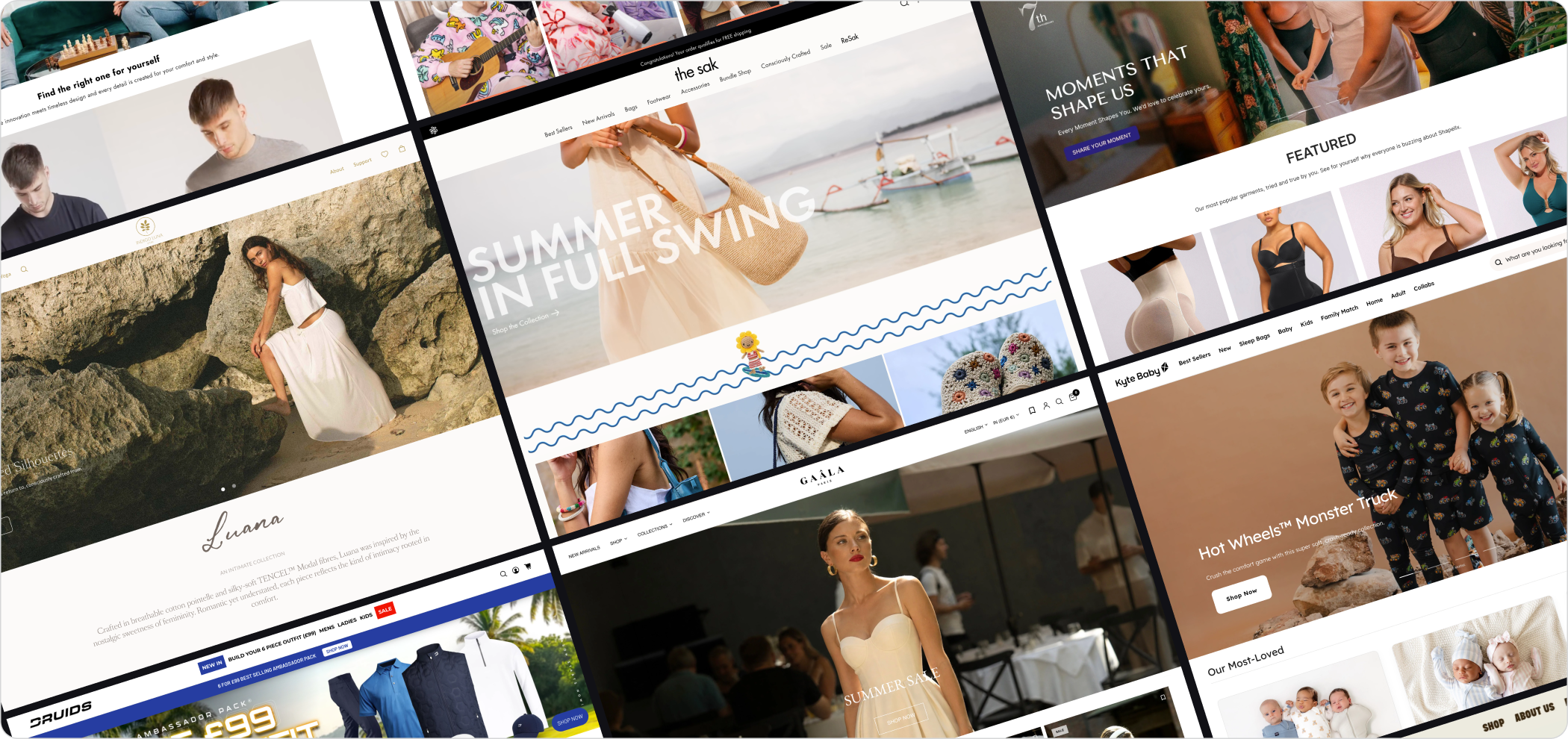
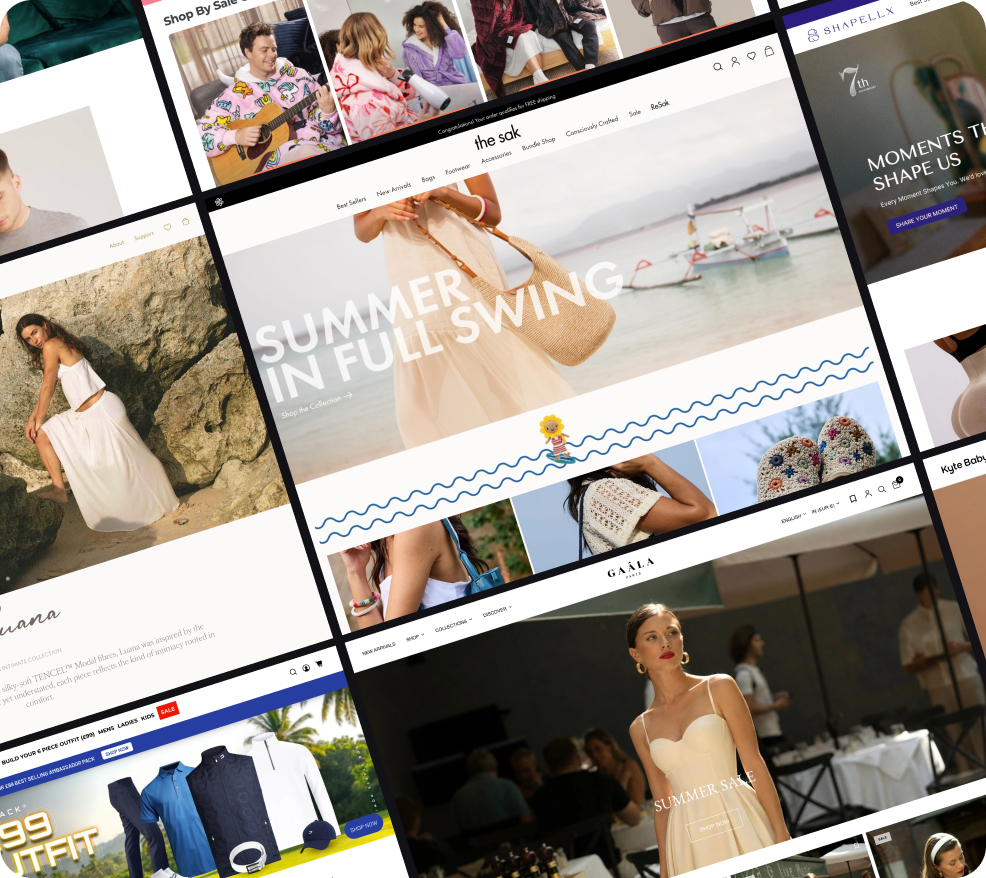
Collage of fashion and apparel storefronts showing clothing, accessories, and styled outfits.Turn your collection into a revenue machine with bundling intelligence
34%
Avg AOV lift · engagement clients
$153M+
In bundle revenue generated
4.9★
On the Shopify App Store
8,000+
Shopify merchants
///
Why most bundles miss
Bundles don't fail.
Poorly designed ones do.
A single $80 dress stranded just under the $100 free-shipping line. A "3-Pack" with no size or colour picker. A bundle page no shopper ever reaches. That’s how fashion bundles die.
It's almost always a strategy problem, not a technology one. Across the fashion & apparel stores we audit, the same four mistakes keep showing up.

01

The bundle ignores the size-and-colour matrix

+
A supplement is one SKU. A tee is five sizes by six colours, thirty variants. A bundle that can’t let the shopper choose size and colour per item, inside the bundle, breaks at add-to-cart. This is the single most apparel-specific failure, and it’s exactly the unlock in the brands that win: a customer picks three joggers, sets size on each, checks out in one flow.

02

Co-purchase data treated as gospel

+
A dress appearing in a basket in both Small and Medium isn’t a bundle, it’s a shopper size-comparing, or about to return one. Same with two colourways of the same top. Most engines surface this variant noise as “frequently bought together.” That’s a return waiting to happen, sold to your customer as a recommendation.

03

No outfit or occasion frame, no reason to add

+
“3-Pack Bundle” doesn’t sell. “Complete the Look,” “The Weekend Capsule,” and “Wedding-Guest Edit” do. Fashion buyers buy outfits and occasions, not SKUs. Stores merchandise a great dress, then stop at the dress, no shoes, no bag, no styled set on the product page. The outfit the customer is already picturing never gets sold to them. In Q4 the occasion frame writes itself: Holiday Gifting is the highest-intent frame of the year, and it only works if it's built before the traffic arrives.

04

The bundle isn't on the product page

+
Most stores build a bundle, then bury it on a page nobody visits. The brands that win put a plain “Save More with Bundle” button right on the product page, the single biggest source of traffic to their bundle pages. The mechanic is only half the job. Surfacing it where the shopper already is, is the other half, and it’s the half most stores skip.
///
Inside the engine
Generic apps see your store.
We see
2,500+ fashion stores
like yours.

Three signals shape every recommendation we make for your store. This is the engineering most bundle apps don't build.

///
The three signals · what the engine reads
Signal 01 ─ Your data
What your customers actually buy and wear together.

Order patterns, attach rates, AOV bands by category, and size-and-colour sell-through. We read your full order history, and which variants move, before recommending a single pairing.

100%
of recommendations grounded in your orders
Signal 02 ─ Lookalike priors
What worked for fashion stores like yours.

For every store, we find the closest peers, same subcategory, similar catalog depth, similar price point, similar drop cadence. We’ve already seen which bundles worked for them.

8,000+
Shopify merchants in the reference library
Signal 03 ─ Per-category patterns
What scales in fashion & apparel.
‍

Which outfits convert. Which occasion frames pull traffic. Which multipacks lift AOV. How to discount without training shoppers off full price. Calibrated to your subcategory, not industry averages.

4
Subcategories read natively: women’s · menswear · streetwear · accessories

This is the difference between a tool and an engine.

///
Bundle types built for fashion
Every bundle type your store needs.
Built for the way people actually get dressed.

We design the right mix of bundle mechanics for your catalog and customer journey. Not every store needs all four, but every winning store runs at least two of them well.

Highest intent

Complete-the-look sets

Cross-category bundles like “Style It With” and “Complete the Look” sell the outfit the customer is already picturing: dress with bag and heels, hoodie with joggers. This is the native fashion frame, and the strongest brands build it straight off frequently-bought-together data so the pairing is real, not guessed.

Example builds

Dress + Bag + Heels · Hoodie + Joggers · Shirt + Pant + Jacket.

High AOV
BFCM bestseller

Buy more, save more multipacks

Same-category quantity bundles, “3 tees for $69,” “Buy 2 get 1 free” on joggers, are uniquely powerful in apparel because people wear and rotate multiples of basics. A fixed price (“$69”) cuts cognitive load and speeds the decision. In the brands that run this well, it’s consistently the highest-revenue bundle type.

Common pattern

“Buy 2 for $39, 3 for $49.” Size set per item. Anchor pricing on the strikethrough.

High engagement

Build-your-own capsule

Let shoppers assemble their own look from a curated collection, with size and colour set on each piece inside the builder. “Build Your Weekend Capsule” or “Pick 4, Save More” turns browsing into a bigger basket and pulls slow-moving styles into the mix alongside heroes. Bigger carts, more engagement, fewer abandons.

Common pattern

“Pick any 4, the more you add the more you save.” In-bundle size + colour picker.

Gifting & seasonal
BFCM bestseller

Gift sets & occasion edits

Custom gift bundles tailored to a recipient, and occasion edits like “Wedding-Guest” or “Holiday Gifting,” give shoppers a reason to buy a set instead of one piece. For brands whose prints or pieces already coordinate, a “shop the matching set” gift box is sitting right there. This is the fashion answer to retention, the occasion calendar, not the refill cycle. And in Q4 it's the frame the entire season shops in.

Example builds

Matching-print gift box · Wedding-Guest Edit · Holiday Gift Set · gift wrap + card in the flow.

Most stores running with us combine two or three of these. The right mix depends on your catalog, your AOV target, and your drop cadence, which is what the BFCM audit figures out. For Q4, gift sets and multipacks are almost always in it. (Subscription bundles work too, but in fashion they’re really only for basics, tees, socks, underwear, so we treat them as a variant, not the spine.)

From recent audits
Six findings.
Drawn from live fashion storefronts.

A composite preview pulled from recent diagnostic audits across fashion subcategories, women’s occasion, menswear, streetwear, and founder-run boutiques. Each numbered marker on the document points to a different element type every audit contains.
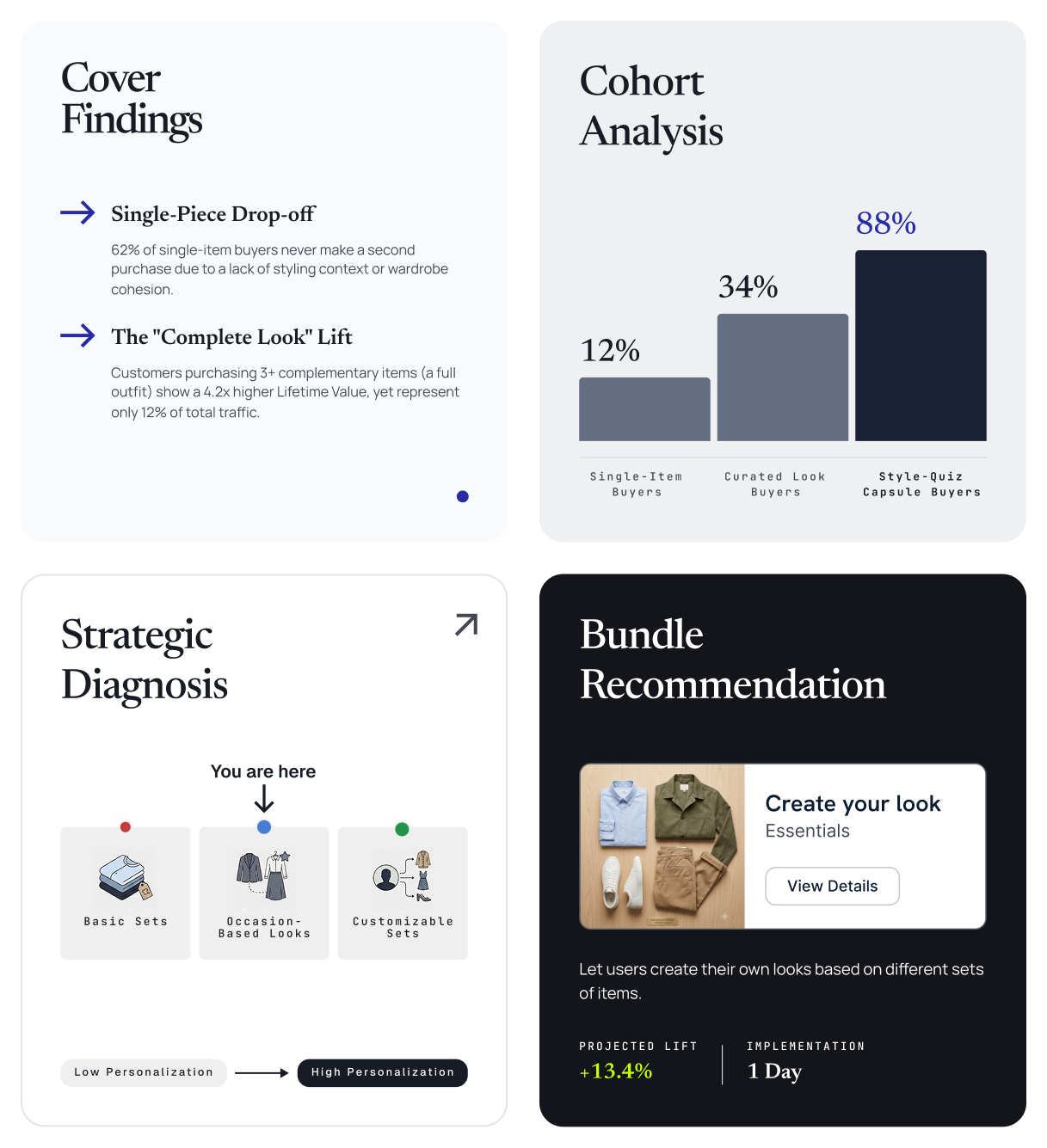
Composite preview of a Skai Lama bundle audit

No two audits look the same. The findings change every time; the discipline behind them doesn't. Every report names what's working, what's leaking, what we'd test next, and what we don't yet know.

///
What's inside
01
Cover finding

The single observation that frames the whole report. Diagnostic, not promotional.

02
Strategic diagnosis

Pattern recognition. Where your bundle program sits vs the closest structural peers in your subcategory.

03
Storefront finding

Diagnosed from your live site. Often surfaces copy you've already written but never built into a buyable unit.

04
Cohort analysis

Customer segmentation from order data. Which cohorts buy what, at what AOV, and which mechanic each one needs.

05
Bundle recommendation

A named bundle with co-purchase evidence, mechanic, scope, and projected impact. Every audit ships 8–12 of these, including the top 3 we would launch first for BFCM.

06
Decision brief + open questions

All recommendations ranked on a single page, with impact and the named gaps still to close before launch.

Get your BFCM Bundle Audit→
///
The platform
Strategy. Build. Proof.
In three moves.

Bundling becomes a managed program: the engine produces the strategy, ships the bundles, and proves the lift. You stay in control by approving every recommendation before it goes live.

01
We diagnose. Then we hand you an outfit-and-AOV strategy.

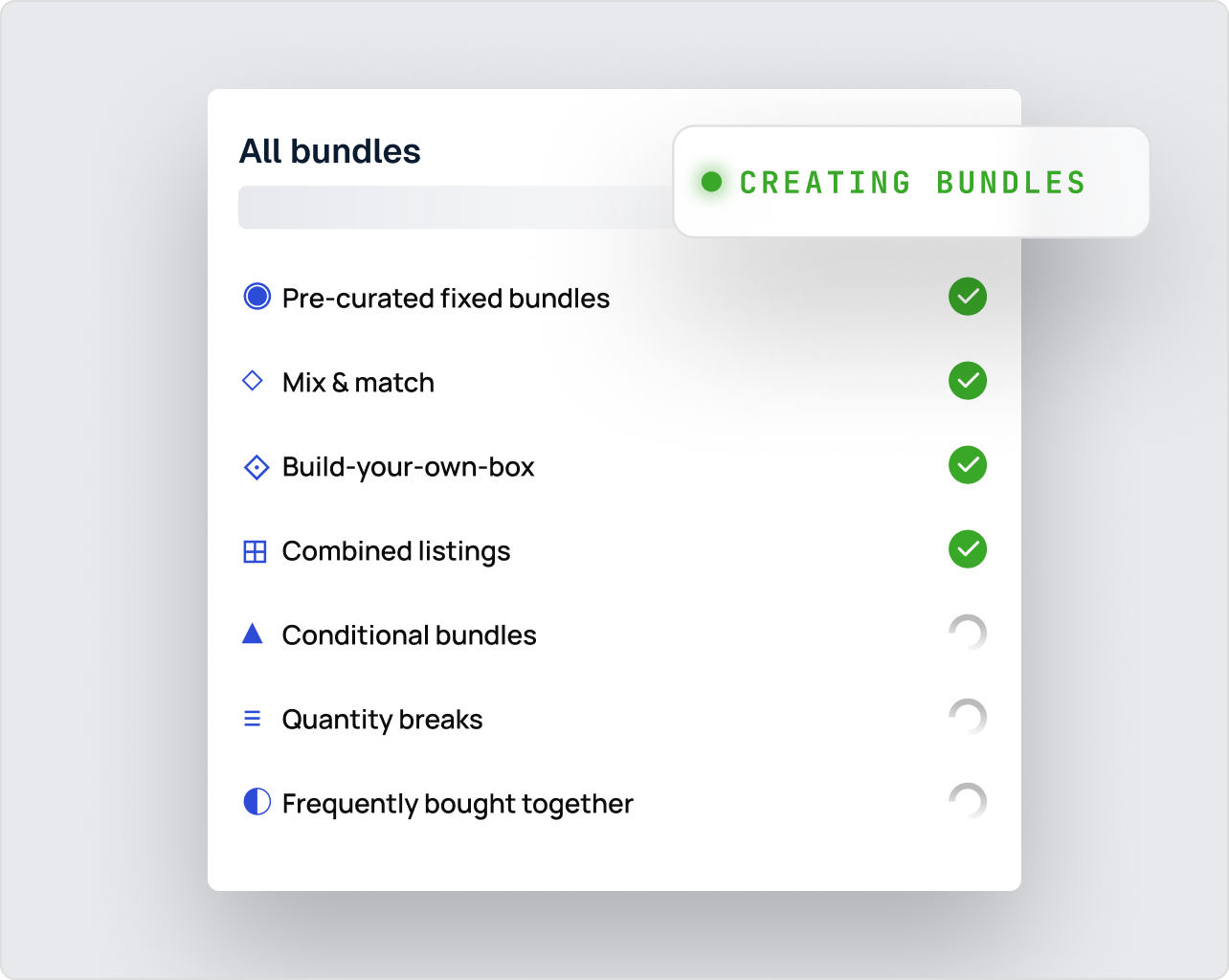
Connect your store, and the engine processes your data in two passes. First, an instant recommendation while you’re still on the install screen. Then within 24 hours, a comprehensive bundle revenue strategy: basket analysis, outfit and multipack archetypes mapped against your subcategory, customer segments identified algorithmically, and 8–12 ranked bundle recommendations with projected impact.
→
Three to five findings, your specific revenue leaks, named
→
Customer segments identified from your order history
→
8–12 bundle recommendations grounded in 8,000+ stores
→
The Top 3: the bundles we would launch first for BFCM, previewed for your store
→
Size & colour sell-through read per style, with confidence labels
→
90-day roadmap split into Launch · Expand · Optimize phases
Bundle recommendations
02
You approve. The engine ships every bundle.

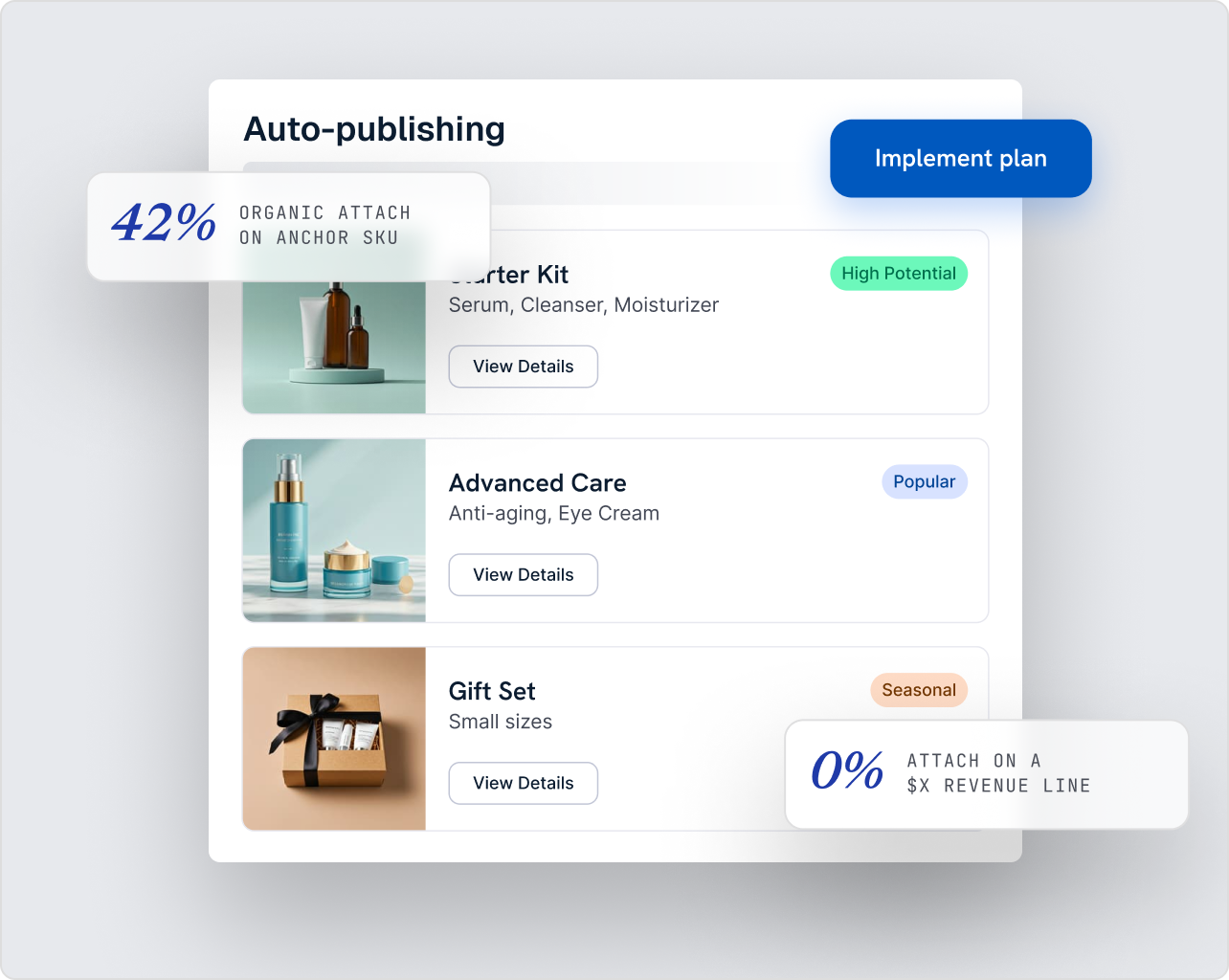
Once the strategy is signed off, the build engine takes over. Every bundle in the report, across every type, is created, named, priced, and deployed to your storefront with the right placement and seasonality logic baked in. No dev tickets, no spreadsheets, no theme surgery.
→
Complete-the-look sets · cross-category, off FBT data
→
Build-your-own capsule with tiered discount logic
→
Buy-more-save-more multipacks with anchor pricing
→
Gift sets & occasion edits with wrap + card in the flow
→
“Save More with Bundle” buttons on the product pages
Build queue · all bundles
Build queue auto publishing
03
We measure. And prove the lift.

Most bundle apps show views, clicks, and bundle revenue. That's vanity. We measure what your CFO would care about: AOV impact, cross-category attach, bundle revenue share against your 90-day baseline, and placement A/B by template, with return rate watched as a guardrail so a bigger basket doesn’t quietly become a bigger return.

CFO-grade attribution
///
Receipts, not promises
It works.
Here's the proof.

Real fashion & apparel brands. Real numbers. Real attribution windows.

Cove
Men’s Apparel · United States
$4.4M
In bundle revenue in 9 months. AOV tripled, inventory turned faster.

Four bundle types on Easy Bundles: Buy-2-Get-1 joggers (the top earner), “3 tees for $69” fixed-price, cross-category hoodie + pant off FBT data, and build-your-own. The “Save More with Bundle” button on product pages was their single biggest traffic source.

Evelyn & Bobbie
Intimate Apparel · United States
$2M+
In sales from “Get the Set” cross-sells and a free-shipping threshold.

A “Get the Set” Buy-X-Get-Y widget off the bra collection cross-sold bikinis, shorts and thongs from the cart and PDP, paired with a $98 free-shipping bar to lift cart value. Built on Kite, the discount-and-gift sibling to Easy Bundles.

Tartan Blanket Co.
Lifestyle / Apparel · United Kingdom
+15%
Annual revenue lift from custom gift bundles built around the recipient.

Letting customers tailor a gift box to who it’s for turned standalone products into giftable sets, lifted satisfaction, and drove repeat purchase. The clearest proof that gifting, not subscription, is the fashion retention lever.

///
In their words
★★★★★

“We used to have a dev code custom bundles every time we needed a new one, which was expensive and time consuming. Now we can create a new bundle and launch it in minutes. Great product and great support.”

Elite Athletic Gear
★★★★★

“I’d been looking for a build-your-own bundle app for three years. There was always some complication with inventory, the interface, or conflicts with other apps. This is the one solution that works for us.”

Farmers Defense
★★★★★

“We’ve tried dozens of other apps, and none of them even came close to the functionality and ease of use that this app offers. I very rarely review apps, but this one deserved it.”

Evertee
///
The BFCM clock
Two months is exactly how long you have.
Black Friday is Nov 27.

A complete bundle engagement takes 8 weeks: diagnose, build, test, declare a winner. Work the math backwards and the last safe start date is Oct 1.

✓
Week 1: full diagnostic plus a written strategy within 24 hours of connecting.
✓
Weeks 2–4: every bundle built, named, priced, placed. No dev tickets.
✓
Weeks 5–8: A/B tests across offers, placements, and price points. We don't stop at "live." We stop at "winning."
✓
Before Nov 27: your proven winners are what BFCM traffic lands on.
✓
You own everything we build. No lock-in, no monthly retainer.

Claim a pre-BFCM start

Engagements booked after Sept 30 roll to a post-BFCM start.

BFCM 8-week timeline badge
8 weeks to a proven bundle lineup.
‍Live before Nov 27.

One engagement fee. Your full bundle lineup, set up and A/B tested until the winners are proven against your 90-day baseline. No retainer, no revenue share.

What the engagement covers
Outfit pairing & bundle strategy
Included
Full bundle build & launch
Included
Conversion copy & naming
Included
Size & colour variant logic + inventory sync
Included
Offer A/B testing to proven winners
Included

*winners declared on bundle-touched orders against your 90-day pre-launch baseline.

///
How we work
Diagnosis first.
Strategy second. Build third.

We never pitch a solution before we understand the problem. Most fashion operators are surprised by what we find in the audit, especially how much margin is sitting in the outfit they already sell one piece at a time.

Day 0–1 · Free
BFCM Audit + Strategy

Connect your store. An instant first recommendation appears while the engine is still loading. Within 24 hours, you receive a written bundle revenue strategy: findings, customer segments, 8–12 ranked recommendations, projected impact, a preview of the top 3 bundles we would pick for your store, and a 90-day roadmap. Before you spend a cent.

Weeks 2–5
Build & Ship

You approve. The engine ships every bundle in the strategy: naming, pricing, placement, size/colour pickers, seasonality logic, mobile QA, theme integration, checkout testing. You don’t touch a line of code. Each bundle goes live with traceable order IDs as evidence.

Day 60 · Guaranteed
Weeks 5–8 · To winners

We A/B test offers, placements, and discounts against your baseline, with return rate watched as a guardrail, and keep iterating until the winning variants are proven. Those winners are what your Black Friday traffic lands on.

“
Easy Bundles solves real merchandising problems, guiding customer experience, surfacing the outfit on the product page, handling everything from fixed-price multipacks to mix-and-match capsules and gift boxes. The kind of platform you build a program on, not just an app you install.
LONG-TIME SKAI LAMA CUSTOMER · 5+ APPS, 2 YEARS
///
Common questions
Answered straight.
No marketing language.
We've tried bundles before, they didn't work. Why will yours?
+
Because the ones that didn't work were almost certainly a strategy problem: wrong pairings, no size and colour picker, no occasion frame, buried off the product page. Ours start from your order history and 8,000+ reference stores, ship onto the PDP where the decision happens, and get A/B tested until the winners are proven. If a bundle doesn't earn its place, it gets rewritten or retired. That's the difference between launching a bundle and running a bundle program.
Why not just build this ourselves with AI?
+
You could generate bundle ideas with AI. What you can't generate is the priors: which pairings, prices, and placements actually worked across 2,500+ fashion stores, and the deterministic checks that kill plausible-sounding strategies your data doesn't support. AI proposes, math disposes. Plus the unglamorous half: variant logic, inventory sync, theme integration, QA, and the A/B discipline to a declared winner.
How do you handle sizes, colours, and inventory across bundled items?
+
 Natively. Shoppers set size and colour per item inside the bundle, and every component syncs to your real inventory so a bundle can't sell a variant you don't have. Bundle items land as individual line items at checkout, so fulfillment, 3PL feeds, and returns all see real SKUs, not a mystery bundle SKU.
Won't bundling just increase my returns?
+
Watched, not wished away. Return rate is a named guardrail metric in every engagement. Bundles built from real co-purchase data and framed around outfits return less than discount-bait sets, because the shopper bought a look they wanted, not a deal they tolerated. If a bundle's return rate creeps, it gets restructured before it erodes the lift.
What does it cost?
+
Pricing is a one-time engagement fee, scoped to your catalog size and bundle complexity on your free audit call. No retainer, no revenue share, no usage fees. One engagement, one outcome: a tested, winning bundle lineup.
Can you really be ready before BFCM?
+
 Yes, if you start by Oct 1. The engagement is 8 weeks end to end, and gifting edits and multipacks are exactly the formats that carry Black Friday. Book after Sept 30 and we will be straight with you: you would launch into December, not Black Friday.
How is this different from just installing a bundling app?
+
An app gives you a bundle builder: a UI for configuring bundles you've already decided to make. We give you the strategy that goes into the builder, then ship it: which bundles, for which customer segments, at what discount, in which placement, with size and colour logic handled, and A/B tested to proven winners. The app is the tool. We bring the engine and the playbook from 8,000+ stores.
Do I lose control over what gets bundled?
+
No. You approve every bundle, every recommendation, every change before it ships. The engine recommends. You decide. Your team owns brand and creative; we own the bundling math.
Does this work if I'm a small boutique? Or a huge catalog?
+
Both, differently. A boutique gets a tighter lineup, usually one hero set, one multipack, one gift edit, because the data supports fewer confident calls. A large catalog gets the full framework with subcategory-level pairings. The engine scales the strategy to the evidence, not to a template.

Your competitors will spend Black Friday discounting.

You can have proven winning bundles live before Nov 27.

Book the free audit this week. Strategy and your top 3 bundle preview in 24 hours, the full lineup live in weeks, proven winners before Black Friday.

Get your BFCM bundle audit
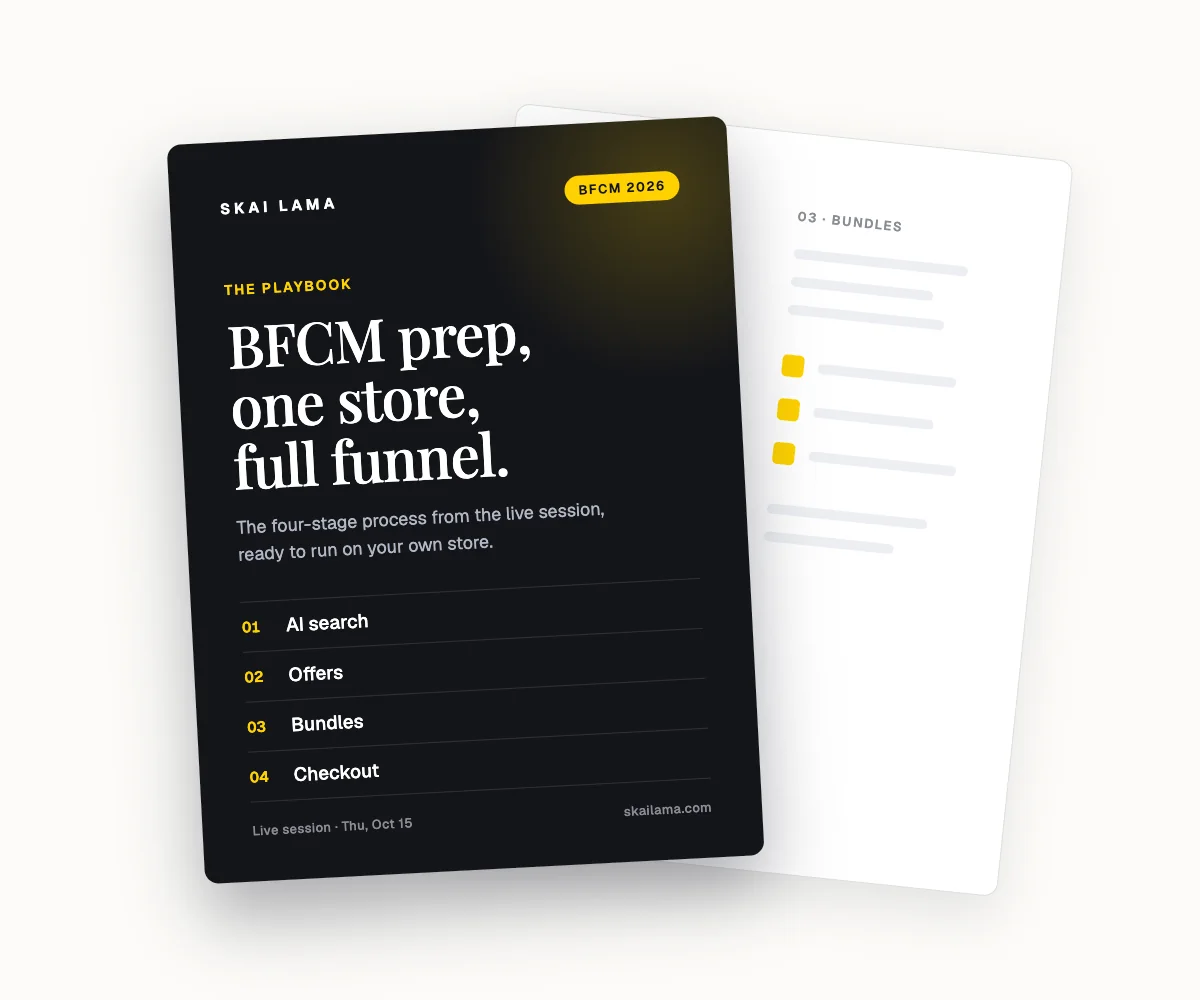
BFCM Guide & Free Audit
Access Now