This guide reviews 9 leading Shopify email marketing apps: Klaviyo, Brevo, Omnisend, Yotpo Email & SMS, AfterShip Email Marketing, SendWILL, Privy, Mailchimp, and Seguno.
The apps were assessed on email automation depth, segmentation logic, omnichannel support (email, SMS, push), Shopify data integration, analytics, deliverability controls, and pricing scalability.
Some tools focus on advanced automation and predictive targeting (Klaviyo, Omnisend), others prioritize cost efficiency and push notifications (Brevo, SendWILL), while a few emphasize Shopify-native workflows and simplicity (Seguno, Privy).
Shopify’s native email capabilities lack advanced automation, behavioral segmentation, and revenue attribution, making third-party email marketing apps essential for stores.
The guide concludes that Klaviyo stands out as the Best Shopify Email Marketing App overall due to its real-time Shopify event tracking, flexible flow logic, predictive analytics, and scalability for growing DTC brands.
This blog compares the best Shopify email marketing apps available today by analyzing features, pricing, reviews, ratings, and real-world email automation capabilities. We reviewed Klaviyo, Brevo , Omnisend, Yotpo Email & SMS, AfterShip Email Marketing, SendWILL, Privy, Mailchimp, and Seguno.
Shopify email marketing apps help merchants drive revenue & retention through newsletters, abandoned cart recovery, post-purchase flows, win-back campaigns, and lifecycle automation. Based on feature depth, Shopify integration, and scalability, I have identified the best Shopify email marketing app for the varied needs of different stores. Let’s dive in.
Starter: Free – 250 subscribers Standard: From $35/mo
In-Depth App Review: Best Shopify Email Marketing App
1. Klaviyo
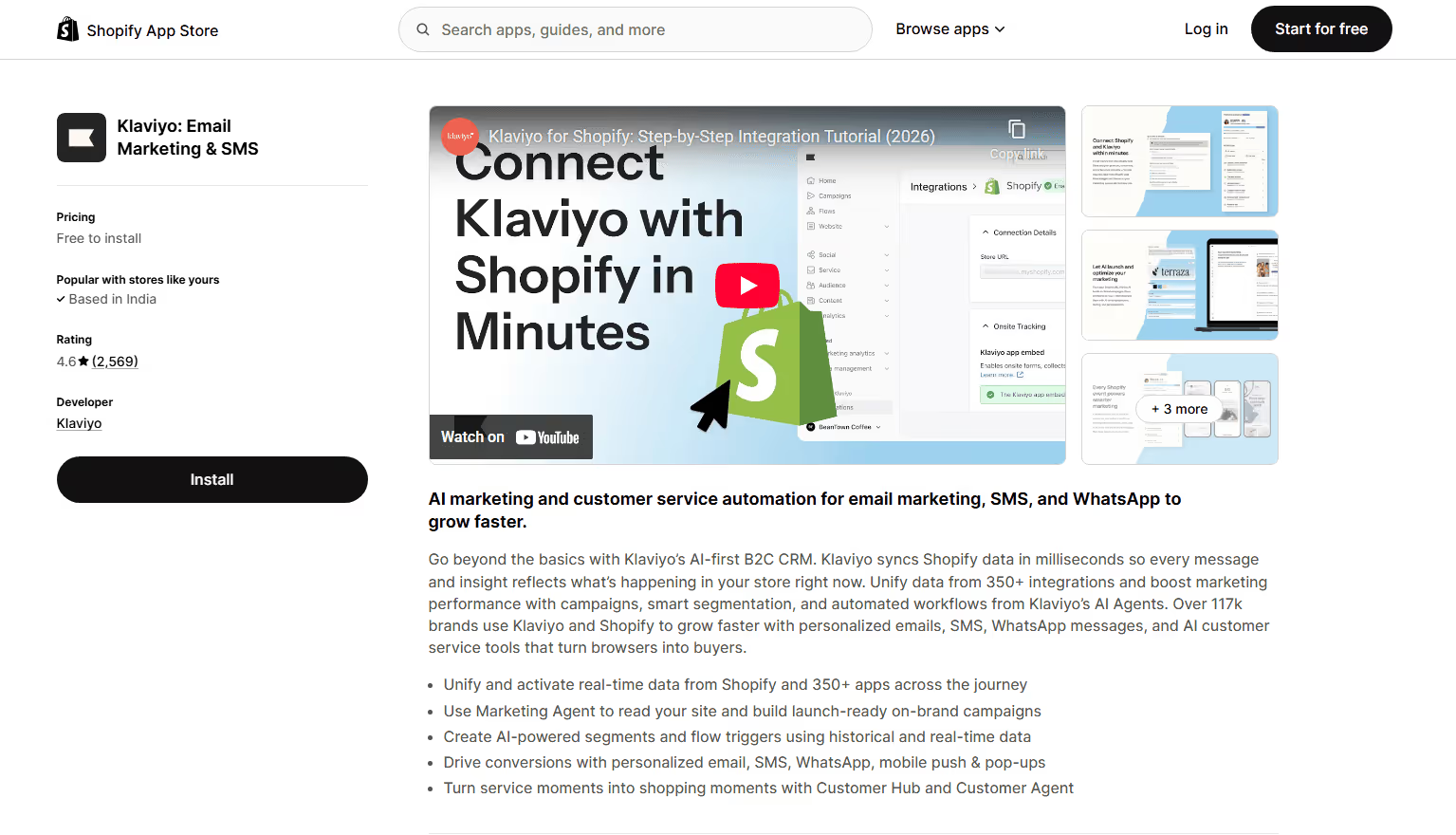
Klaviyo is a mature Shopify email marketing app that connects to Shopify and synchronizes products, customers and orders in real time. Post installation the app claims to collect every site event like views, carts, checkouts and purchases to trigger intelligent flows and messages. Klaviyo’s built-in AI reads the connected Shopify site to suggest store specific campaigns and flows, even generating the design & subjectline copy.
Brevo is a Shopify email marketing app that combines email, push notifications, and SMS to offer a complete retention marketing email suite. It charges based on message sends instead of list size.
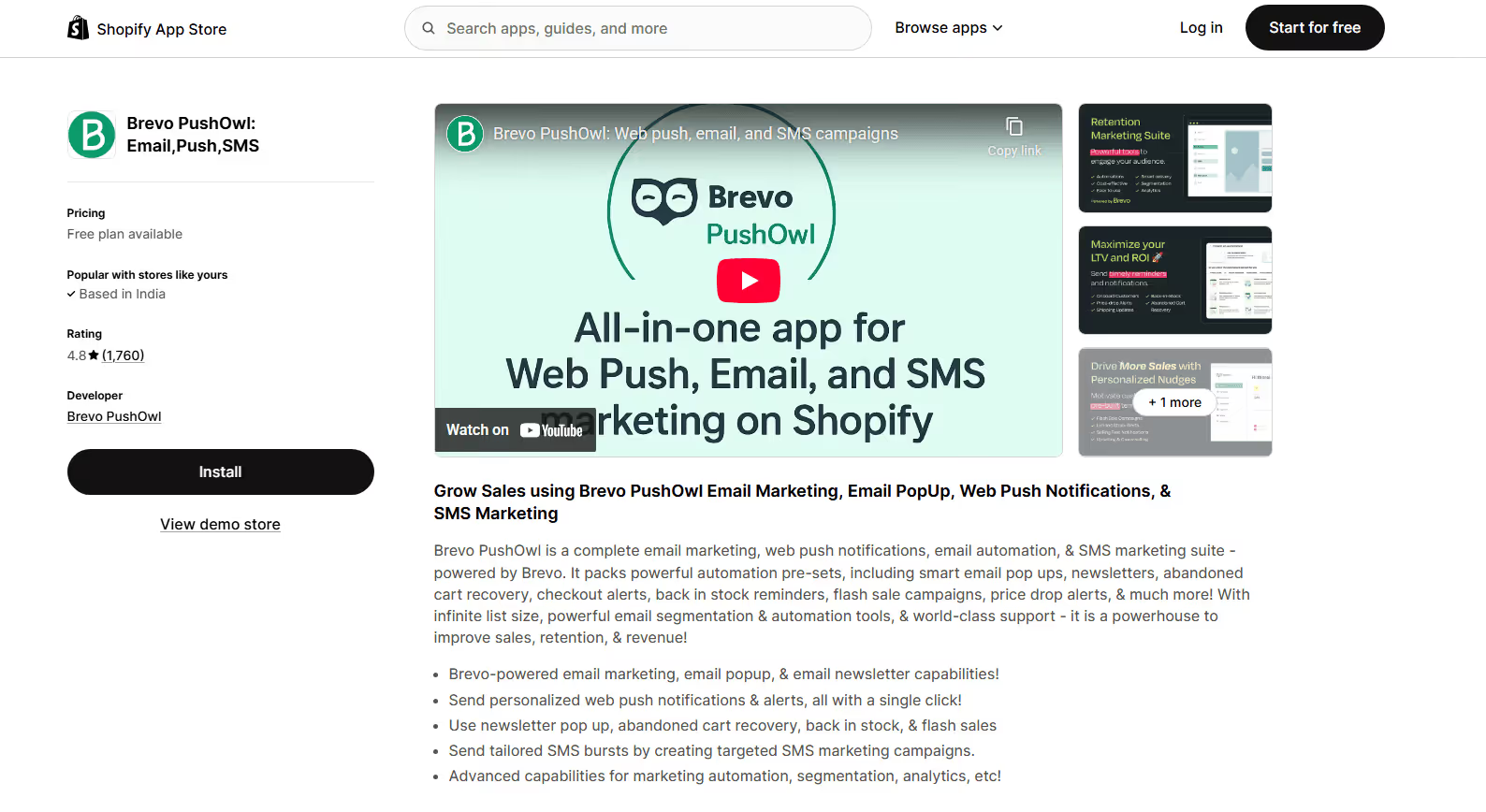
Key Features of Brevo
Email newsletters & promotional campaigns
Web push notifications
SMS marketing campaigns
Visual automation workflow builder
Abandoned cart & browse recovery
Behavioral segmentation
Drag-and-drop email editor
A/B testing
Pay-by-sends pricing model
Campaign analytics & revenue tracking
Limits
Automation depth limited on lower plans
Pros
Pay by sends, not contacts
Strong push notification support
Cost-effective
Cons
Less advanced AI than competitors
Pricing
Free: limited sends
Plus: ~$19/month
Power: ~$79/month
3. Omnisend
Omnisend is a Shopify email marketing app that offers an omnichannel platform. The apps give stores the capability to build pop ups & forms for list generation & the create emails from hundreds of pre‑designed templates.
Another strong forte of Omnisend is the capability to personalize emails with dynamic product content and discount codes (pulled directly from the store), and automate workflows such as welcome series and abandoned‑cart recovery.
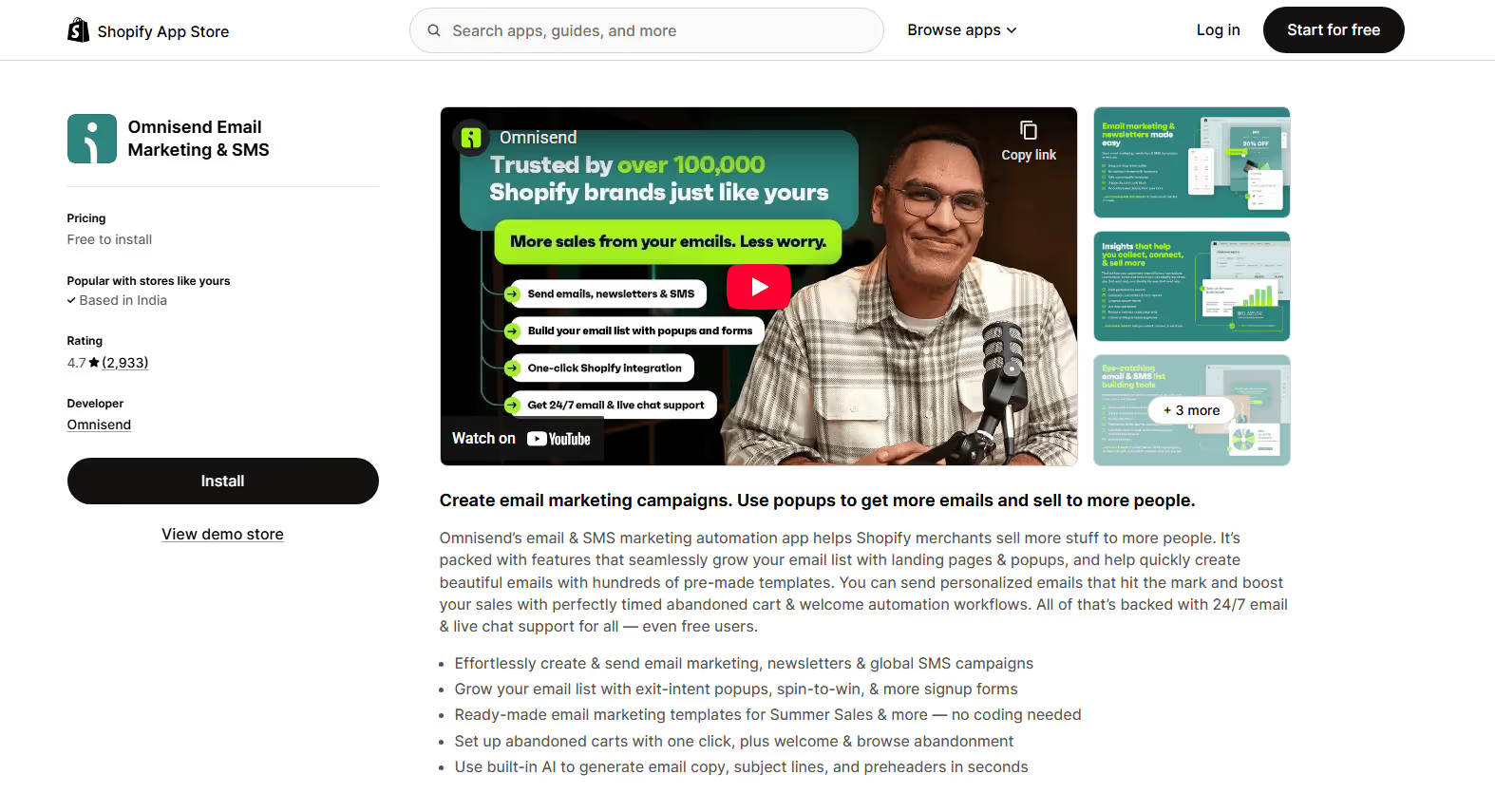
Key Features of Omnisend
Prebuilt ecommerce automation workflows
Email, SMS & web push automation
AI copy & subject line generator
Drag-and-drop email builder
Dynamic product & discount insertion
Exit-intent & gamified popups
Advanced audience segmentation
A/B testing
Revenue attribution dashboard
24/7 customer support
Limits
SMS credits limited
Pros
Excellent automation templates
Strong support
Balanced pricing
Cons
SMS costs add up
Pricing
Free: 250 contacts
Standard: $16/month
Pro: $59/month
4. Yotpo Email & SMS
Yotpo is a Shopify email marketing app focused on scaling list growth and personalization. The app proposes that merchants can grow email lists quickly when they have the right number of forms, pop‑ups and widgets in their store. The data captured from these can then be used to send ultra‑targeted campaigns using 180+ data points for segmentation.
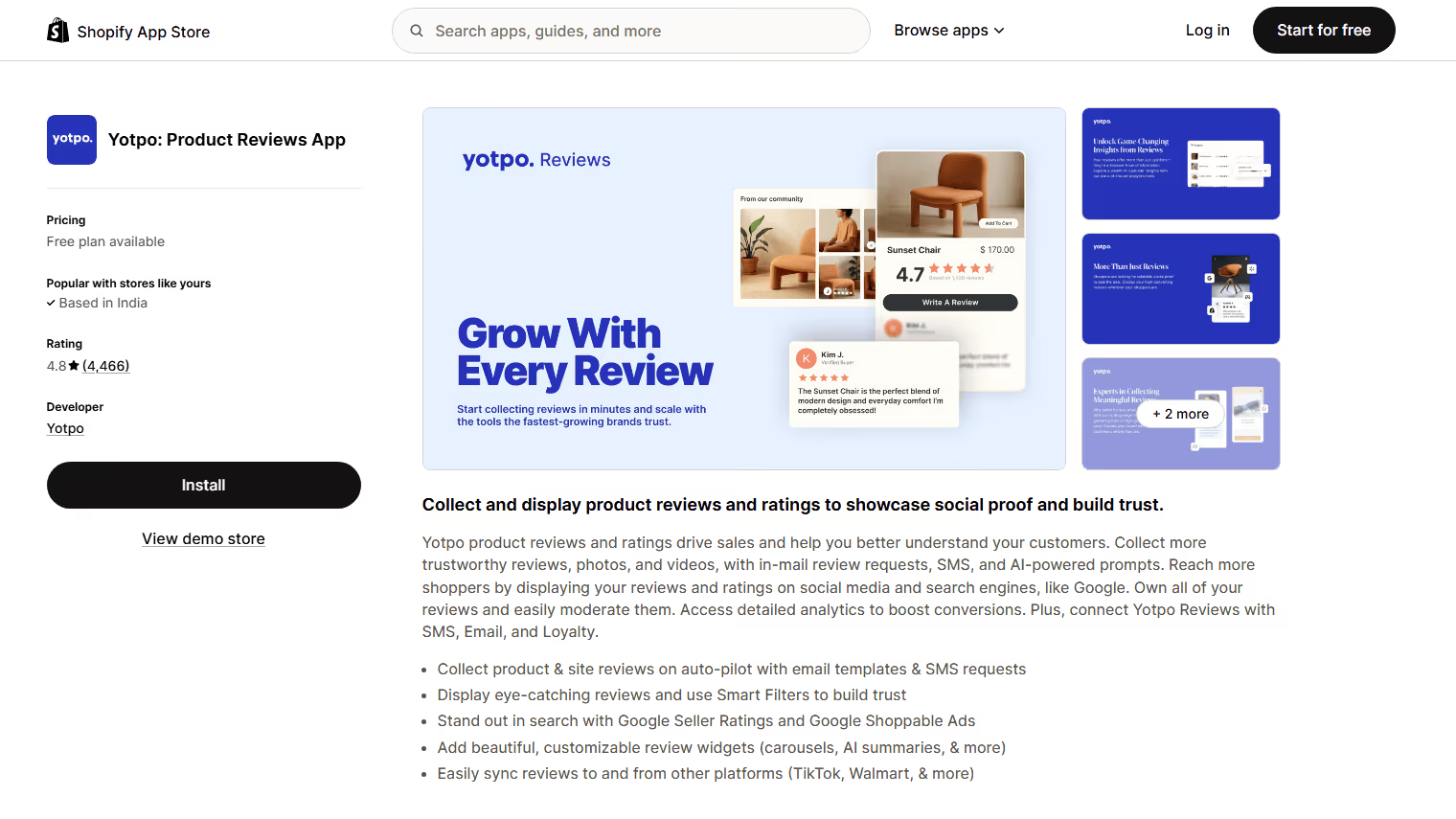
Key Features of Yotpo
Multi-channel email & SMS automation
180+ segmentation data points
Canva-powered email editor
40+ automated ecommerce triggers
Abandoned cart & browse recovery
Advanced analytics & reporting
Personalized product recommendations
Two-way SMS messaging
List growth popups & forms
Cross-channel campaign orchestration
Limits
Higher tiers required for advanced analytics
Pros
Excellent SMS + email orchestration
Strong personalization
Cons
Premium plans expensive
Pricing
Free → $19 → $59 → $199/month
5. AfterShip Email Marketing
AfterShip Email Marketing (formerly Automizely) is a Shopify email marketing app positioned as an all-in-one retention platform. Once installed, it syncs customer, order, and behavioral data from Shopify to power automated email and SMS flows across the customer lifecycle.
The app combines email campaigns, SMS automation, popups, and product recommendations into a single dashboard. While it lacks the advanced predictive logic of enterprise tools, AfterShip covers most core retention use cases in one system, making it well-suited for merchants who want broad functionality without managing multiple apps.
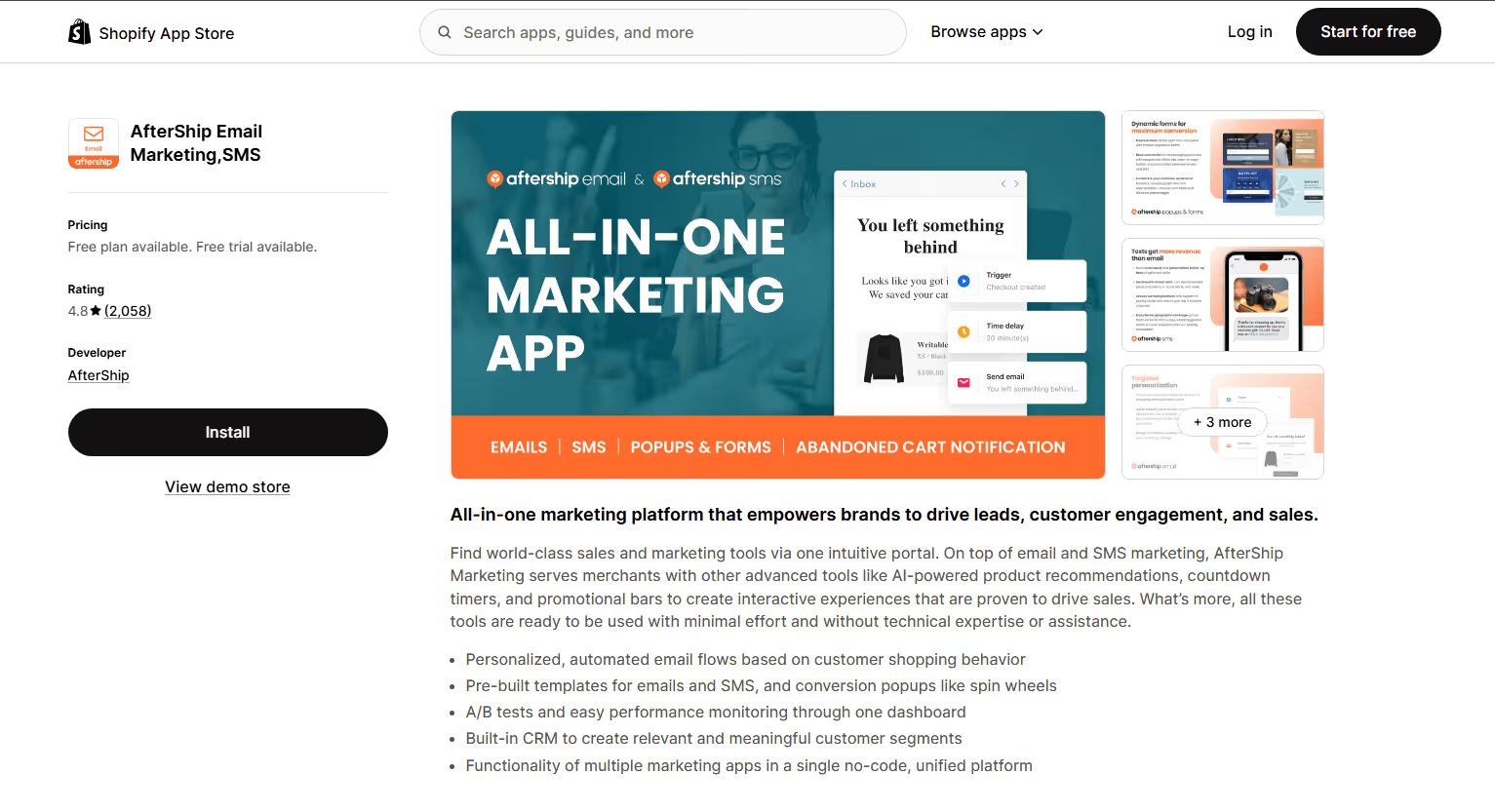
Key Features of AfterShip
Drag-and-drop email editor
Email & SMS automation
Welcome, abandoned cart & win-back flows
Browse abandonment triggers
Built-in CRM segmentation
Popups & coupon bars
AI product recommendations
Revenue attribution tracking
A/B testing
Shopify data sync (customers, orders, products)
Limits
UI can feel crowded
Pros
Generous free plan
Broad feature set
Cons
Less specialized than Klaviyo
Pricing
Free → $11 → $119 → $179/month
6. SendWILL (Ecomsend)
SendWILL is a Shopify email marketing app focused primarily on email list growth through high-converting popups and gamified opt-in experiences. After installation, it captures subscribers using exit-intent popups, spin-to-win wheels, and promotional forms, tagging users directly inside Shopify.
Rather than acting as a full-scale email automation platform, SendWILL integrates with tools like Klaviyo and Mailchimp for advanced campaigns. It works best as a frontend acquisition layer for stores prioritizing rapid list growth before scaling deeper email automation.
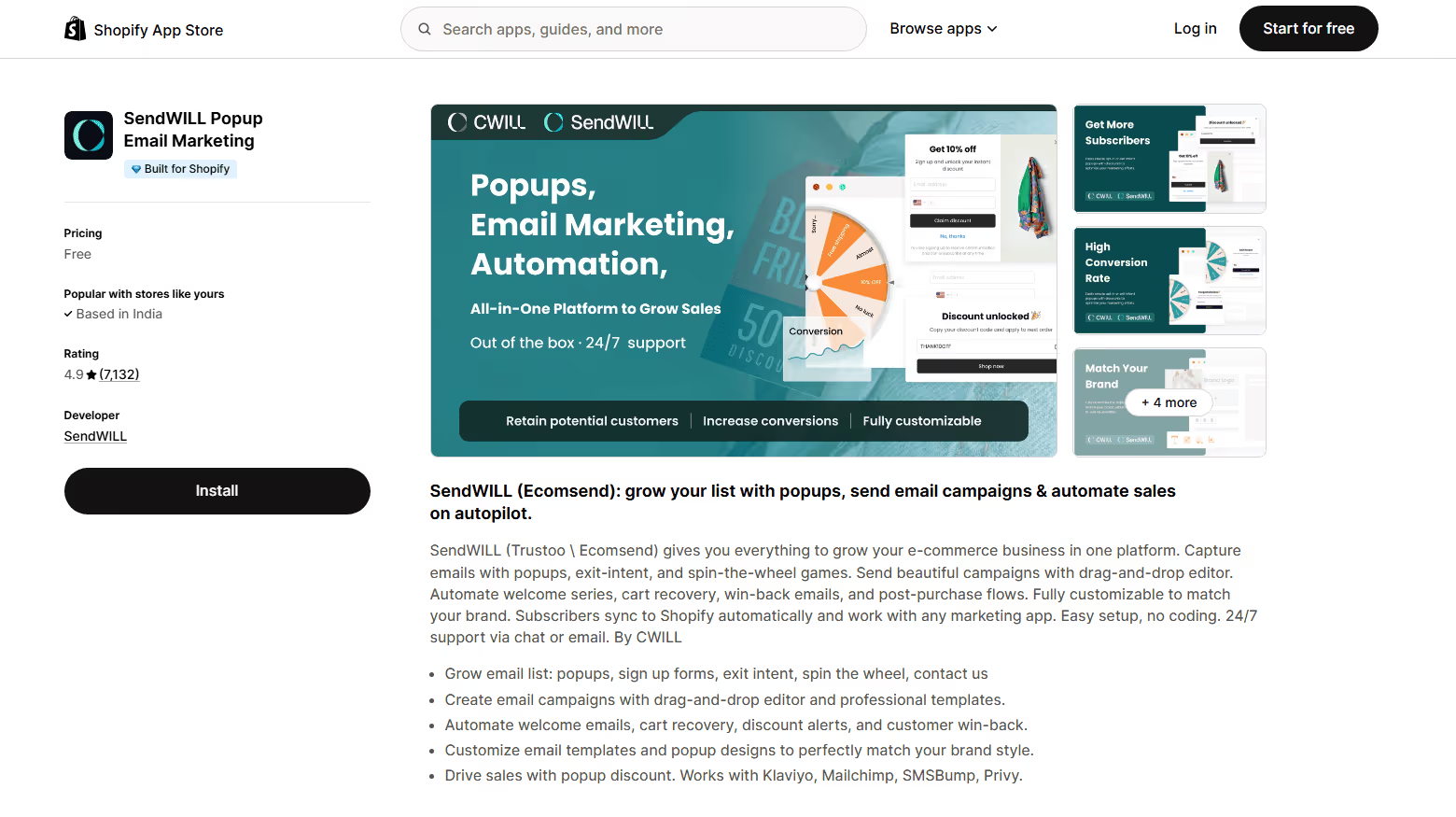
Key Features of SendWILL
Exit-intent popups
Spin-to-win gamified popups
Embedded forms & announcement bars
Trigger-based display rules
Basic email automation
Welcome & cart reminder emails
Subscriber tagging inside Shopify
Discount code capture flows
Integration with Klaviyo & Mailchimp
Popup conversion analytics
Limits
Limited native email depth
Pros
Free forever
Excellent popup UX
Cons
Needs external ESP for scaling
Pricing
Free
7. Privy
Privy is a Shopify email marketing app designed for small and mid-sized stores that want a simple, unified marketing solution. It syncs Shopify customer and order data to trigger email and SMS campaigns tied to events like signups and cart abandonment.
The platform blends popups, email campaigns, SMS messaging, and basic automation into one interface. Privy prioritizes ease of use over advanced logic, making it ideal for merchants moving from manual email sends to structured lifecycle automation.
Key Features of Privy
Drag-and-drop email builder
Email & SMS campaigns
Welcome & abandoned cart flows
Multi-step automation builder
Exit-intent & countdown popups
List-building widgets
Behavioral segmentation
Revenue reporting dashboard
A/B testing
Shopify customer & order sync
Limits
Page view limits
Pros
Easy setup
Strong popup tools
Cons
Costs rise with traffic
Pricing
$24 → $30 → $45/month
8. Mailchimp
Mailchimp is a legacy Shopify email marketing platform that integrates with Shopify to support ecommerce-driven campaigns and automation. Once connected, it syncs customer data, purchase history, and products to enable abandoned cart emails, post-purchase flows, and personalized recommendations.
While Mailchimp offers strong AI tools and analytics, it is not fully ecommerce-native. Its contact-based pricing and limited Shopify-specific automation make it better suited for merchants already invested in the Mailchimp ecosystem rather than fast-scaling DTC brands.
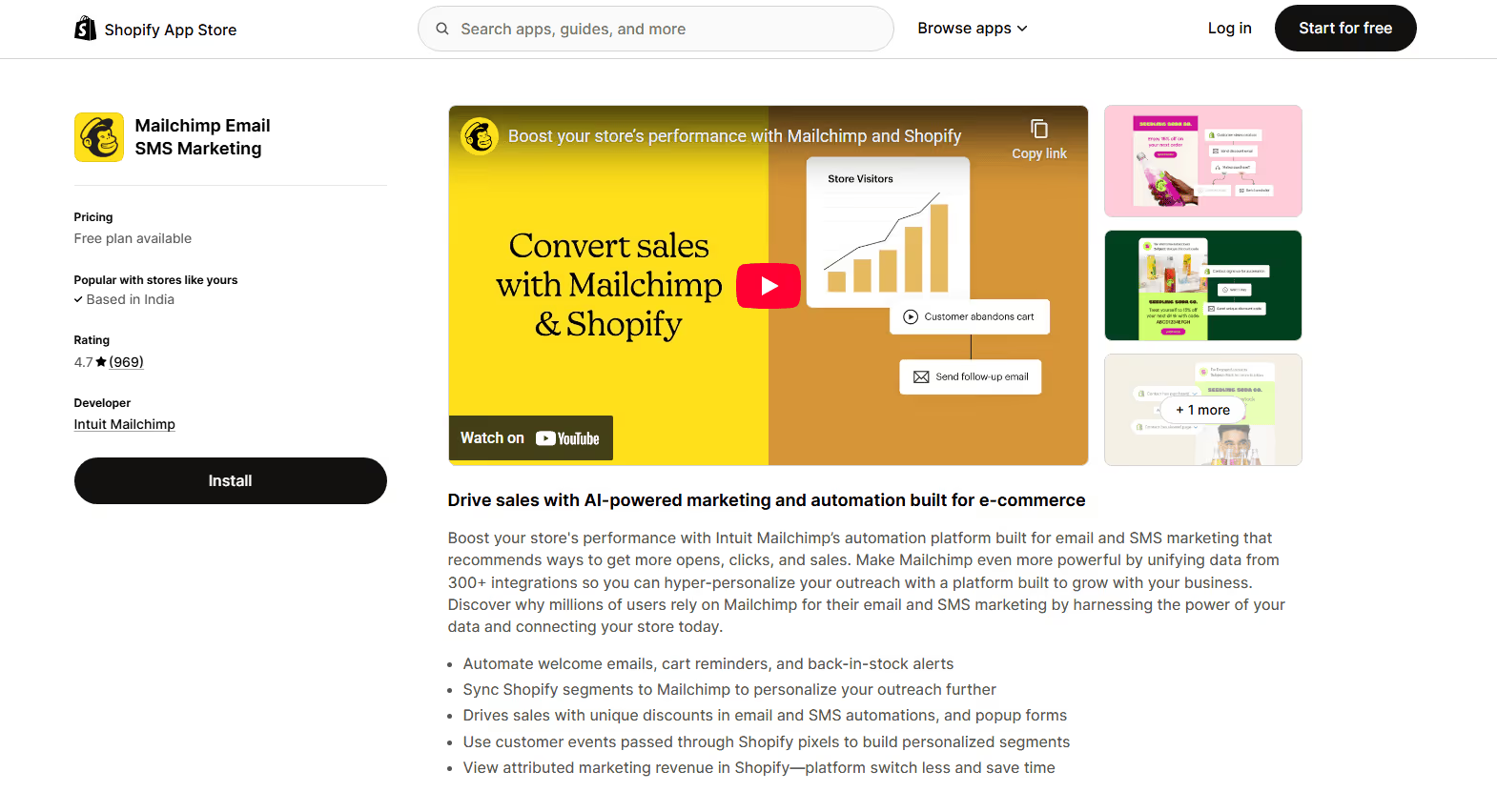
Key Features of Mailchimp
AI content & subject line assistant
Customer Journeys automation builder
Abandoned cart & post-purchase flows
Dynamic product recommendations
Advanced audience segmentation
Predictive analytics
Multivariate A/B testing
SMS & multi-channel campaigns
Landing pages & signup forms
Detailed analytics & reporting
Limits
Counts unsubscribed contacts
Pros
Mature platform
Advanced AI tools
Cons
Expensive at scale
Less ecommerce-native
Pricing
Free → $13 → $20 → $350/month
Seguno
Seguno is a Shopify-native email marketing app that operates entirely inside the Shopify admin. It uses Shopify’s internal data to power prebuilt automations such as welcome emails, abandoned checkout recovery, and post-purchase follow-ups.
The app emphasizes simplicity, deliverability, and native workflows over complex automation logic. Seguno is best suited for merchants who want a tightly integrated, low-maintenance email solution without relying on external platforms
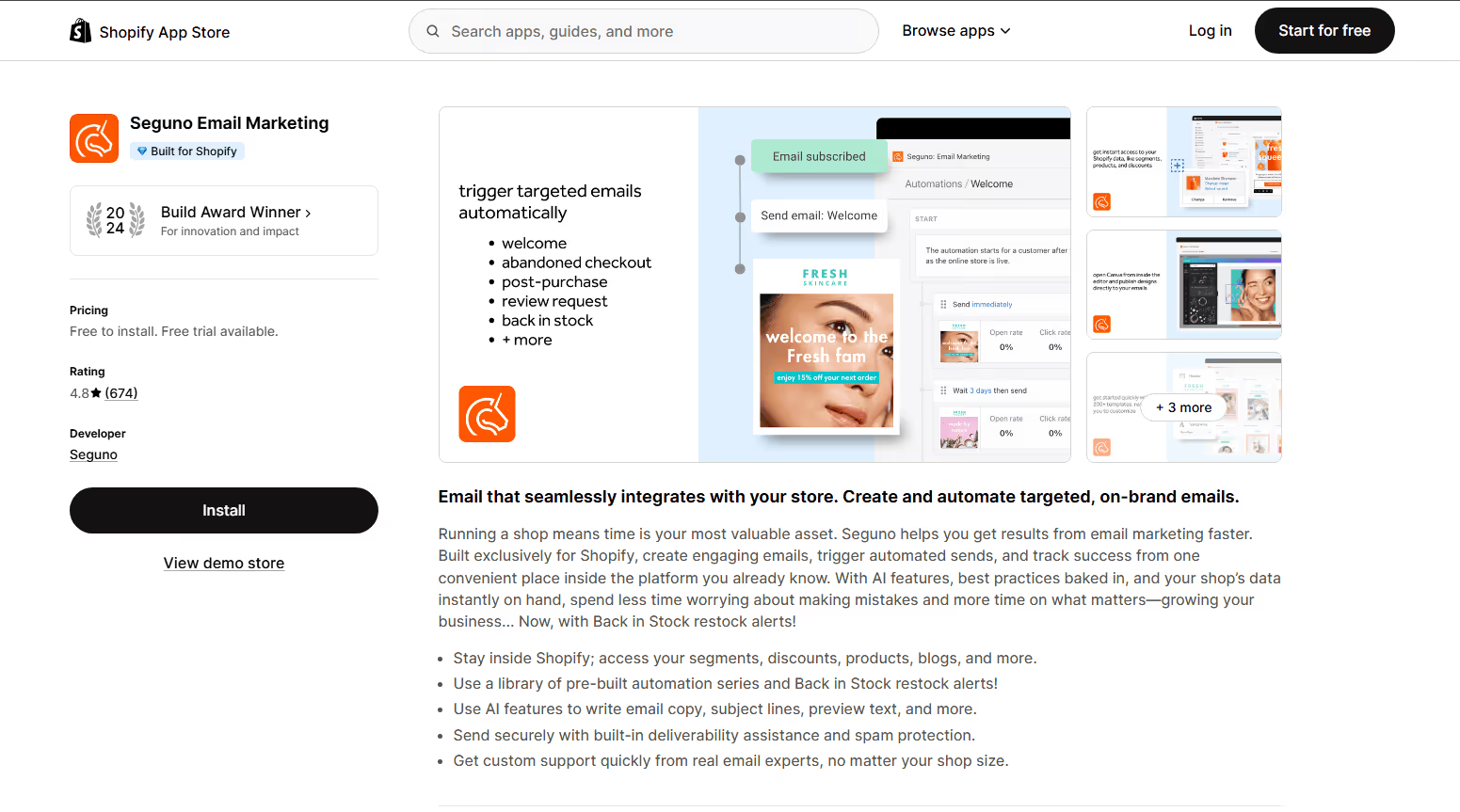
Key Features of Seguno
Shopify-native integration
Drag-and-drop email editor
200+ ecommerce templates
Welcome & abandoned checkout automation
Back-in-stock alerts
Product review request emails
Canva integration
Native customer segmentation
Revenue attribution tracking
Built-in deliverability tools
Limits
Shopify-only ecosystem
Pros
Best native experience
Excellent deliverability
Cons
Less extensible outside Shopify
Pricing
Free → $35 → $215/month
How Shopify Email Marketing Apps Work
When you install a Shopify email marketing app, it doesn’t just act as a separate tool it becomes fully integrated with your store’s data, events, and customer behavior.
Here’s how the connection and workflow generally function:
1. Shopify App Installation & Permission Sync
The app is installed from the Shop-ify App Store and given permission to access key store data — including customers, orders, products, and browsing events. This sync happens through Shopify’s API, ensuring that the app receives real-time event updates (e.g., someone viewed a product, abandoned a cart, or made a purchase).
2. Customer & Order Data Synchronization
Once connected, the email marketing app imports and updates customer lists, purchase history, and subscriber segments automatically. Every time a customer signs up for emails (via popups, checkout, or embedded forms), the app captures this in its database without manual CSV uploads.
3. Triggered Automations Based on Shopify Events
The core power of these tools is automation. Based on Shopify events like a first purchase, cart abandonment, repeat purchase interval, product view, or lifecycle stage apps can trigger automated workflows such as:
Welcome email series
Abandoned cart reminders
Browse abandonment nudges
Post-purchase follow-ups
VIP and loyalty email campaigns
This means you react to customer behavior automatically — without manual sends.
4. Behavior-based Segmentation
Apps segment subscribers based on real Shopify customer behavior (e.g., spending tier, product categories, time since last purchase). These segments ensure emails are much more personalized and relevant.
5. Email Design and Campaign Building
Once data is synced, merchants use drag-and-drop builders, templates, and content tools from the app to create campaigns. These templates can include dynamic product blocks that automatically display products a customer has viewed or left in cart.
6. Sending and Tracking
When the app sends an email, it uses authenticated sending protocols (such as SPF and DKIM) to improve deliverability. Merchants can then track opens, clicks, conversions, and even attributed sales within dashboards that pull Shopify revenue data back into the app’s analytics.
7. Continuous Learning & Optimization
Many advanced apps also use performance data — like which subject lines get the highest open rates or which automations deliver the most revenue — to refine and optimize future sends. This is especially true for tools with AI and predictive analytics built in.
Limitations of Shopify’s Native Email Marketing
Shopify does offer native email capabilities through Shopify Email/Shopify Messaging, which lets you build and send campaigns directly from the Shopify admin. However, compared with dedicated third-party email marketing apps, these built-in tools have notable limitations for scaling ecommerce stores.
Basic automation only — Shopify Email supports simple automated flows (like abandoned cart and welcome emails), but lacks the depth and conditional logic found in specialized automation builders.
Limited segmentation power — Segmenting based on detailed behavior and lifecycle stages is restricted compared with advanced segmentation engines in third-party apps.
Fewer personalization features — Dynamic product recommendations, predictive content, and AI-driven personalization are generally limited or unavailable.
Simplified analytics — Shopify provides basic engagement metrics (opens, clicks, conversions), but lacks deeper analytics, reporting granularity, and multi-channel attribution.
Feature set designed for beginners — Shopify’s native email is easy to use but meant primarily for entry-level campaigns; growing brands often need richer capabilities from apps like Klaviyo or Omnisend.
Conclusion
Selecting the right Shopify email marketing app is essential if you want to transform campaigns into revenue-driving machines. While Klaviyo leads for advanced scalability, options like Omnisend, Brevo, and Seguno fit diverse budgets and needs, start with your store's size, automation goals, and multichannel plans to maximize ROI. Test free trials to match features to your Shopify workflow and watch customer lifetime value grow.
Hurrify customers to buy within a given timeframe with a sales countdown timer & improve conversions
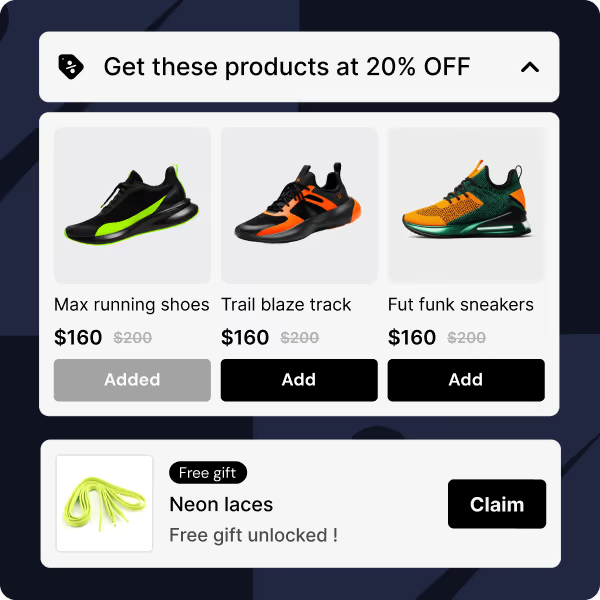
Another popular Shopify checkout app is Checkout Promotions. The app comes with the ability to leverage a collection of highly robust visibility rules that help show customers one-click post purchase upsell promotions after an order payment has been made. Some of its key features include:
Features
AI recommended and manual recommendations for upselling.
Complete branding control.
Checkout Upsell for increasing AOV.
AI recommended and manual recommendations for upselling.
Pricing
Development
Free
Monthly Plan
$99/ month
Plus Plan
$99/ month
Plus Plan
$99/ month
FAQs - Best Shopify Email Marketing App
What is the best Shopify email marketing app for scaling brands?
Klaviyo stands out as the best Shopify email marketing app for scaling brands due to its real-time Shopify event sync, predictive analytics, advanced flow builders with conditional logic, and omnichannel support including SMS and push. It excels in revenue attribution and dynamic product recommendations, making it ideal for DTC stores with growing lists.
How do Shopify email marketing apps integrate with a Shopify store?
Shopify email marketing apps install via the Shopify App Store, granting API access to sync customers, orders, products, and events like cart abandonment in real-time. They enable triggered automations such as welcome series and post-purchase flows without manual data imports.
What are the limitations of Shopify's native email marketing?
Shopify's built-in email tools offer basic automations like abandoned cart but lack advanced segmentation, predictive personalization, and detailed revenue analytics found in dedicated apps. They suit beginners but fall short for stores needing complex workflows or omnichannel campaigns.
How can I choose a cost-effective Shopify email marketing app?
Apps like Brevo use pay-per-send pricing instead of contact-based, making them economical for variable volumes, while free tiers in Omnisend or Seguno support up to 250-500 contacts with core automations. Evaluate based on your send volume, SMS needs, and scalability to avoid hidden costs.
What key features should I look for in email marketing for Shopify?
Prioritize drag-and-drop editors, behavioral segmentation, AB testing, and Shopify-native data pulls for dynamic content like product recommendations. Top apps also include deliverability tools (SPF/DKIM) and analytics tying emails to store revenue.
How important is deliverability in a Shopify email marketing app?
Deliverability is crucial for any Shopify email marketing app, as it determines if emails land in inboxes rather than spam folders. Look for apps with built-in SPF/DKIM authentication, dedicated IP options, and high sender reputation scores, like Seguno's native tools or Klaviyo's optimization features. Poor deliverability wastes send budgets and hurts revenue—monitor bounce rates and spam complaints to maintain performance.
×
Sid B
Sid is the founder of Skai Lama and The Indian Dream Podcast. He is passionate about building SaaS and talks about eCommerce Growth, 0-1 Startups, Building Businesses and Brands, and Shopify.