This guide reviews the top Shopify Page Builder Apps: PageFly, GemPages, LayoutHub, EComposer, Shogun, Beae, and Section Store.
These apps were evaluated based on ease of use, template quality, mobile editing, CRO elements, performance impact, SEO safety, pricing scalability, and how well they support real Shopify stores (landing pages, product page upgrades, and reusable theme sections).
Shopify’s native editor is limited by theme constraints, section/block restrictions, and the lack of built-in A/B testing and conversion-level page analytics, making it hard for store operators to iterate quickly or optimize pages systematically.
Page builder apps solve this by enabling faster launches, better layouts, conversion blocks, reusable sections, and (in some cases) testing and performance monitoring.
The guide concludes that PageFly stands out as the strongest all-around option because it offers a flexible editor with speed-friendly output and scalable pricing, making it the most practical Shopify Page Builder App for most Shopify stores.
Shopify page builder apps help store operators to create high-converting landing pages, product pages, and theme sections without depending fully on dev work. In this comparitvie guide, I’m covering 7 best Shopify page builder apps where I will compare them for page-building capabilities (not just templates), impact on site speed, SEO possibilities, A/B testing + analytics and of course pricing. Let’s dive right into it.
Comparison Table: Top Shopify Page Builder Apps (2026)
A/B testing + analytics: track what converts, not just what looks nice. Top Shopify Page Builder Apps
Custom code control: Liquid/CSS/JS support when you need edge cases. Top Shopify Page Builder Apps
Pricing scalability: published page limits, slot pricing, and how fast costs rise. Top Shopify Page Builder Apps
Detailed Review: Best Shopify Page Builder Apps
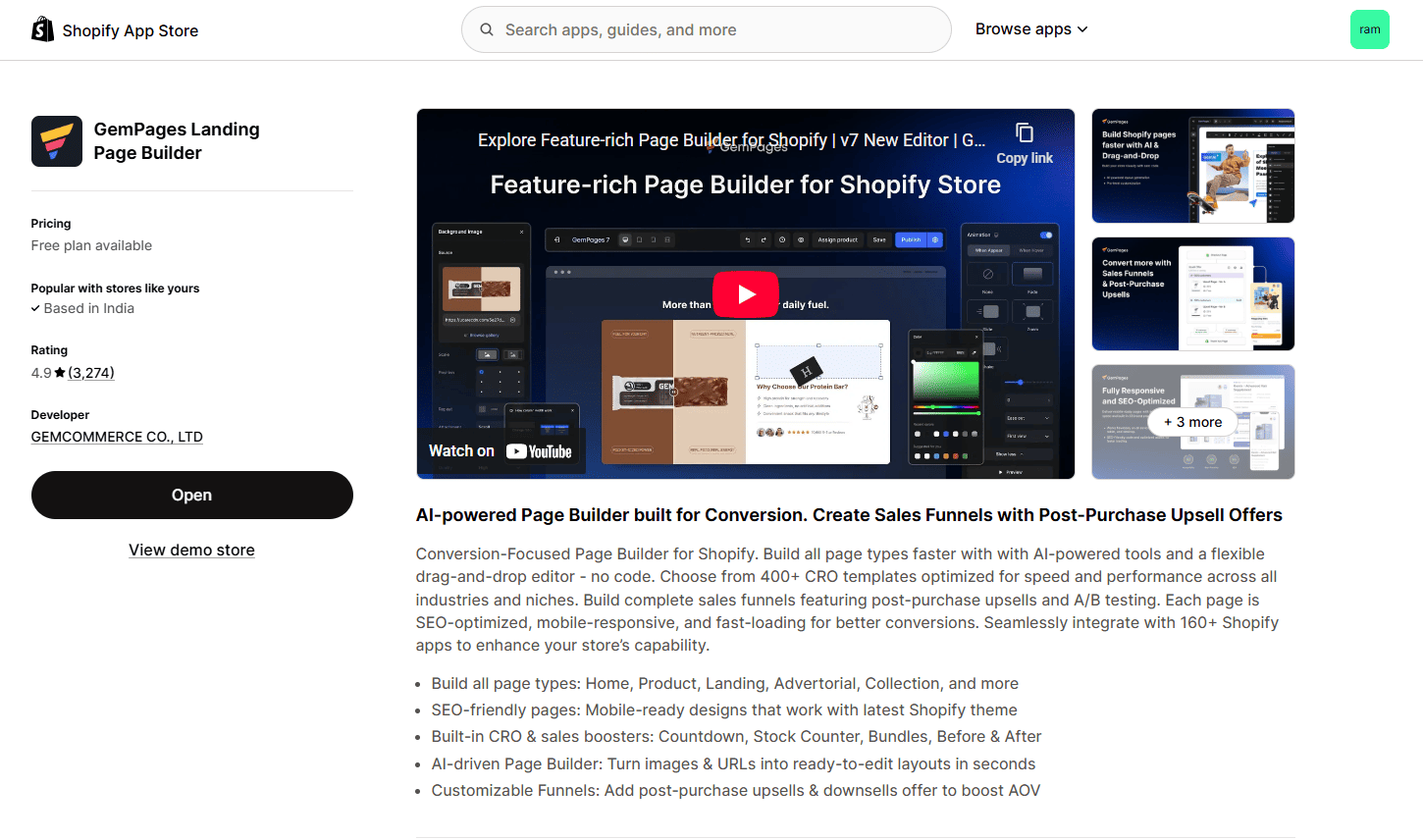
1. GemPages (Best Overall)
GemPages is a Shopify Page Builder App built around conversion-first landing pages and funnel-style selling. It’s strongest when your pages need CRO widgets, upsells, and structured flows not just pretty design.
Key Features
Drag-and-drop for landing, product, collection, blog, FAQ pages
Best option if you treat landing pages like revenue assets
Strong conversion widget library compared to basic builders
Great for campaign-focused stores
Limitations
Pages can become heavier/slower depending on how aggressively you use CRO blocks Top Shopify Page Builder Apps
Higher plans matter a lot (free tier is limited for serious funnel work)
Pricing
Free: $0/month (limited published pages)
Build: $29/month
Optimize: $59/month
Enterprise: $199/month
Ideal For
Store operators who run paid traffic funnels and want a CRO-heavy page builder app.
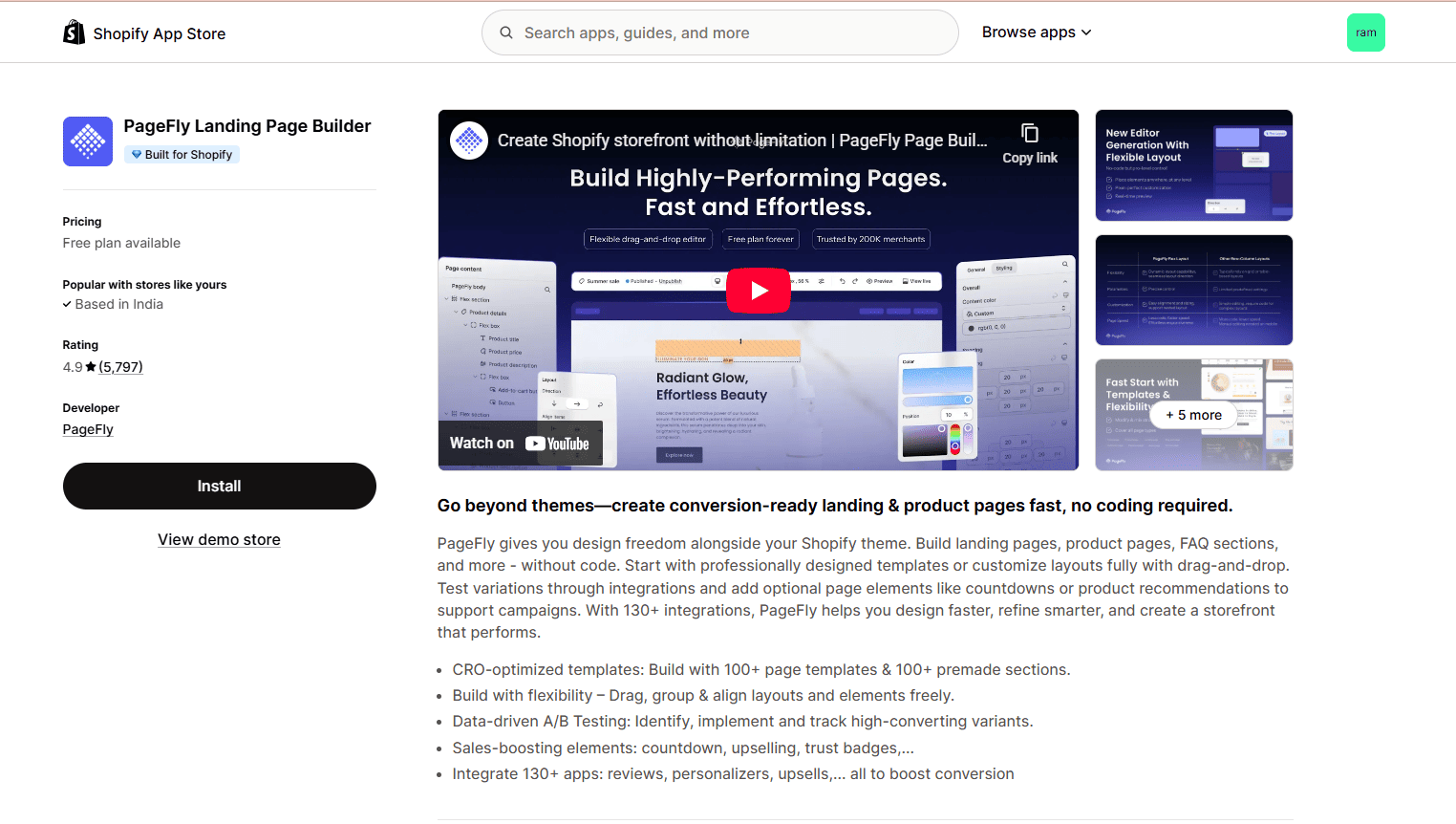
2. PageFly (Most Flexible)
PageFly is a Shopify page builder app that focuses on flexibility without becoming bloated. It supports most page types, offers strong layout control with a grid-based editor, and is known for speed-friendly output.
Key Features
Build landing, product, collection, blog, FAQ, and theme-section pages
350+ elements + responsive controls
100+ templates and CRO-ready sections
Built-in A/B testing + analytics
Deep integrations (130+ apps)
Pros
Good balance of design freedom + performance
Easy to use by most Shopify store operators (not just designers)
Flexible enough for both PDP upgrades and landing pages
Limitations
Slot-based pricing can feel restrictive as you publish more campaigns
Like most builders, advanced layouts require some learning time
Pricing
Free: $0/month (limited published slots)
Pay as you go: starts around $18/month
Unlimited: typically $99/month
Ideal For
Store operators who want the safest “do-it-all” Shopify Page Builder App without paying enterprise pricing.
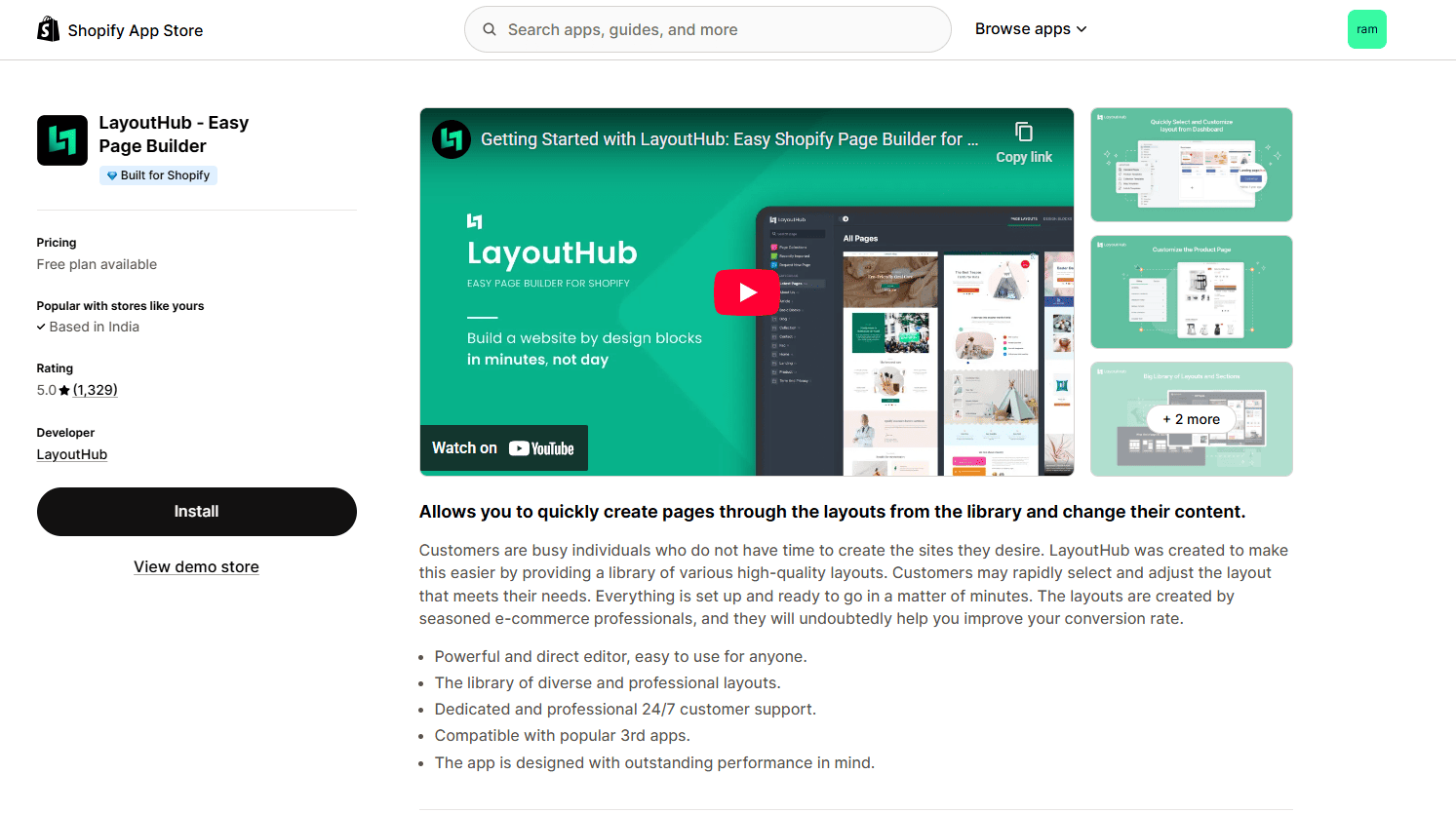
3. LayoutHub (Best for Beginners + Fast Templates)
LayoutHub is a Shopify Page Builder App built for speed-to-launch. It’s template-first, which makes it ideal if you want pages to be live quickly without overthinking layout systems.
Key Features
Pre-built templates for landing/home/product/collection pages
Simple drag-and-drop editor with real-time preview
Responsive templates optimized for mobile shoppers
Pros
Best “launch fast” option
Easy for non-designers
Low-risk pricing for small stores
Limitations
You can outgrow it if you want advanced CRO workflows
Less suited to complex, multi-variant landing page testing
Pricing
Free: $0/month
Basic: $14.99/month
Pro: $29.99/month
Premium: $59.99/month
Ideal For
New Shopify store operators who want an easy, template-driven Shopify Page Builder App.
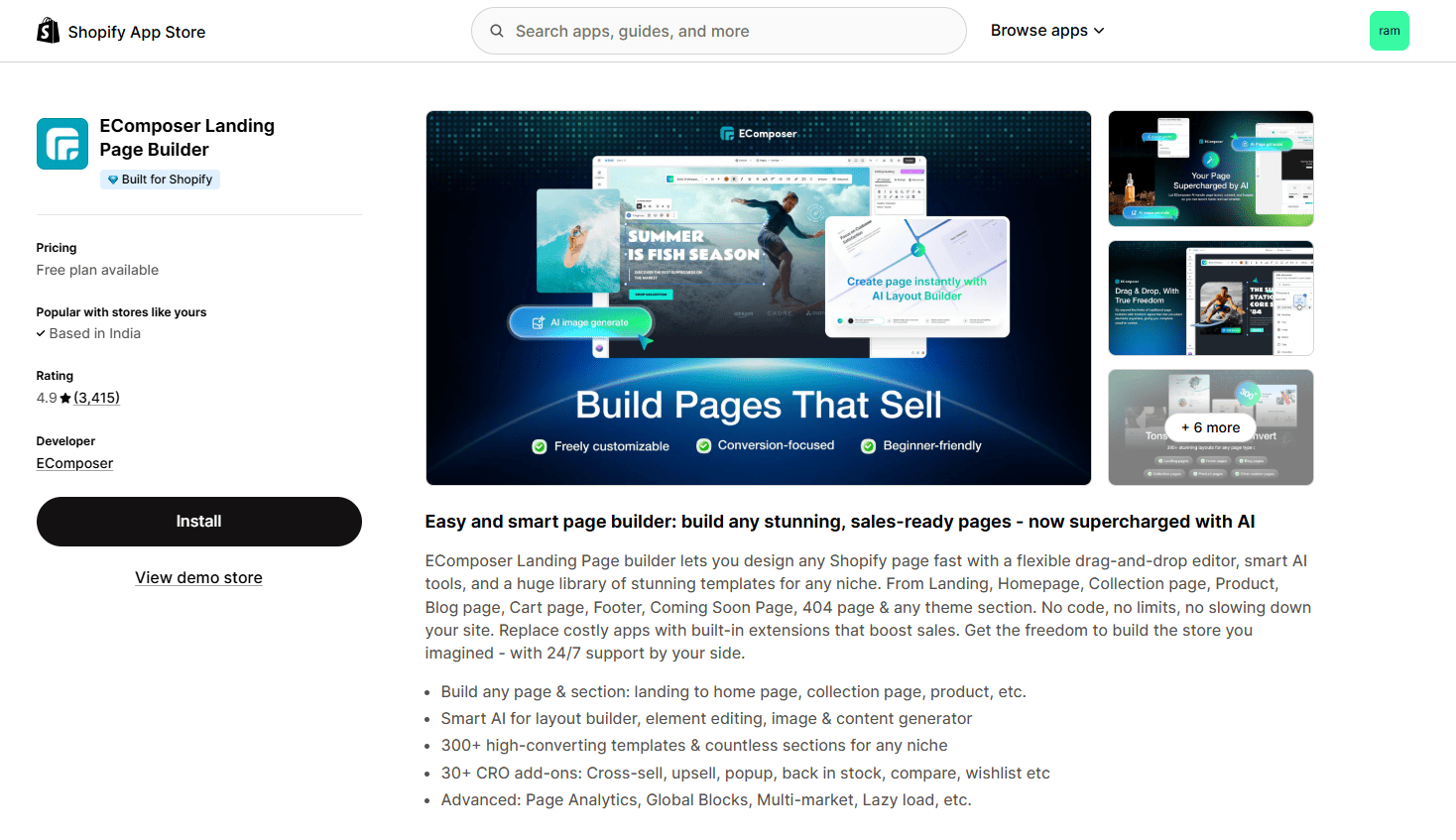
4. EComposer (Best “All-in-One” Builder)
EComposer is a Shopify Page Builder App designed for store operators who want one builder that also brings add-ons like comparison blocks, upsells, and feature extensions without stacking many apps.
AI tools + performance-focused features like lazy loading
Pros
Strong value if you want builder + CRO add-ons together
Good for store operators who don’t want 10 extra apps
Flexible enough for most page types
Limitations
Feature-dense interface can slow down adaptation
Adding too many extensions can still impact performance
Pricing
Free plan available
Paid tiers commonly include $19/month, $39/month, and $99/month
Ideal For
Stores that want a feature-rich page builder app that replaces multiple CRO tools.
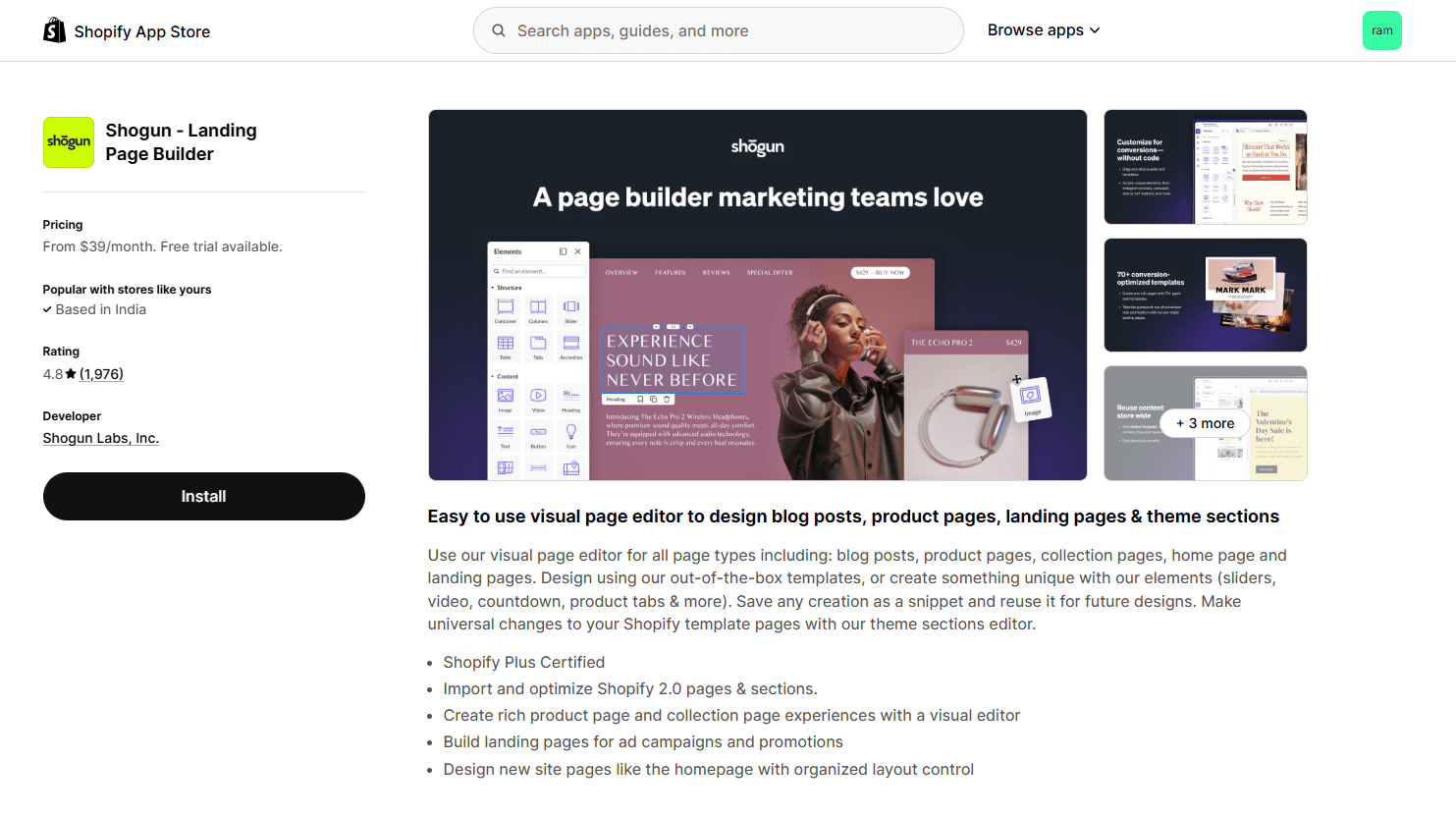
5. Shogun (Best for Enterprise Teams)
Shogun is aShopify Page Builder App built for teams that want governance, advanced workflows, content systems, and structured testing. It’s powerful—but you need to actually use the enterprise features to justify the cost.
Best fit for systematic experimentation and governance
Mature platform vs “template-only builders”
Limitations
Expensive for smaller Shopify stores
Overkill if your store doesn’t run real testing cycles
Pricing
Build: $39/month
Grow: $199/month
Advanced: $499/month
Includes a 10-day free trial
Ideal For
Larger brands that want a premium Shopify page builder app for scaling content operations.
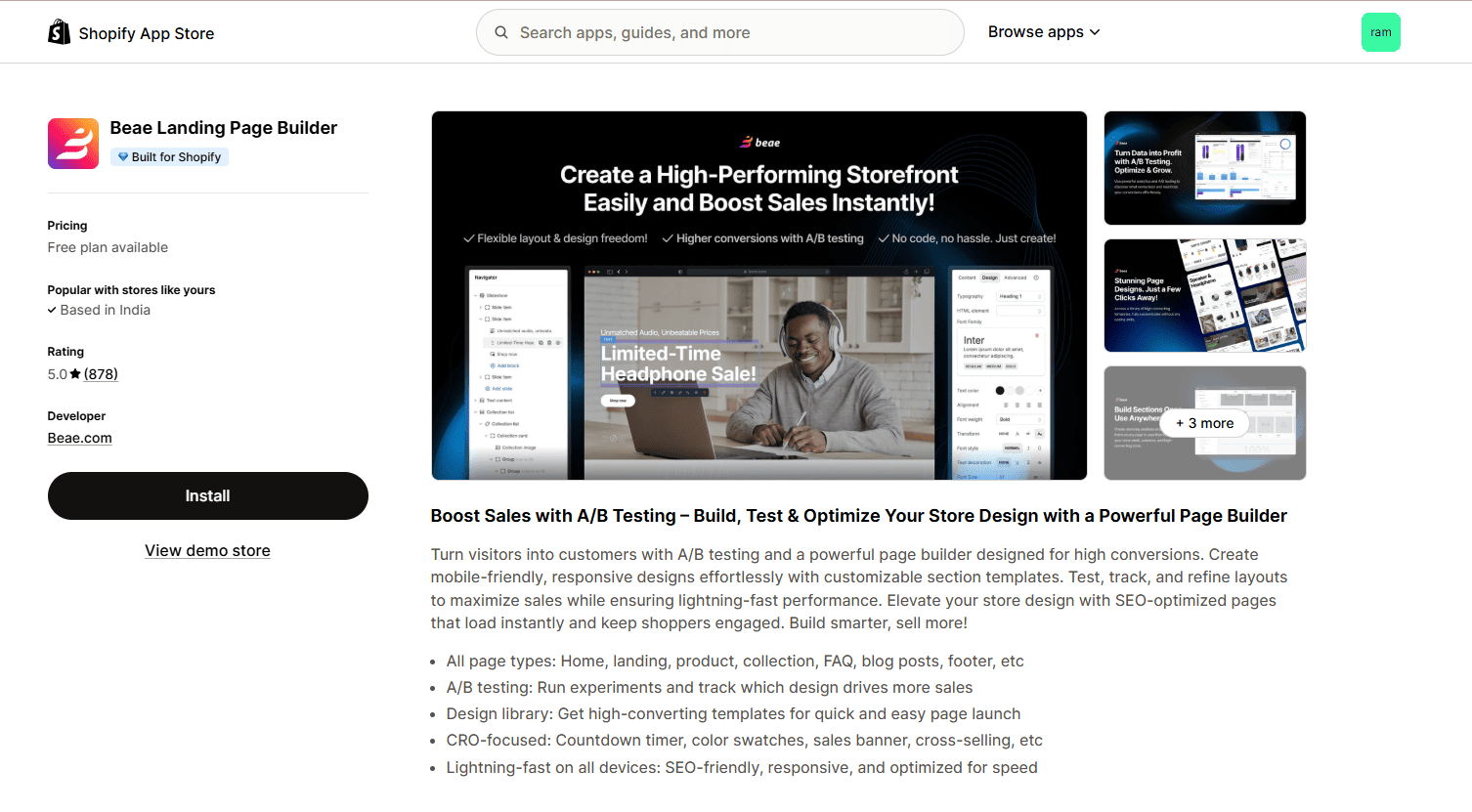
6. Beae (Best for Speed)
Overview
Beae is a Shopify page builder app focused on fast pages and store operators-friendly performance monitoring. It’s a practical pick if you want a builder but don’t want to risk heavy site slowdown.
Key Features
A/B testing + Google Analytics integration
Page health auditing for SEO + performance
Integrates with Klaviyo, Yotpo, Recharge, and more
Pros
A performance-first approach is store operators-friendly
Good template range without feeling bloated
Useful for paid landing page iteration
Limitations
Smaller ecosystem than PageFly/GemPages
Less ideal if you want deep funnel tooling built-in
Pricing
Free: $0/month
Pay as you go: $19.99/month
Enterprise: $149.99/month
Ideal For
Store operators who need a fast, stable Shopify page builder app with performance guardrails.
7. Section Store (Best Lightweight Option)
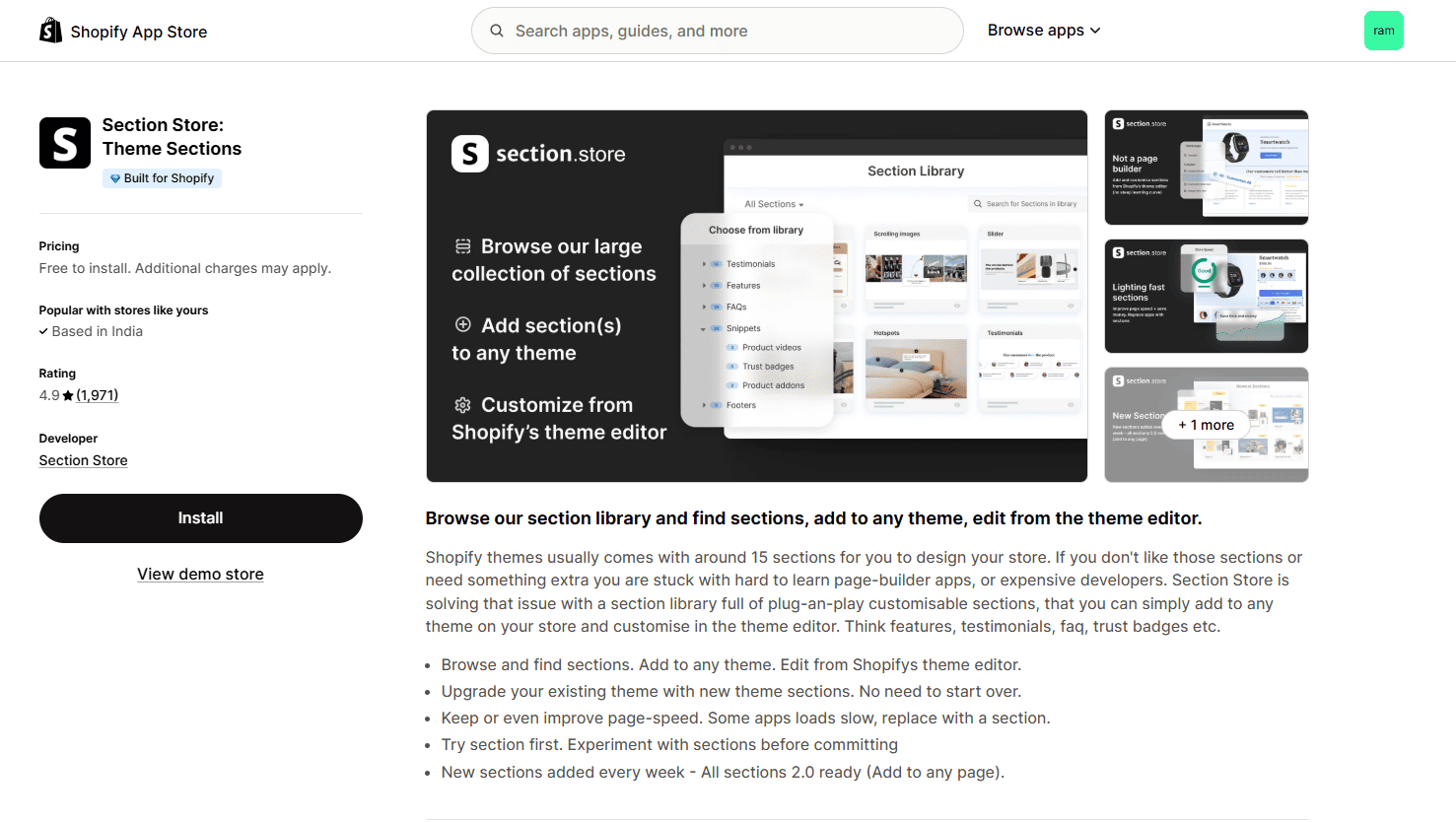
Section Store isn’t a traditional Shopify Page Builder App, it’s a section app. But for many Shopify store operators, it’s the smarter move: upgrade your theme without committing to a monthly builder subscription.
Key Features
700+ plug-and-play Shopify 2.0 sections
Add sections directly inside Shopify theme editor
Lightweight and performance-friendly
Pros
No subscriptions
Minimal performance risk
Perfect for “theme enhancement” upgrades
Limitations
Not built for landing page funnels or deep layouts
No A/B testing or analytics like full builders
Pricing
Free to install
Most sections are one-time $0–$9
Ideal For
Store operators who want “better sections” without adopting a full Shopify Page Builder App.
Limitations of Shopify Native Page Building
Visibility limitations: No built-in conversion tracking at the page-builder level.
Automation gaps: No native A/B testing workflow for page variants.
Logic constraints: Page layouts are constrained by theme structure + section limits.
Segmentation limitations: No visitor-based personalization without extra tooling.
Analytics gaps: Shopify doesn’t natively tell you which page layout version converts better.
Conclusion
Shopify page builder apps like PageFly, GemPages, and EComposer empower store operators to overcome native limitations, launching high-converting pages with CRO elements, A/B testing, and theme reusability that drive AOV growth. PageFly emerges as the top Shopify page builder app for its balance of speed, flexibility, and scalability, fitting most stores from startups to scaling brands without enterprise costs.
Test one app matching your needs, such as funnels for ad-heavy stores or templates for beginners, over 30 days, measuring metrics like page load time and conversion uplift to confirm ROI before full commitment. This data-driven approach ensures your choice maximizes revenue in 2026's competitive ecommerce landscape.
Hurrify customers to buy within a given timeframe with a sales countdown timer & improve conversions
Another popular Shopify checkout app is Checkout Promotions. The app comes with the ability to leverage a collection of highly robust visibility rules that help show customers one-click post purchase upsell promotions after an order payment has been made. Some of its key features include:
Features
AI recommended and manual recommendations for upselling.
Complete branding control.
Checkout Upsell for increasing AOV.
AI recommended and manual recommendations for upselling.
Pricing
Development
Free
Monthly Plan
$99/ month
Plus Plan
$99/ month
Plus Plan
$99/ month
FAQs- Top Shopify Page Builder App
What are Shopify page builder apps?
What types of pages can Shopify page builder apps create?
Do Shopify page builder apps affect site speed and SEO?
Can I use multiple Shopify page builder apps on one store?
Which Shopify page builder app is best for beginners?
How does pricing work for Shopify page builder apps?
Sid B
Sid is the founder of Skai Lama and The Indian Dream Podcast. He is passionate about building SaaS and talks about eCommerce Growth, 0-1 Startups, Building Businesses and Brands, and Shopify.

.svg)
.svg)

.svg)
.svg)


.jpg)
.svg)









.svg)