.svg)
.svg)

.svg)
.svg)


%20(1).jpg)
.jpg)

Our Apps Have Driven
5X AOV | 2X Conversions | $30M+ Additional Revenue
5X AOV | 2X Conversions | $30M+ Additional Revenue
.svg)


5.0 (3000+ Reviews)


Shopify Apps





.svg)

Store credit systems have become an essential part of Shopify’s retention and refund strategy. Instead of refunding customers through external payment gateways, store credit allows merchants to keep revenue within the store ecosystem while enhancing customer loyalty. In 2025, as refund rates and customer acquisition costs continue to rise, store credit apps are becoming a smarter way for merchants to encourage repeat purchases, manage returns, and build long-term trust.
A well-chosen store credit app helps brands streamline their post-purchase experience. Customers can easily use credits at checkout for future orders, improving satisfaction while reducing churn. Whether you are running BFCM campaigns or handling large-scale returns, a store credit solution ensures you retain sales and create opportunities for re-engagement.
The right store credit app can help you manage refunds, loyalty programs, and customer incentives effectively. Below are the top-performing Shopify apps that make issuing and managing store credits simple and efficient.

.webp)
Rating

4.3
(
20
)
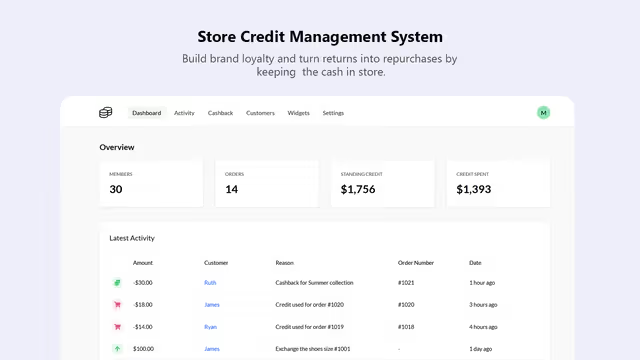
CreditsYard helps Shopify stores replace refunds with in-store credits. It supports Shopify POS and Flow, making it ideal for both online and retail operations.
Features

Issue store credits instantly for refunds or rewards
Bulk import and export credits via CSV or API
POS and multi-store compatible
Cashback and loyalty point options built-in
Customer-friendly credit wallet integrated with store themes
Pricing
Free trial available; paid plans start at $29/month

Rating
3.8
(
16
)
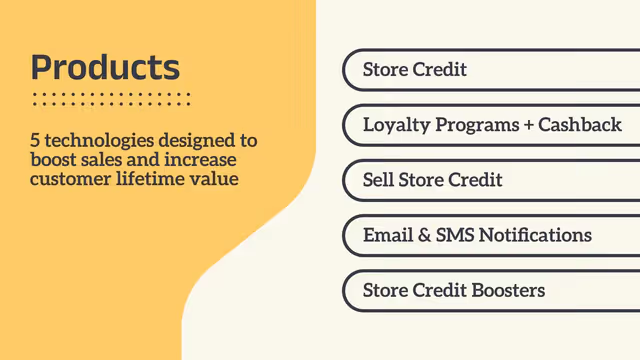
Pabloo offers store credit, cashback, and referral solutions within a single platform. It is designed to help merchants boost repeat purchases and reward loyal customers.
Features
Convert refunds into store credits
Allow customers to top up wallet balance
Loyalty and referral program integration
Multi-currency support
Customizable store credit display
Pricing
Free plan available; paid plans from $59/month


Rating
4.2
(
106
)
FreshCredit allows merchants to offer true store credit instead of discount codes. It provides a seamless experience for customers to use credit directly at checkout.
Features
Real-time store credit balance tracking
Email and SMS notifications for credit updates
Bulk import and export credit data
Custom credit widget matching store theme
Smooth checkout integration
Pricing
Paid plans start at $15/month


Rating
4.0
(
25
)
Rewardify provides loyalty and credit programs in one platform, suitable for online and POS merchants. It enables brands to offer flexible customer incentives and internal reward systems.
Features
Issue credits for returns, loyalty, or staff programs
Create VIP and employee reward programs
Integrates with Shopify POS and online stores
Custom credit rules based on purchase behavior
Supports multi-channel redemption
Pricing
Paid plans start at $9.95/month; 14-day free trial


Rating
3.5
(
3
)
MP Store Credit is a simple and straightforward solution to manage store credits. It’s best for small stores looking for a lightweight credit management tool.
Features
Issue manual credits to customer accounts
Easy dashboard for managing credits
Quick checkout credit application
Minimal setup required
Basic reporting and usage tracking
Pricing
Free plan available; paid plan starts around $15/month
When selecting a store credit app for your Shopify store, it’s important to evaluate both functionality and usability. The right app should simplify refund management while encouraging repeat purchases. Below are the key features that define a strong store credit system.
Choose an app that allows you to issue refunds directly as store credit instead of cash. This ensures the revenue stays within your store and drives future purchases.
A unified credit system across both online and physical stores helps you manage customer balances seamlessly. This is vital for omnichannel retailers who use Shopify POS.
If you sell globally or run multiple stores, look for apps that support different currencies and sync credits across all stores.
Many advanced apps integrate loyalty rewards, referrals, or cashback programs with store credit. This increases engagement and builds long-term customer value.
A visible credit balance and an easy redemption process encourage customers to reuse their credits quickly. Apps like CreditsYard and Pabloo offer branded credit dashboards that improve the user experience.
Automated credit issuing, expiry notifications, and detailed analytics help merchants track and optimize how credits are used.
The goal is to choose an app that not only manages credits but also supports your store’s retention strategy — helping turn refunds into future sales opportunities.
Store credit becomes more powerful when combined with other Shopify optimization tools that improve the shopping experience and boost average order value. Integrating credit systems with tools like Easy Bundles and Checkout Wiz helps merchants unlock higher conversions and repeat purchases.
By combining store credit with Easy Bundles, merchants can encourage customers to redeem credits on bundle offers. This approach not only increases order value but also moves inventory faster. Credits can serve as an incentive for customers to upgrade to higher-value bundles or try new product sets.
When customers have store credit available, it’s crucial that redemption is smooth during checkout. Checkout Wiz ensures a faster, more intuitive checkout process, helping reduce cart abandonment. Integrating store credit with an optimized checkout flow gives customers a reason to complete their purchase without friction.
Store credit apps can work alongside loyalty tools or upsell systems to reward repeat buyers. Customers who earn credits from previous purchases can easily apply them to upsell offers or exclusive discounts, driving retention.
Modern Shopify apps like CreditsYard and Pabloo sync seamlessly with Shopify Flow, allowing merchants to automate actions such as issuing credit after a successful return or after a certain purchase milestone. This ensures consistency across systems without manual work.
During high-volume sales events like BFCM, integrating store credit with bundling and checkout tools allows merchants to recover potential refunds quickly and retain cash flow. Customers can be encouraged to use store credit on bundled offers or flash deals, creating a continuous purchase cycle.
Store credit integrations ensure every step — from refunds to checkout — stays connected, reducing revenue loss and enhancing customer engagement.
Store credit is one of the most underused yet powerful tools in eCommerce. When applied strategically, it not only retains revenue but also builds customer loyalty and increases purchase frequency. Here are a few best practices to make the most of your store credit system on Shopify.
Use store credit as a reward during high-traffic periods like BFCM. For example, offer a fixed credit value on every purchase or for specific bundle deals. This encourages repeat visits even after the sale ends and helps sustain post-sale momentum.
Instead of offering cash refunds, convert returns into store credit through apps like CreditsYard or FreshCredit. This simple switch helps you retain the sale value and gives customers a reason to return for another purchase.
Set up automated email or SMS notifications whenever a credit is issued or about to expire. Regular communication keeps the credit visible in customers’ minds, increasing the chance they’ll use it quickly.
Pair your credit system with upselling tools and Easy Bundles to maximize order value. For instance, when customers redeem store credit, show relevant bundle options or volume discounts at checkout.
A complicated redemption process can discourage usage. Integrating your store credit app with Checkout Wiz ensures that customers can easily view and apply credits during checkout without extra steps.
Monitor how often credits are issued, redeemed, and expired. Use this data to refine your policies — for instance, adjusting expiry durations or offering bonus credits to inactive customers.
Add a simple explanation on your refund or rewards page about how store credits work and how they can be used. Transparency builds trust and encourages repeat usage.
When used strategically, store credit becomes more than a refund mechanism — it turns one-time shoppers into long-term customers and maximizes profitability across campaigns.
Store credit is no longer just an alternative to refunds — it’s a strategic retention tool that strengthens customer relationships and preserves store revenue. By offering credits instead of direct refunds, Shopify merchants can transform post-purchase interactions into future sales opportunities.
With apps like CreditsYard, Pabloo, and FreshCredit, issuing and managing store credits has become seamless. These tools integrate smoothly with Shopify POS, loyalty systems, and other growth tools such as Easy Bundles and Checkout Wiz, ensuring every touchpoint in the buying journey supports retention and upselling.
As customer acquisition costs continue to rise in 2025, keeping existing customers engaged is more valuable than ever. Implementing a smart store credit strategy allows your brand to reward loyalty, recover refund losses, and boost repeat purchase rates — all while delivering a better experience for your customers.


.avif)