Bundles Grew Into a Meaningful Share of the Business
Since setting up the bundle, the brand has generated $7.7 million in bundle revenue across 80000+ bundle orders. For instance, July 2026 shows how that plays out in a single recent month: $400k+ in bundle revenue across 4000+ bundle orders. Against store GMV of $1,902,542, bundles contributed 23.2% of revenue that month, and close to one in six store orders contained a bundle.
The bundle did not replace the existing catalogue. It grew alongside individual product purchasing until it accounted for almost a quarter of monthly store revenue.
Average Order Value Became an Important Part of the Result
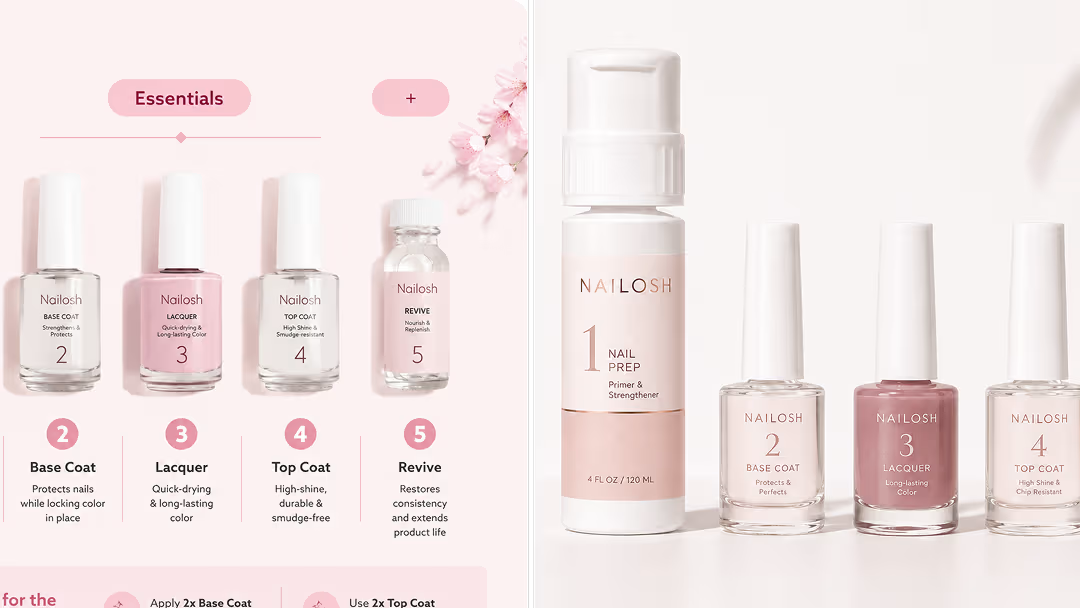
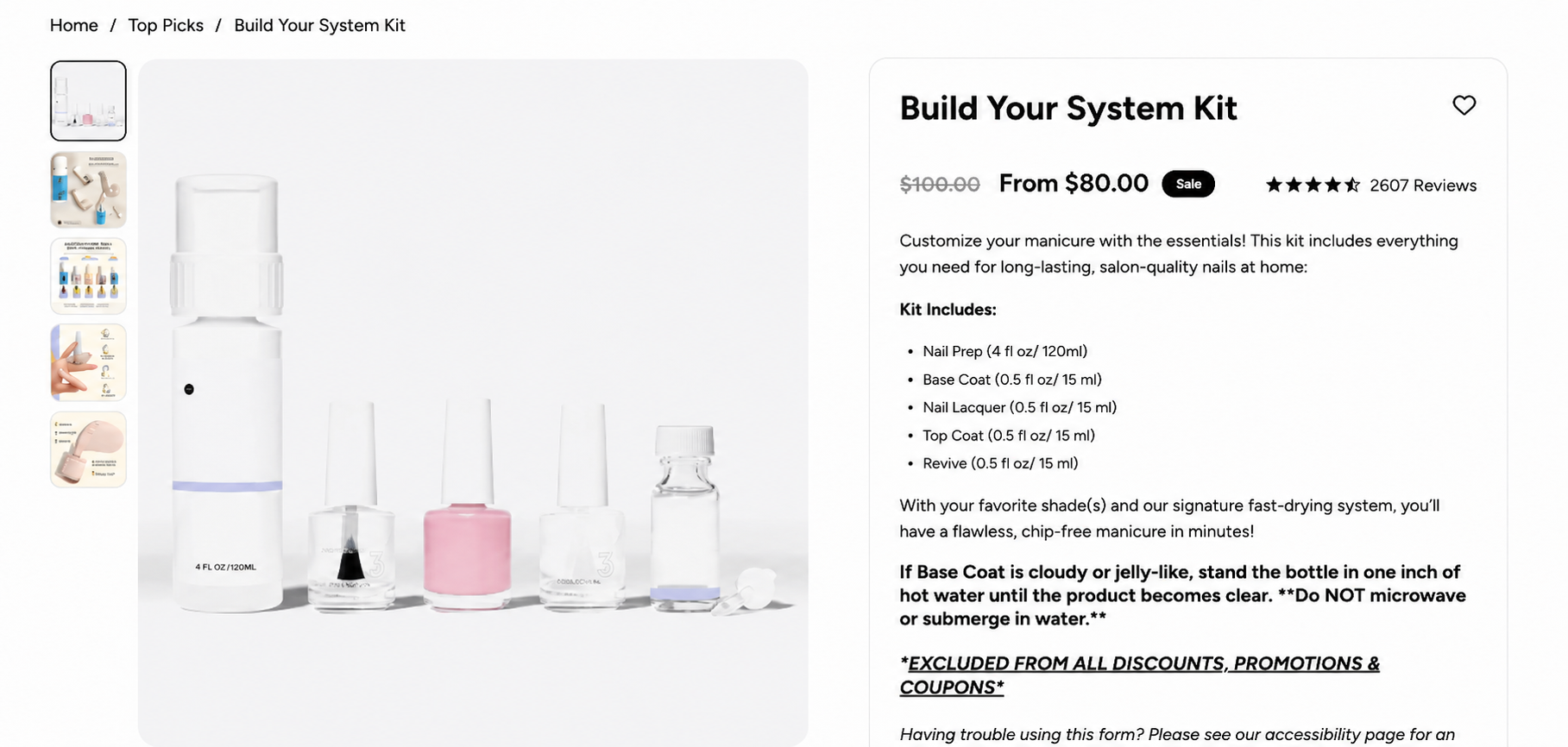
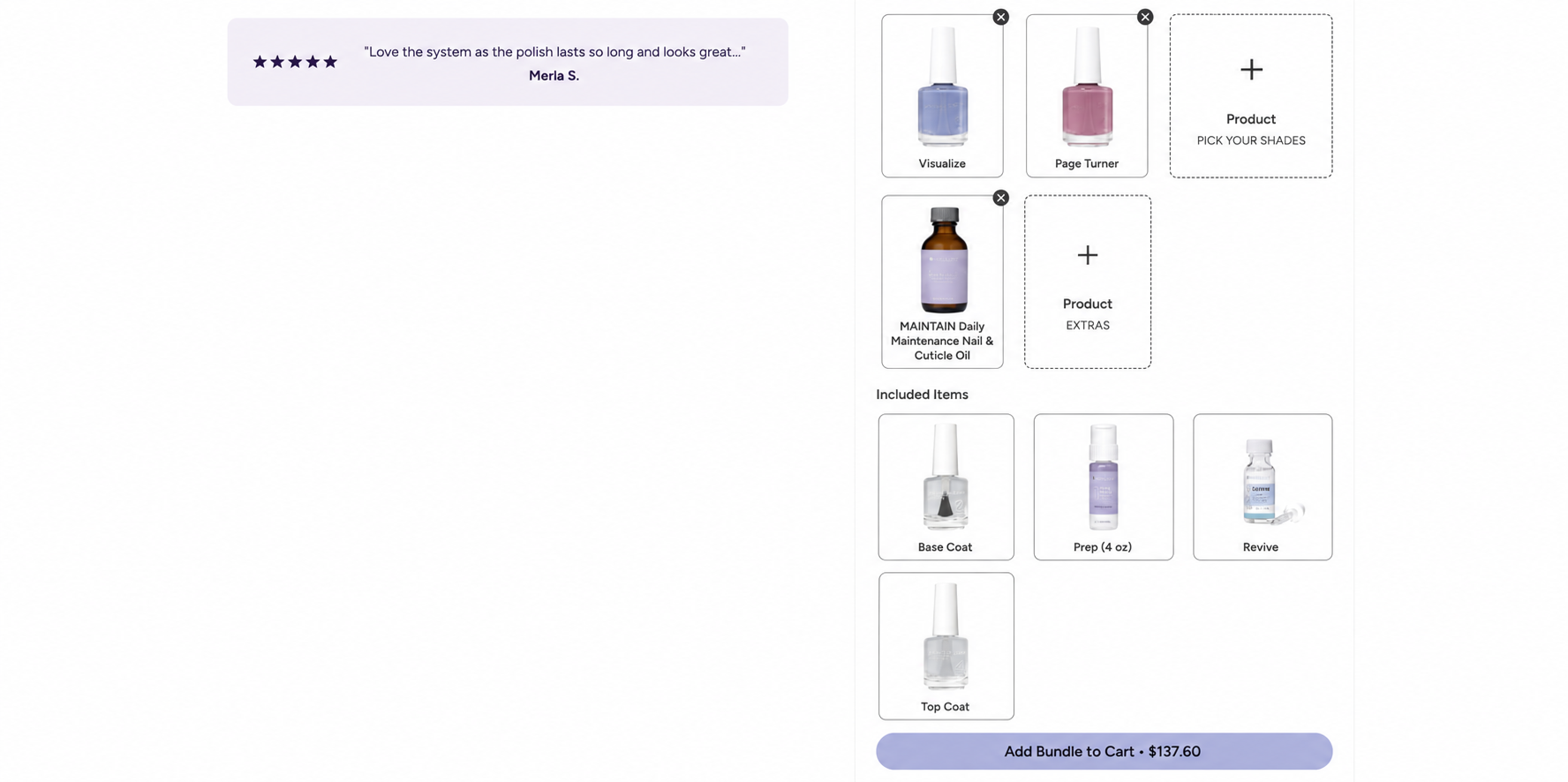
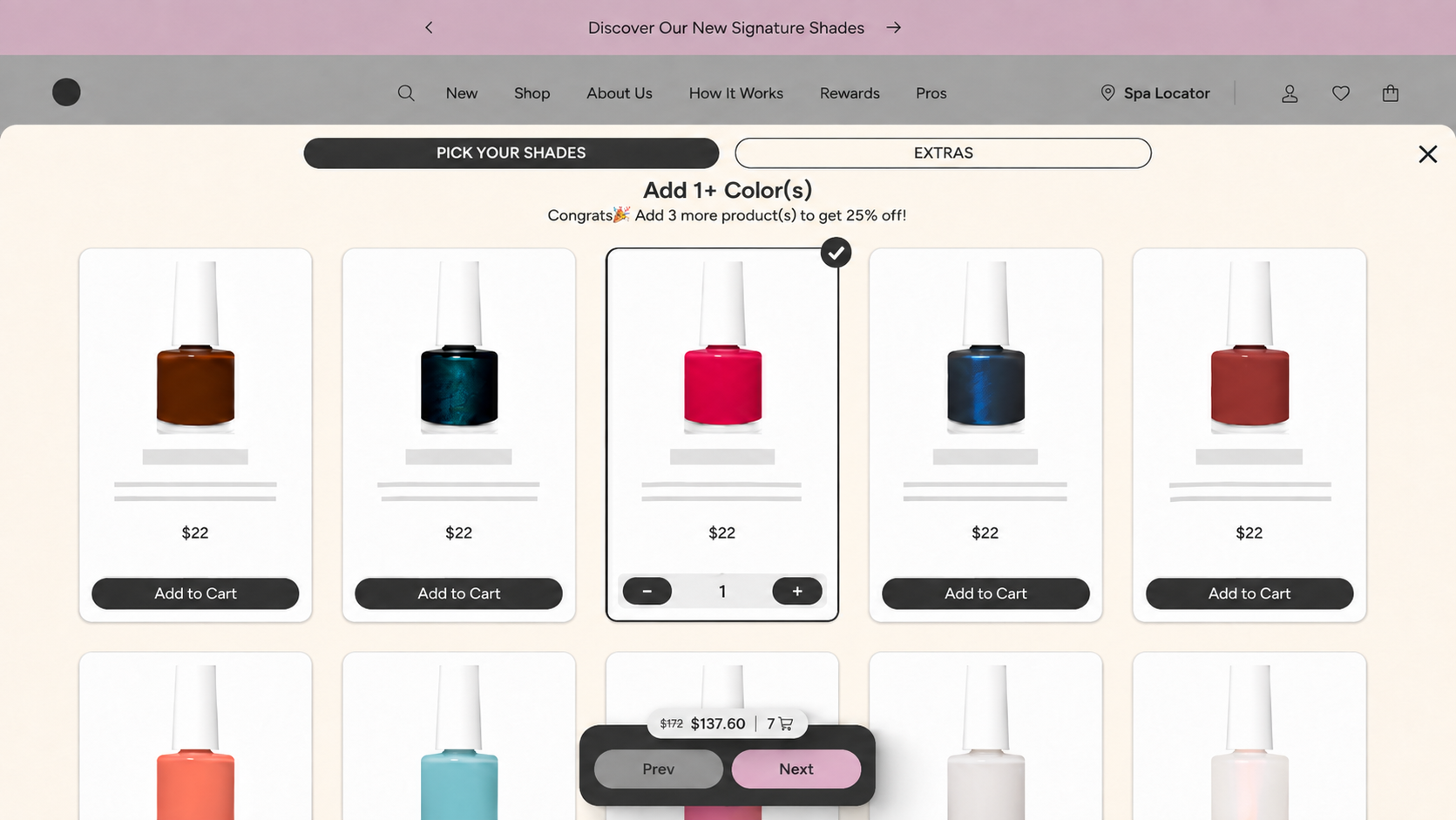
The system kit was designed to let shoppers begin with the complete routine and then expand the purchase through additional colour choices. Average order value is the clearest way to see whether that happened.
- Across the June to September 2025 measurement period, bundle AOV was $84.63.
- Lifetime bundle AOV stands at $95.86.
- In July 2026, bundle AOV reached $105.63, which is 24.8% above the mid-2025 level.
Bundle view-to-order conversion barely moved, from 4.13% across the programme’s lifetime to 4.21% in July 2026. That suggests the growth came less from a major conversion-rate jump and more from higher-value bundle orders.
One Customizable System Kit Generated Nearly 60% of Bundle Revenue
In July 2026, the customizable system kit generated $262,893, accounting for 59.6% of all bundle revenue that month.
That concentration makes the system kit particularly useful to examine. The merchant had several bundle experiences live, but customers responded much more strongly to the one built around a clear buying occasion: assembling the complete manicure system while retaining control over colour.
The result also reinforces the strategy behind the build. The value came from designing a bundle around a specific customer need and giving that bundle a clear role within the existing catalogue.
What Other Shopify Merchants Can Learn From This Bundle Strategy
Look for Customers Buying an Outcome, Not Just a Product
The same catalogue often serves very different buying occasions.
Some customers arrive knowing exactly what they need: a replacement, a refill, or one specific item. Others are trying to achieve a result that takes several products working together, and they have to work out the combination themselves.
That second group is where bundling earns its place.
Look for moments where customers are assembling an outcome product by product. If the same items repeatedly appear together to create one experience, there may be an opportunity to make that complete purchase easier to understand and buy.
Keep Functional Products Fixed and Preference Products Customizable
Not every component of a bundle needs the same flexibility.
Some products determine whether the result works. Others are there because the customer has a preference. The distinction is often easy to spot: functional components are the ones a merchant would recommend to anyone buying, while preference components are the ones where the honest answer is "whichever you like," such as colour, flavour, scent, size or style.
Fix the first. Open the second.
This gives the merchant control over whether the outcome succeeds while giving the shopper freedom where choice actually adds something. It also means the bundle does not have to be built as a single rigid package to stay coherent.
The framework will not apply equally to every category. Some bundles are almost entirely preference-led, such as a snack box or candle set, while others offer little meaningful variation at all. The split is most useful when a catalogue contains both functional and preference-led products.
Add the Bundle to the Catalogue You Already Have
A customizable bundle is an additional buying path, not a replacement for one.
The underlying products can continue serving replenishment, standalone purchases and customers who know precisely what they want. The bundle simply offers another way to assemble those same products for a different occasion.
Easy Bundle Builder can populate customizable sections from individual products or from Shopify inventory. For merchants with changing assortments, that matters. New products can enter the bundle through normal merchandising rather than requiring the bundle itself to be rebuilt.
Instead of restructuring a catalogue around every possible combination, a merchant can add a new purchasing experience over the catalogue that already exists.
Put the Bundle Where the Buying Problem Happens
Where a bundle lives should follow what the customer needs before they are ready to build it.
If customers already understand the category and mainly need an easier way to buy the complete set, a product-page bundle fits naturally into collections, search and regular browsing. It meets them where they already are.
If customers first need to understand which products belong together, or why, a dedicated landing page gives more room for explanation, comparison and guidance.
The placement is a decision about the customer's starting knowledge, not about where the bundle looks best.
What to Measure Once the Bundle Is Live
Easy Bundle Builder surfaces several metrics that show how a bundle is performing:
- Bundle revenue and its share of store revenue
- Bundle AOV compared with non-bundle AOV
- Bundle conversion compared with overall store conversion
- Performance across different bundle types
- Average units selected within an individual bundle
For a customizable bundle, average units selected is particularly useful. It shows whether shoppers are using the flexibility to expand their purchase beyond the starting configuration, which helps merchants understand how customers are actually using the customizable experience.
Together, these metrics answer more useful questions than revenue alone. Are customers building larger orders? How significant are bundles becoming within the store? Which use cases are customers responding to most strongly?



.webp)


.svg)


.svg)









.svg)