.svg)
.svg)

.svg)
.svg)



Our Apps Have Driven
5X AOV | 2X Conversions | $30M+ Additional Revenue
5X AOV | 2X Conversions | $30M+ Additional Revenue
.svg)


5.0 (3000+ Reviews)


Shopify Apps




.svg)

14 Black Friday promotion ideas that actually work: Volume discounts, BOGO, bundles, tiered offers, mystery deals, VIP codes, and referral promos are the highest-converting tactics for BFCM. Choose based on your AOV goal and margin, not just how deep the discount is.
Deeper discounts do not mean higher conversions: Research shows Gen Z shoppers prefer 20%–35% off. Sitewide blowouts can hurt brand perception and margin. Match your discount depth to your category benchmarks.
Segment before you discount: New customers, returning buyers, and VIP spenders each respond to different Black Friday promotion ideas. One-size-fits-all sitewide discounts leave conversion on the table.
Stack tactics to lift AOV: Pair a volume discount with a progress bar, or a bundle offer with a checkout-exclusive deal. Layering two Black Friday promotion ideas in the same campaign consistently outperforms single-tactic approaches.
Plan post-BFCM retention from day one: Subscription discounts, referral codes, and bundle offers during BFCM seed long-term loyalty, not just one-time revenue.
Black Friday 2025 broke records again. US consumers spent $11.8 billion online on Black Friday, and Shopify merchants alone generated $6.2 billion in global sales, a 25% year-over-year increase. At its peak, $12.5 million passed through online shopping carts every minute. Cyber Monday was projected to be even bigger, with sales expected to reach $14.2 billion.
The numbers are significant, but they also tell you something more important: every ecommerce store is competing for the same wallet. The brands that win BFCM are not the ones offering the deepest discounts. They are the ones with the most deliberately designed promotion strategy. This guide covers 14 Black Friday promotion ideas, what makes each one work, and how to structure them for your store type, your margin, and your AOV goal.
Before choosing your Black Friday promotion ideas, you need a solid discount pricing strategy. Answer these three questions to define your primary goal:
What is your primary goal?
Is it acquiring new customers, or increasing your store AOV from existing buyers, or is it to retain customers post-BFCM to build customer loyalty?
Each of these goals require a different promotional structure. For example,
What is your margin floor?
As per Klaviyo, higher discounts do not mean higher conversion rates. The average discount rate across industries was 28% on Black Friday 2025.
According to Queue-it, a 20–29% discount worked well for home and garden, jewelry, hardware, sporting goods, and home improvement. Deep discounts worked for food and beverages (80–89%), toys (60–69%), and electronics (50–59%). Match your discount depth to your category, not your competitor's headline number.
Who are you targeting?
When it comes to ecommerce discount ideas, percentage discounts remain the most preferred promotion type, followed by BOGO, as per the 2024 BFCM Consumer Trends Report. Gen Z shoppers prefer discounts in the 20–35% range. Sitewide offers drive traffic but treats all customers the same. Segmented offers convert better.
If you are a Shopify Merchant, these four tactics will help you directly increase your average order value by giving your customers a structured incentive to spend more per transaction.
Volume discounts incentivize customers to buy more units in a single purchase, growing AOV while moving inventory. According to Adobe Digital Insights, volume discounts also increase customer loyalty: there is a 20% higher likelihood of repeat purchases from customers who took a brand up on this offer.
Note that volume discounts reward quantity of items purchased, while tiered discounts reward total spend. Both serve AOV, but the mechanism differs.
Setting up your volume discount for BFCM:
There are two types of volume discounts you can consider for BFCM:
Read our blog on volume discount strategies here.
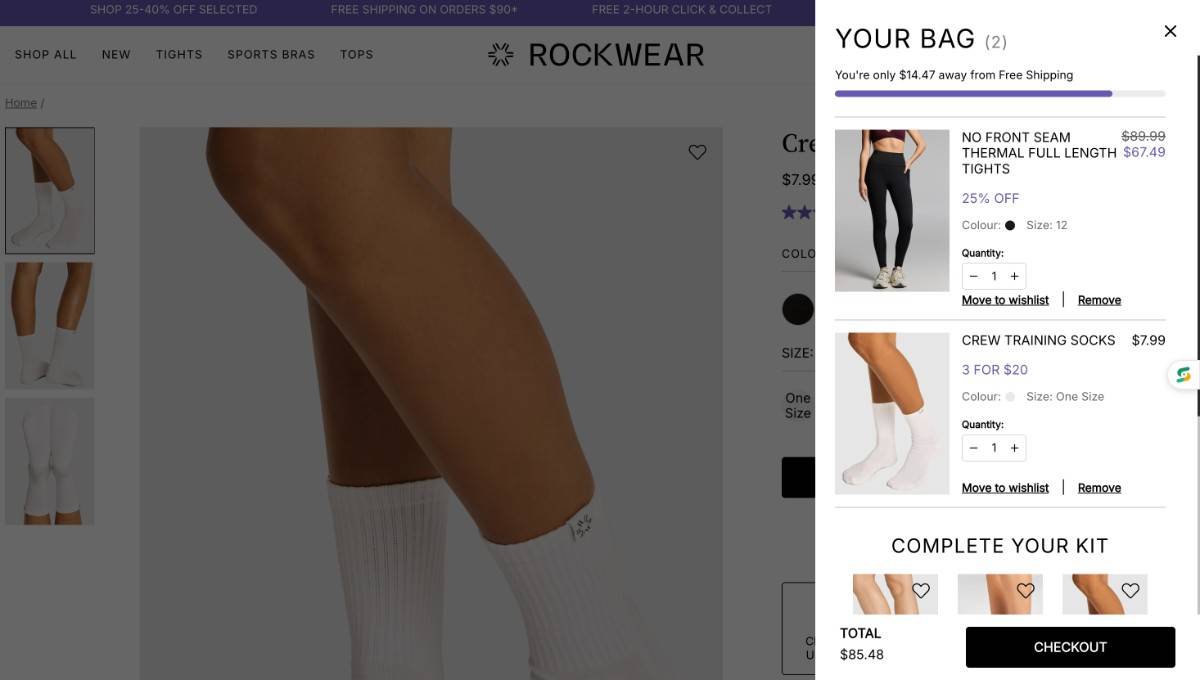
Volume Discount Example: Rockwear
Australian activewear brand Rockwear executes one of the most effective Black Friday promotion ideas by offering a simple volume discount on their lower-ticket items. For example, in their cart drawer, they feature a highly visible "3 FOR $20" callout on training socks.
By placing a frictionless quantity selector right next to the promotional tag, they instantly gamify the experience. This specific ecommerce discount idea encourages shoppers to easily triple their accessory purchase, effectively helping to increase Rockwear’s Average Order Value (AOV).
Have you ever run multiple Black Friday offers and wondered how to present them without confusing customers?
The goal-based discount progress bar solves exactly this. It is one unified campaign that delivers multiple reward types through a single sequential progress bar. For example: free samples at $30, free shipping at $50, and 20% off at $80, all displayed in one widget that updates in real time as the customer builds their cart.
This is a feature in the Kite app and it changes how merchants think about BFCM campaigns. Instead of running three separate promotions, you run one, and the progress bar handles all the communication.
Setting up your goal-based campaign for BFCM:
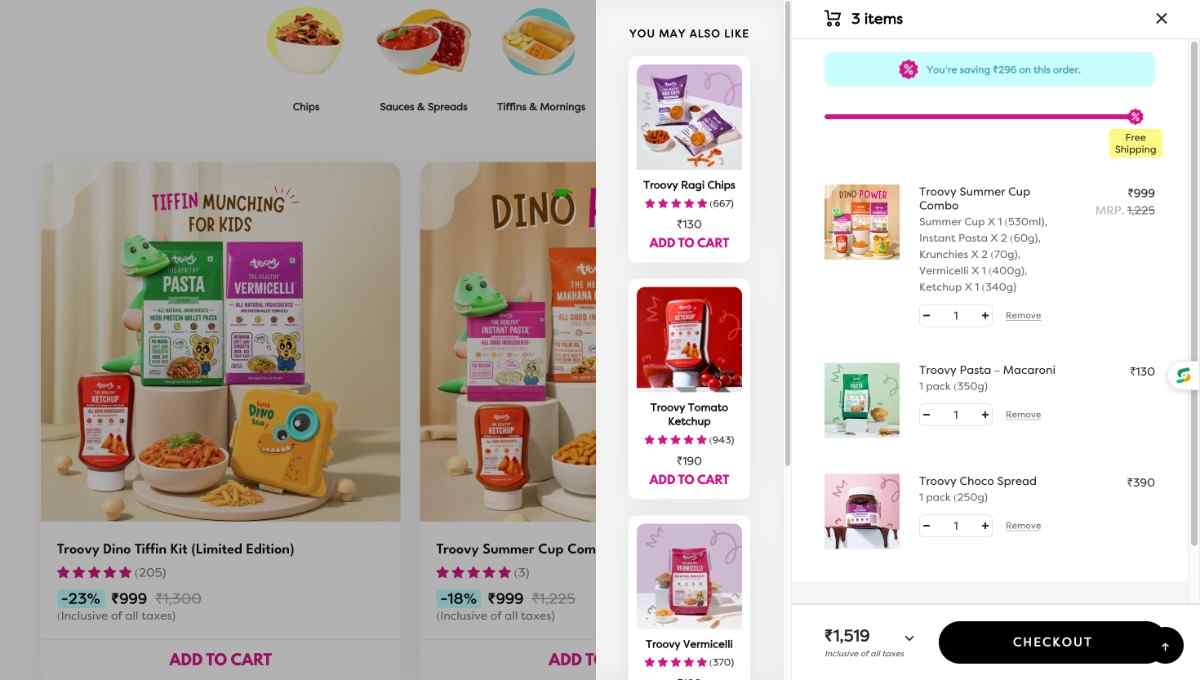
Goal-Based Discount Progress Bar: Troovy
Healthy kids' food brand Troovy increases Average Order Value (AOV) using a dynamic, goal-based progress bar in their slide-out cart. This gamifies the experience by updating in real-time as items are added.
For example, crossing ₹499 unlocks Free Shipping, while higher spending unlocks percentage discounts. By visually tracking rewards and displaying savings (e.g., "You're saving ₹296 on this order"), Troovy motivates shoppers to add more items to capture extra value.
Tiered discounts are a Black Friday promotion idea where the discount percentage increases with the amount customers spend. They are a direct AOV lever: each tier creates a new incentive to add one more item rather than stopping at the first threshold.
Setting up your Black Friday tier structure:
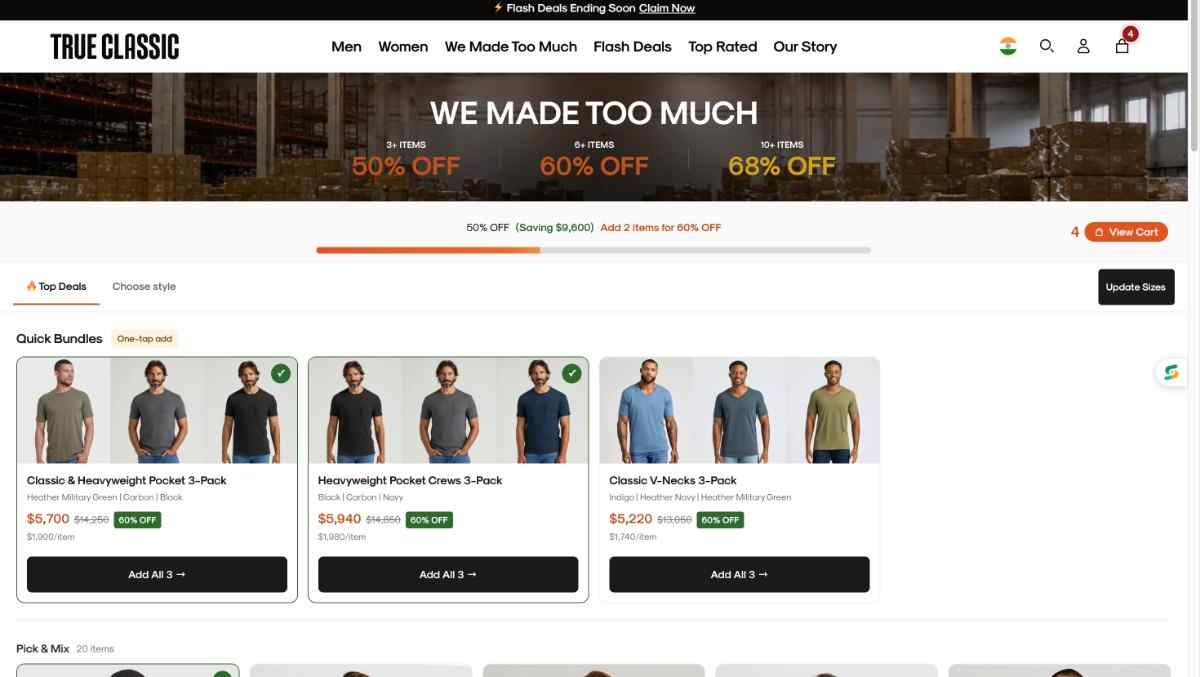
Tiered Discount Example: True Classic
True Classic utilizes tiered discounting in their 'We Made Too Much' campaign, offering 50% off for 3+ items, 60% off for 6+ items, and 68% off for 10+ items. To guide shoppers to higher tiers, they use a dynamic progress bar showing requirements to unlock the next reward (e.g., “Add 2 items for 60% OFF”). This gamified experience effectively drives up average order value (AOV) while clearing excess inventory.
Bundle deals are a Black Friday promotion idea where customers purchase a group of products at a reduced price. They are one of the most effective AOV drivers because the discount is tied to buying multiple products together.
Bundle deals also serve double duty: they clear old stock when you pair slow-moving items with popular ones, and they introduce new products by bundling them with proven sellers.
Types of bundle deals for BFCM:
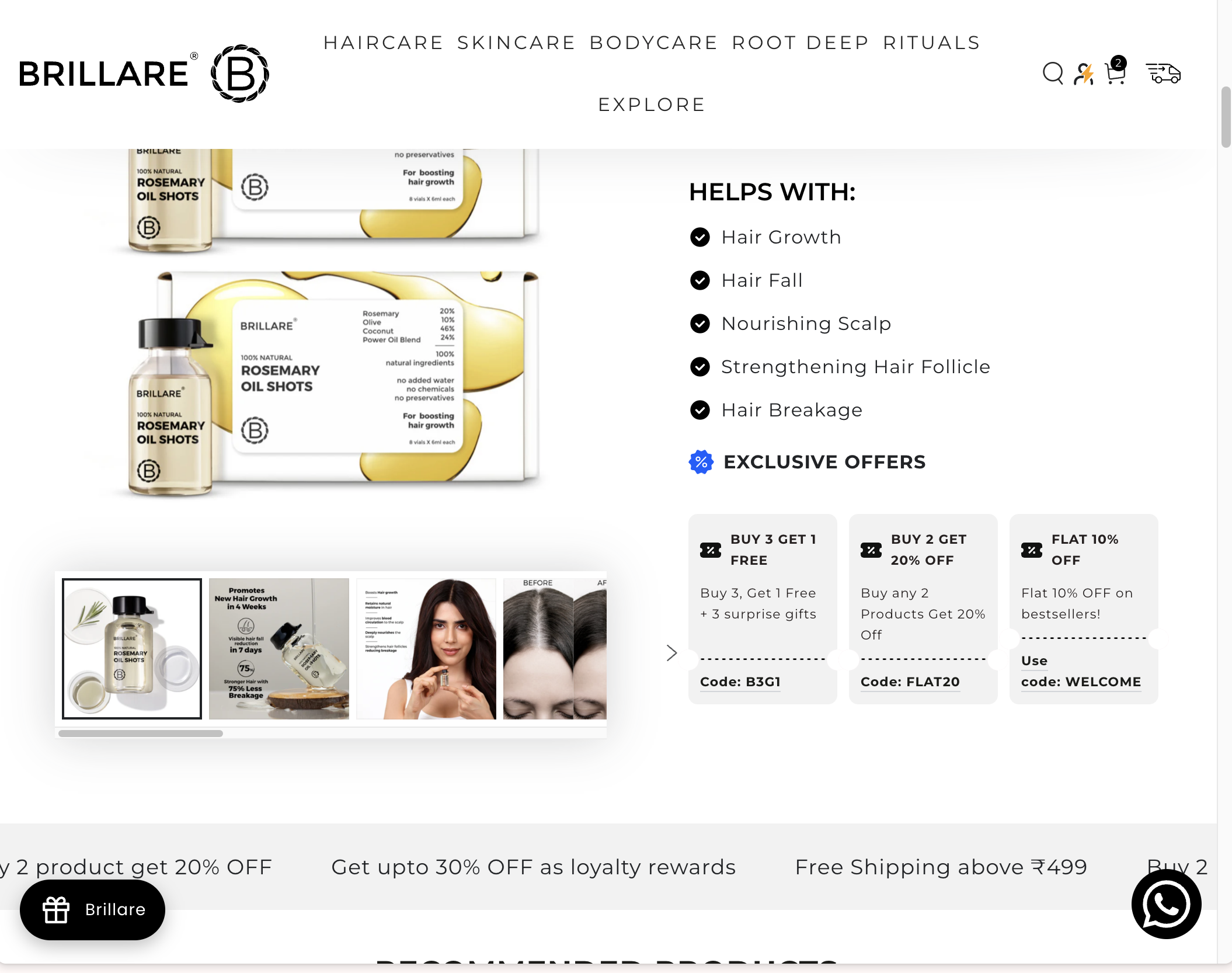
Bundle Deal Example: Brillare
One of the most effective Black Friday promotion ideas for beauty and wellness brands is shifting the focus from single items to complete routines. A good example of this approach is Brillare, which leverages strategic, pre-curated bundles on their product pages.
Instead of a flat discount on popular Rosemary Oil Shots, they upsell shoppers to a "Hair Growth Kit" (oil, scalp serum, and shampoo at 24% off) or an "Ultimate Hair Growth Kit" (at 29% off). This ecommerce discount strategy works well by solving a complete customer problem, viz., hair growth, with a multi-step routine rather than a single product.
By promoting these holiday bundles, Brillare increases Average Order Value (AOV) and protects profit margins from deep sitewide price cuts. Additionally, selling complete routines improves product efficacy, fostering long-term customer loyalty.
Pro Tip: Shopify merchants can use Easy Bundle Builder to create fixed-price BYOB, mix-and-match bundles and curated gift boxes without custom development.
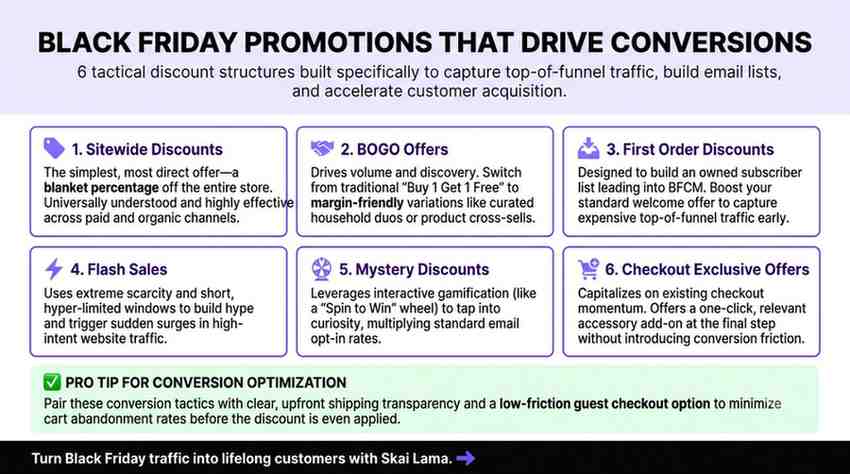
If you are a Shopify store owner, looking for Black Friday marketing ideas, these six tactics will help you prioritize your top-of-funnel conversion: getting browsers to buy and new visitors to convert on their first visit.
A sitewide discount is the simplest Black Friday promotion idea: a single percentage off that applies to every product in the store. Sitewide discounts are easy to communicate across paid and organic channels. From a customer's perspective, they are unconditional, which removes the hesitation of checking whether their product qualifies.
Sitewide discounts work especially well for seasonal categories like fashion, where clearing inventory before the new season is a real operational goal.
Setting up your sitewide Black Friday sale:
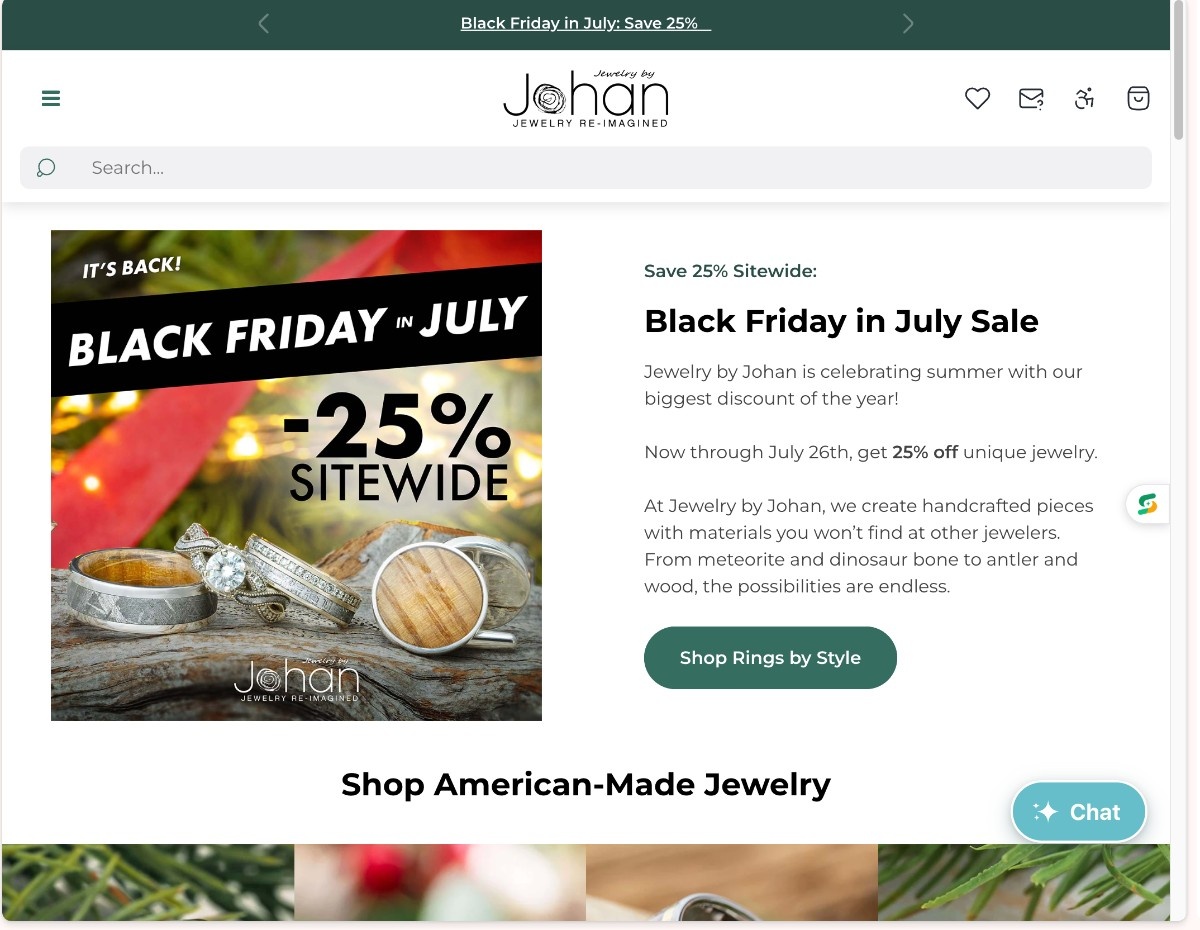
Sitewide Discount Example: Jewelry by Johan
A sitewide discount is a reliable, high-impact, and simple option among Black Friday promotion ideas. A perfect example is the "Black Friday in July" campaign run by custom ring brand Jewelry by Johan.
They offer a flat 25% off sitewide on all handcrafted pieces, using a clear announcement bar and dedicated landing page. This straightforward ecommerce discount idea works well for high-ticket items because eliminating promo code exclusions allows customers to browse the entire catalogue confidently. This removes friction, thereby driving faster conversions and a massive influx of top-of-funnel traffic.
Second only to percentage-off promotions, Buy One Get One (BOGO) is highly favoured by consumers. During Black Friday, BOGO campaigns are strategically utilized to clear stock and raise Average Order Value (AOV) by linking a second product purchase to a clear value unlock.
Structuring your BOGO for BFCM:
If you want to know more about BOGO offers, you can see some of the best BOGO examples here.
BOGO Example: SURI
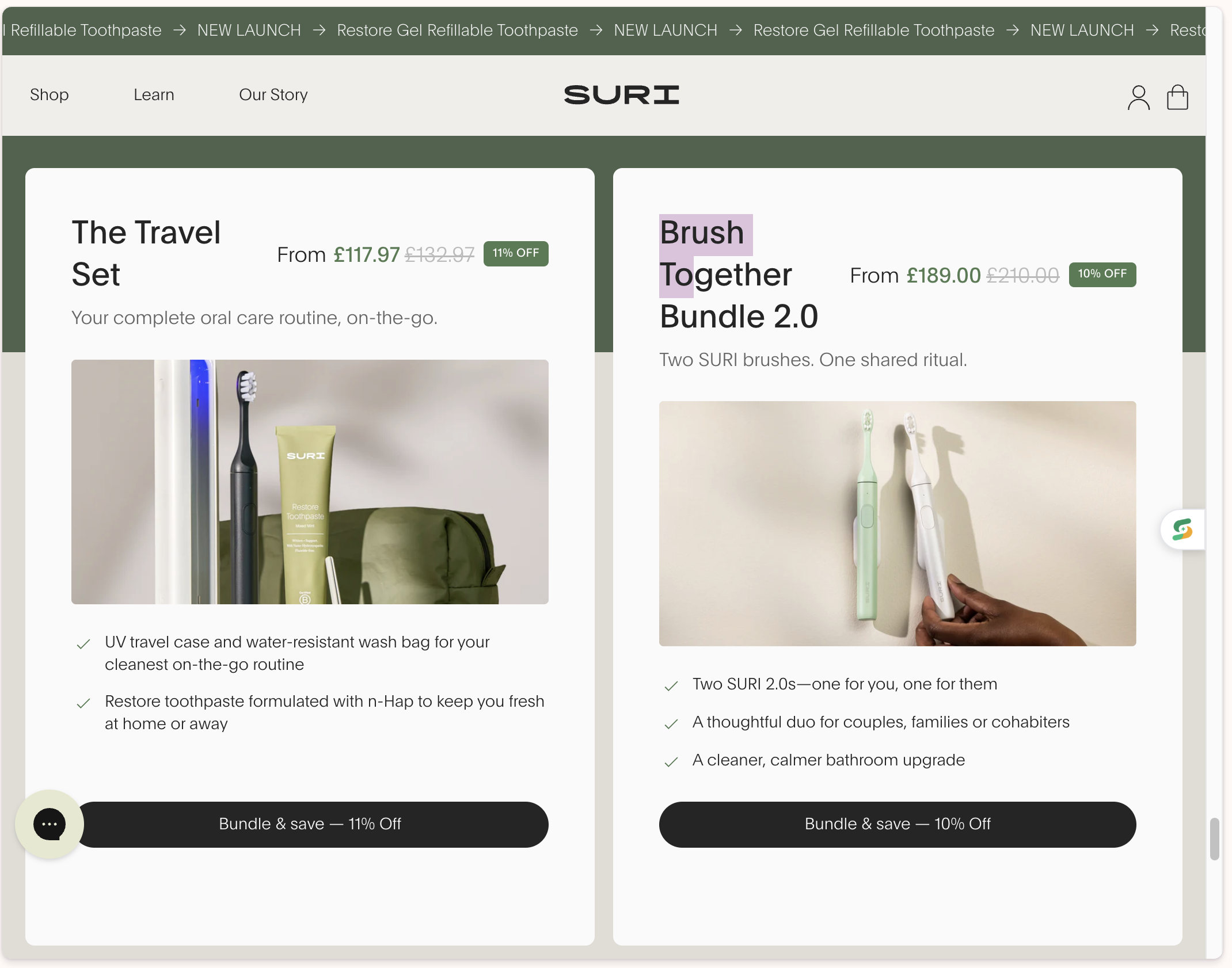
Sustainable DTC toothbrush brand SURI executes a brilliant, margin-friendly variation of the BOGO strategy with their "Brush Together Bundle." Instead of a traditional "Buy 1 Get 1 Free" offer, they offer a curated two-pack (one for you, one for your partner) at a flat 10% discount.
By framing the multi-buy purchase around a shared household ritual rather than a cheap clearance tactic, SURI successfully doubles their unit volume per order and acquires two users in a single transaction, all while maintaining their premium brand positioning.
A first-order discount is built for acquisition. It gives new visitors a compelling reason to convert on their first visit rather than leaving to comparison-shop. You can offer a price reduction, a percentage discount, or free shipping, and structure it as a bonus on top of your standard BFCM offer.
Setting up your first-order acquisition offer:
First Order Discount Example: Olipop
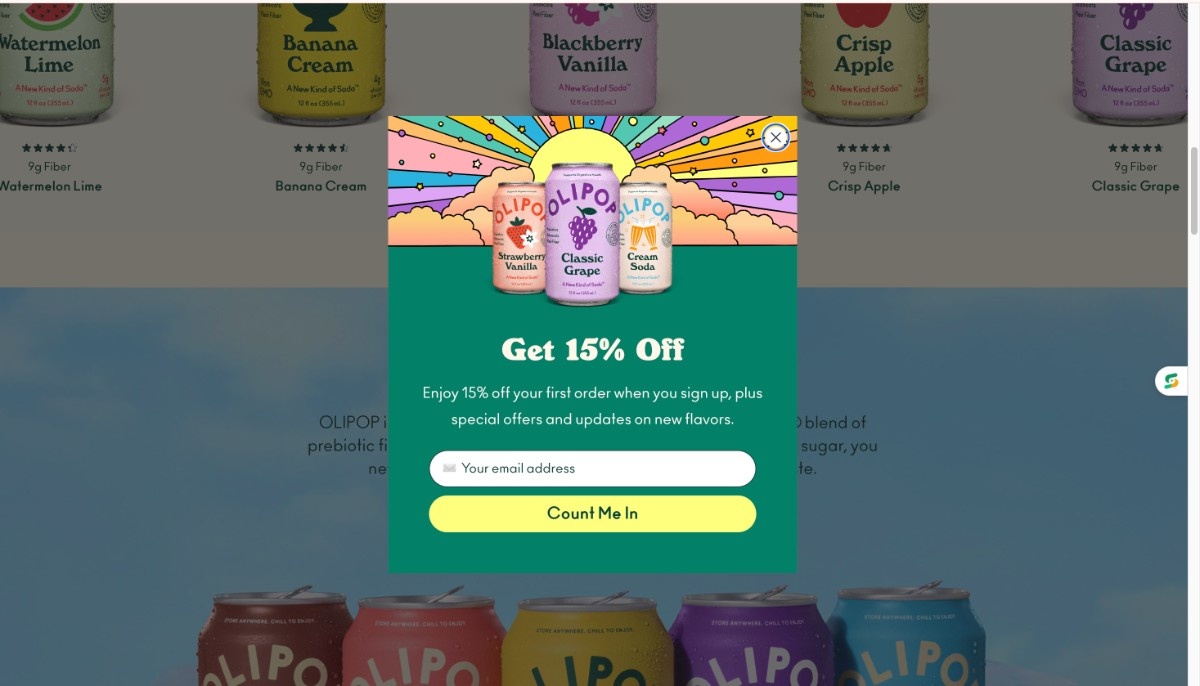
As said before, first-order discounts drive customer acquisition by incentivizing immediate purchases over comparison-shopping. DTC soda brand Olipop executes this perfectly with a visible pop-up offering 15% off first orders for email and SMS sign-ups.
Before BFCM in early November, savvy Shopify merchants often increased this welcome offer from 10% to 20% to build their subscriber list. Capturing first-time buyer contact info turns expensive ad traffic into an owned audience, enabling free email and SMS retargeting during Black Friday to lower acquisition costs and maximize conversions.
A flash sale is a time-limited Black Friday promotion idea where a discount is available for a defined window, typically two to four hours or twenty-four hours, and then expires completely. What separates flash sales from standard Black Friday discounts is not the depth of the offer. It is the deadline.
The psychology is well-documented: time-limited customer offers activate loss aversion more effectively than depth-of-discount alone. A shopper who sees "40% off, ends in 3 hours" behaves differently from one who sees "40% off this weekend." The window is the conversion mechanism, not the number.
Setting up a flash sale for BFCM:
Flash Sale Example: Macy’s
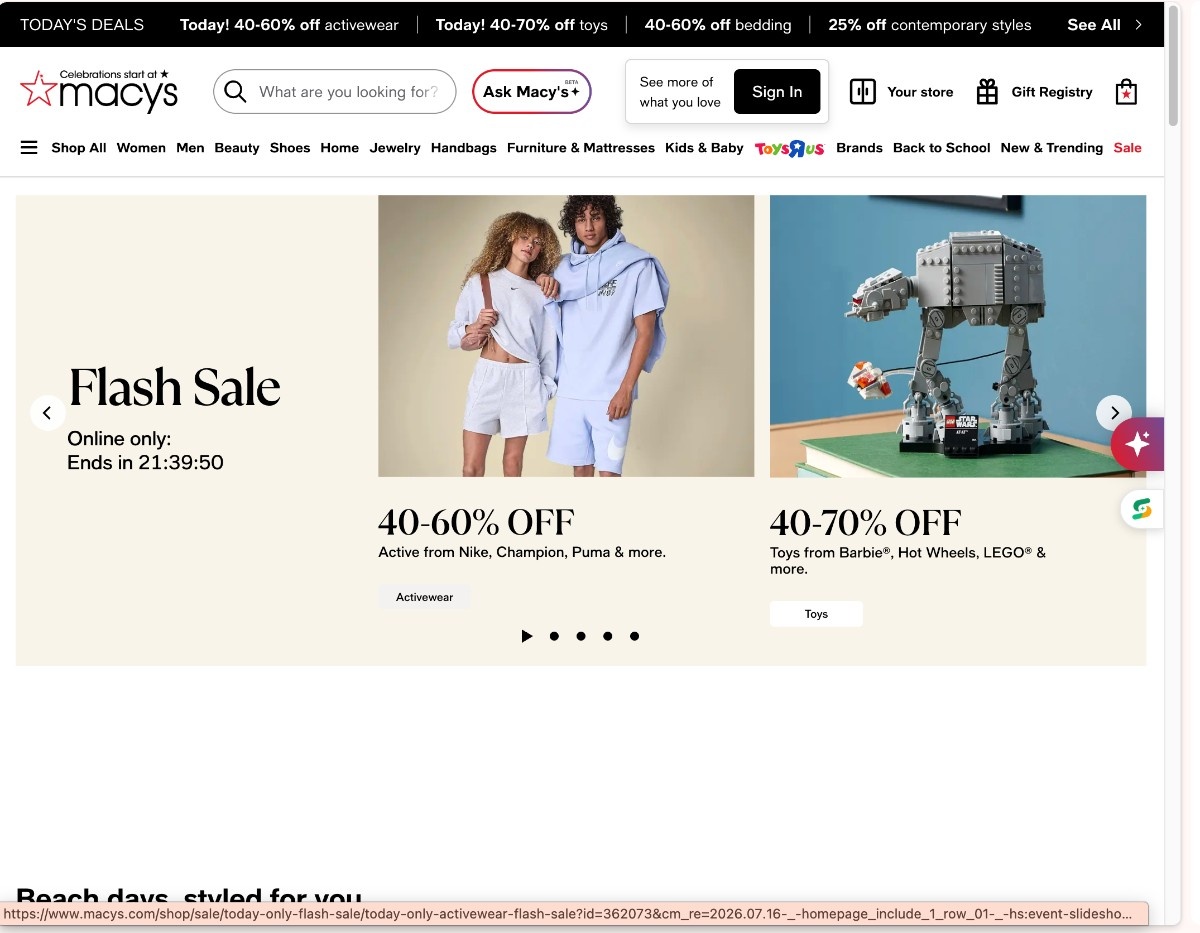
Retail giant Macy's executes flash sale on their digital storefront by dedicatedly featuring an online-only "Flash Sale" banner equipped with a live, ticking countdown clock showing exactly how many hours and minutes are left before the deal vanishes.
Instead of discounting the entire store, Macy's targets high-demand, specific categories for a steep, short-term price slash, such as offering 40% to 60% off activewear from major brands like Nike and Champion, or 40% to 70% off top-tier toy brands.
A mystery discount withholds the offer amount until the customer takes an action to reveal it. The anticipation itself is a conversion mechanism: customers who unlock a discount have already committed a micro-action toward buying. That commitment increases the likelihood they follow through.
Setting up your mystery promotion for BFCM:
Gamified "Spin to Win" Discount: MotionGrey
Many Shopify stores use spin-to-win popups that appear on exit intent or after a short delay, then reveal a mystery discount when the visitor spins.
Ergonomic office furniture brand MotionGrey executes this perfectly by triggering an interactive "Spin to Win" wheel for incoming visitors. Instead of offering a static discount code for email sign-ups, they invite shoppers to enter their email for a randomized chance to win rewards like 20% off, 25% off, $35 off, or a free gift.
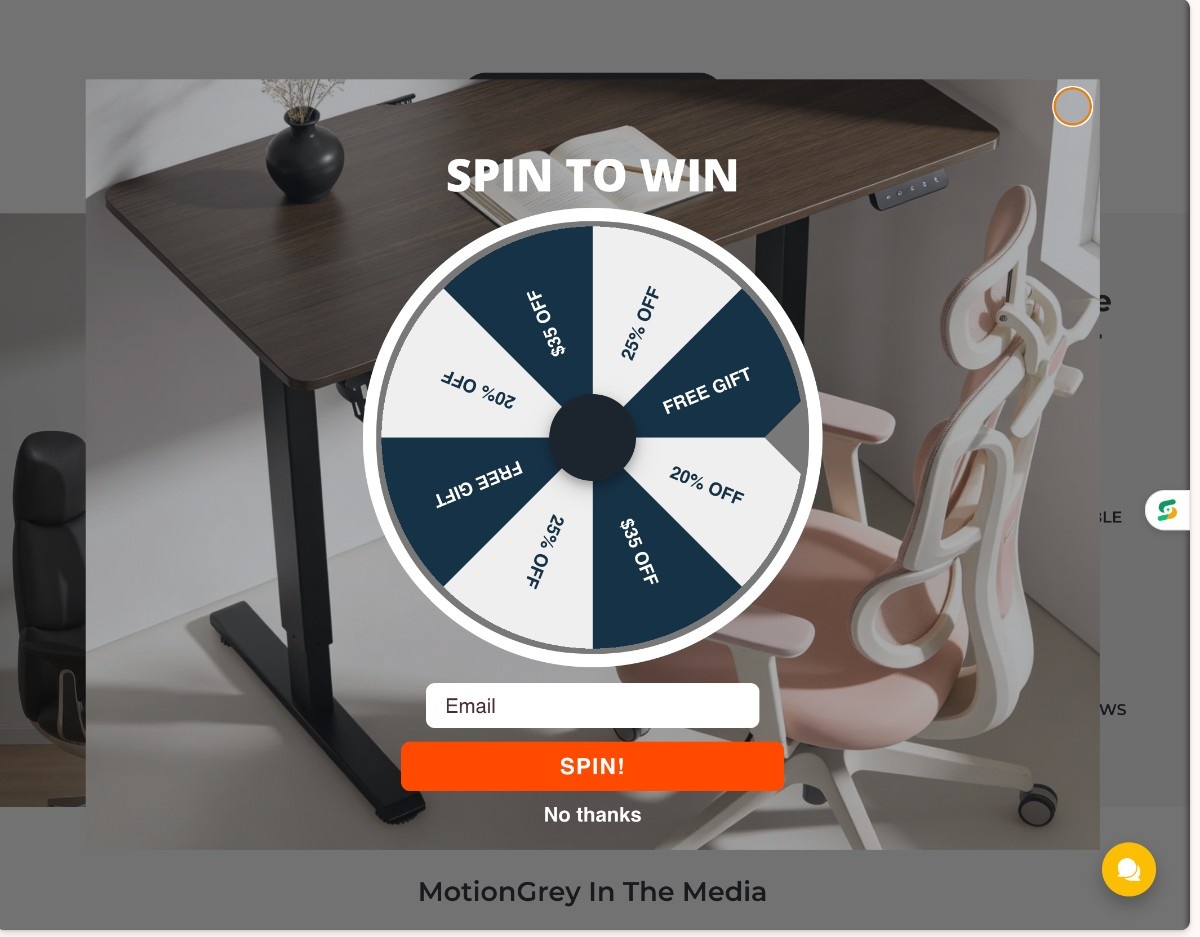
For Black Friday promotion ideas, taking this gamified approach is incredibly effective. It dramatically increases email opt-in rates compared to standard pop-ups because the potential reward feels much higher to the shopper. Furthermore, the psychological effect of "winning" a discount makes the customer much more likely to actually redeem it at checkout, driving higher conversions while keeping the shopping experience interactive and engaging.
A checkout exclusive discount is available only at the checkout step and nowhere else on the site. The exclusivity creates urgency and taps into purchase momentum: a customer who has already decided to buy is in the most receptive state for an additional customer offer.
Setting up your checkout-only promotion:
Checkout Exclusive Discount Example: Casper
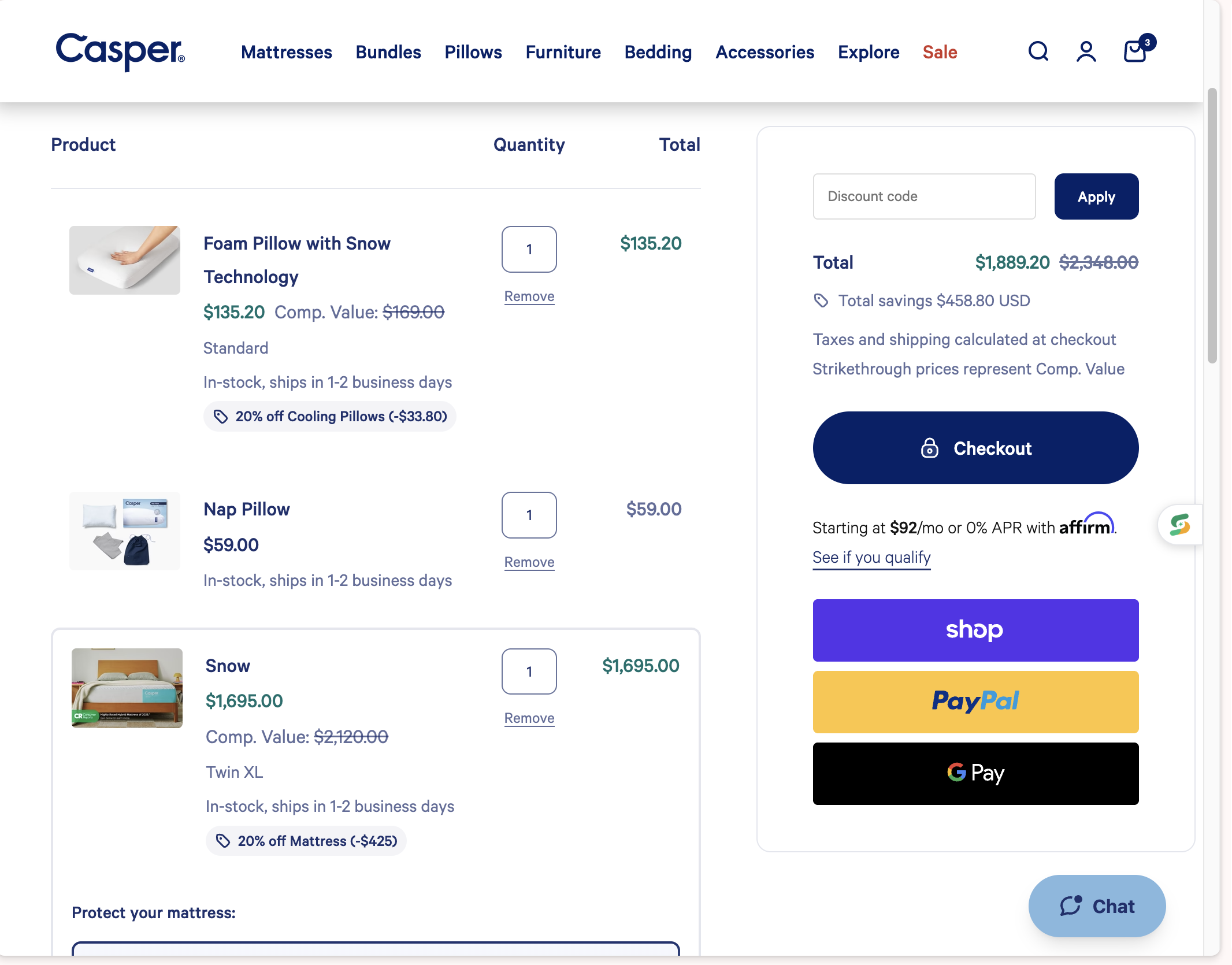
A textbook example of checkout exclusive discount is the premium sleep brand Casper.
When a customer proceeds to checkout with a high-ticket hero product, like one of their signature mattresses, Casper utilizes checkout extensibility to present a highly relevant, discounted add-on right next to the payment details. They might offer a special "Checkout Only" discount of 15% off a waterproof mattress protector or a set of premium pillows.
Because this offer is only visible at checkout and features a lower price point relative to the main cart total, it feels like a no-brainer upgrade. The customer can add it to their order with a single click without ever leaving the payment page, successfully increasing Average Order Value (AOV) without introducing friction or risking cart abandonment.
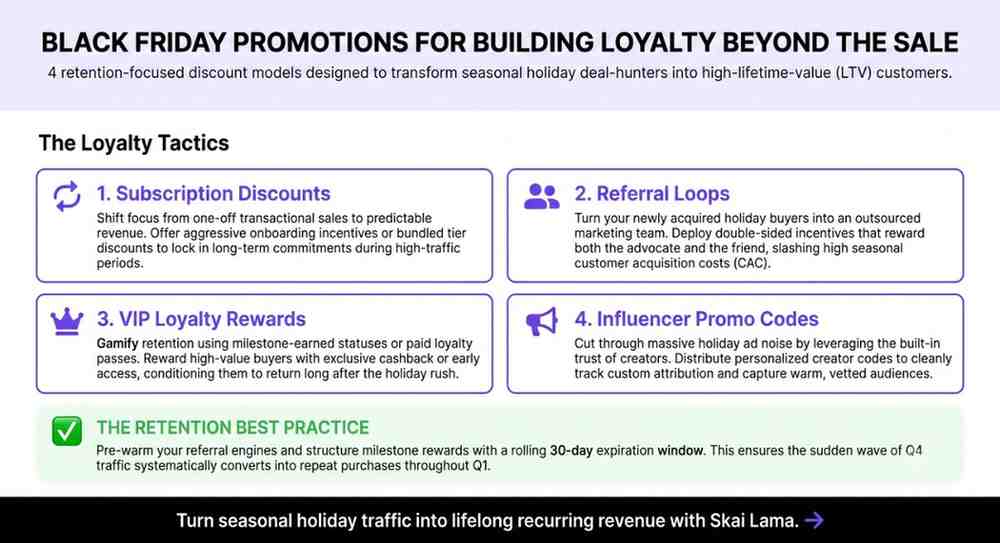
These four Black Friday Marketing ideas generate your first BFCM revenue and continue paying off in the weeks and months that follow, by building your repeat customer base.
Subscription discounts offer a price reduction to customers who commit to recurring purchases. They are one of the few BFCM promotion ideas whose value compounds beyond the sale weekend. A subscription acquired during Black Friday at a 20% introductory discount locks in the customer for months, improving cash flow and customer lifetime value simultaneously.
Setting up your subscription offer for BFCM:
If you want to know more, you can read our full guide on subscription bundling here.
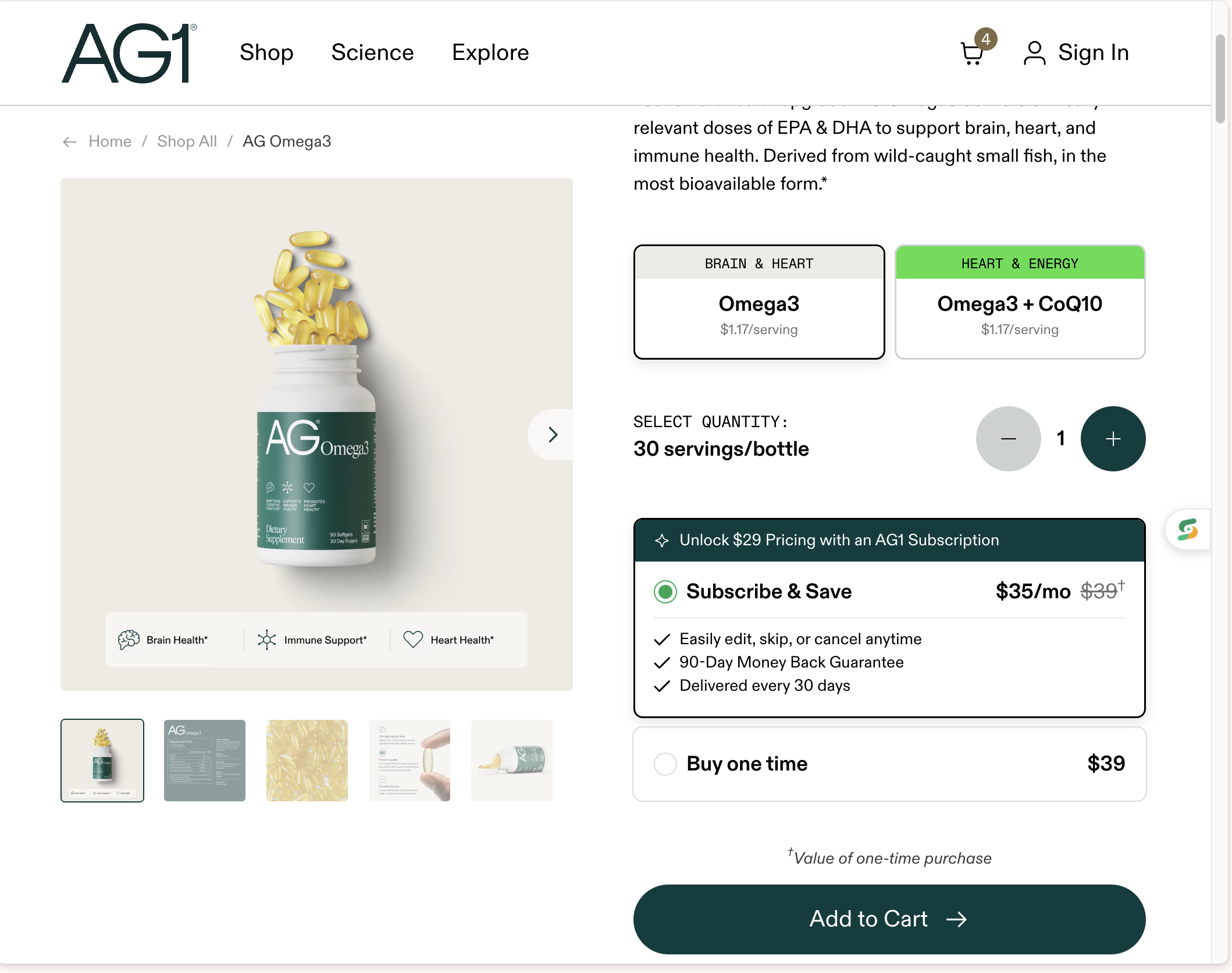
Subscription Discount Example: AG1
Subscription discounts are powerful cross-sell tools to boost AOV beyond the initial purchase. AG1 exemplifies this: their Omega3 supplement drops from $39 (one-time) to $35 (standard subscription), and further to $29 when bundled with a core subscription. For Black Friday, use this to increase your recurring revenue: offer "subscriber-only" pricing on secondary items to incentivize seasonal shoppers to commit to your core subscription for the best deal.
A referral discount rewards existing customers for bringing in new buyers. If you are looking for Black Friday promo code ideas specifically, referral codes and coupon codes distributed through referral channels are the highest-attribution options, because every unique promo code is trackable back to the customer or creator who shared it. Referral programs are also one of the most cost-effective acquisition channels during BFCM: the customer doing the acquisition work is incentivized rather than paid.
Referral coupon codes perform better than general codes during BFCM because they carry social proof. The recipient got this code from someone they trust, not from an ad.
Setting up your referral and promo code campaign:
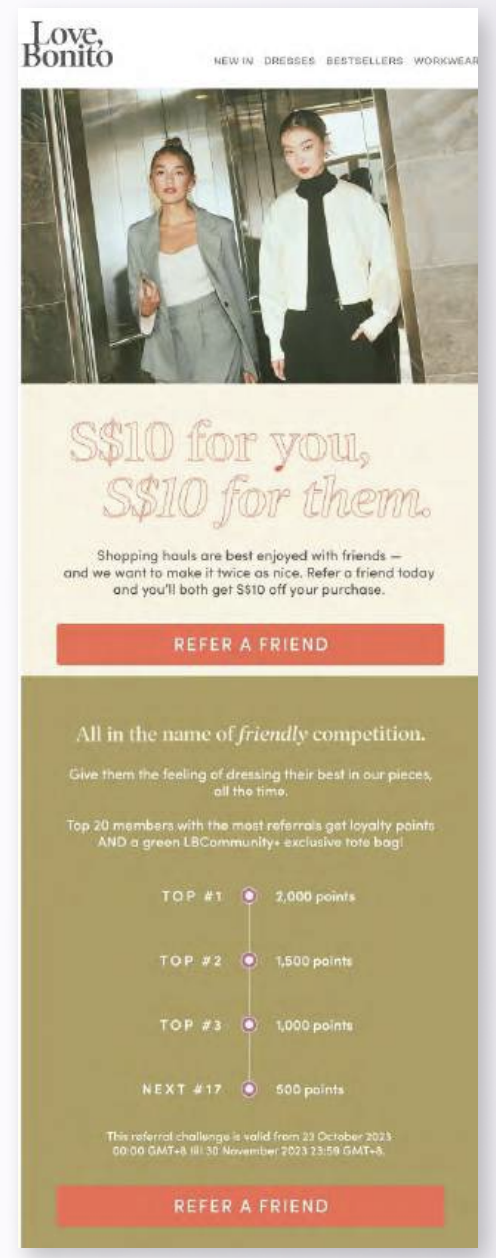
Referral discount example: Love, Bonito
Love, Bonito ran a time-limited referral competition to boost organic customer acquisition. The brand emailed customers asking them to refer friends, offering $10 cashback to both the advocate and the new user. Additionally, the top 20 referrers received bonus loyalty points, creating a gamified, win-win referral loop.
VIP discounts are designed for your highest-value customers: those with the highest purchase frequency, highest AOV, and most recent purchase activity. This Black Friday promotion idea rewards the customers most likely to respond, while creating a sense of exclusivity that strengthens brand loyalty beyond the sale weekend.
Setting up your VIP Black Friday offer:
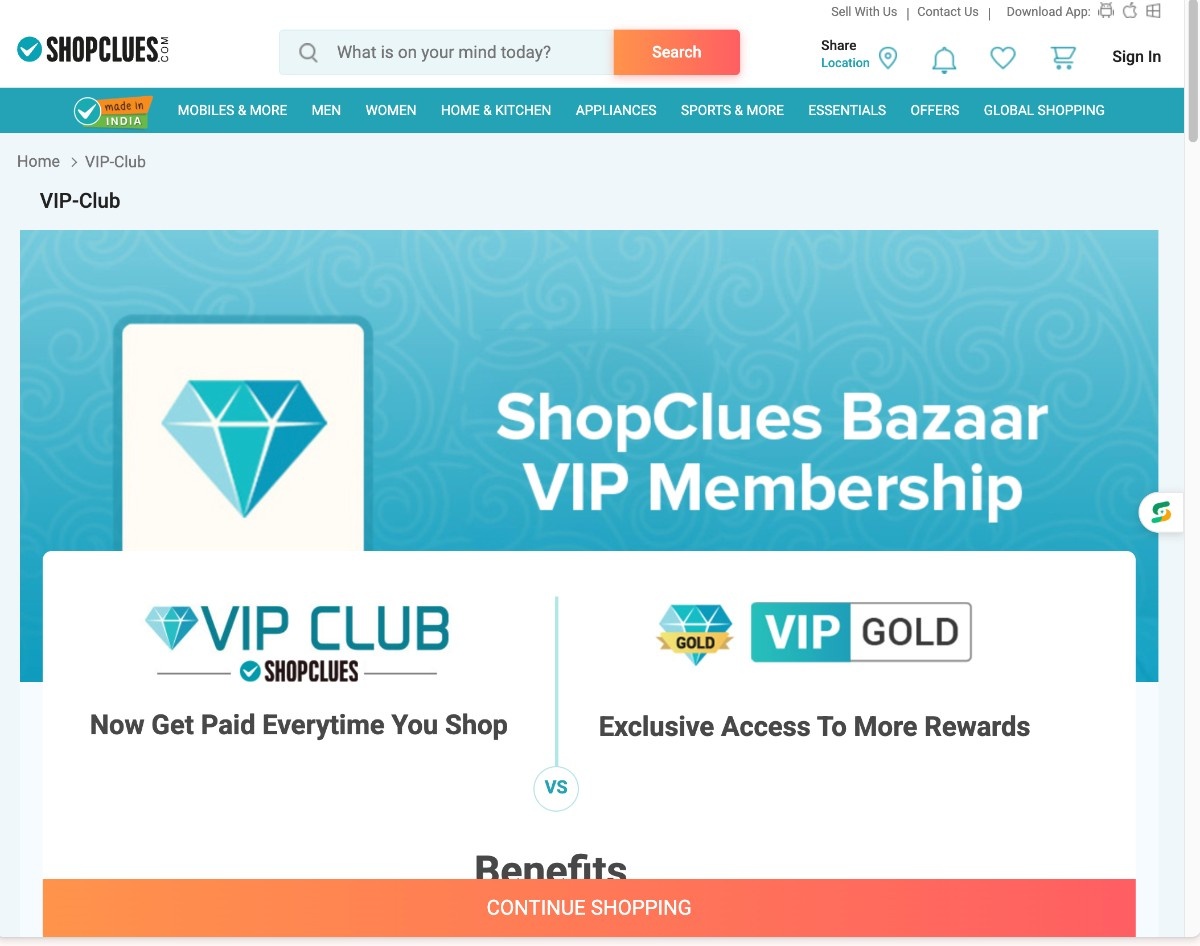
VIP Discount Example: ShopClues
VIP discounts drive retention by rewarding customers LTV. ShopClues executes this via two tiers: an earned "VIP Club" (unlocked after the second purchase, rewarding 5% cashback) and a paid "VIP Gold" pass (a small monthly fee for 10% cashback).
For Black Friday, adapt this to retain seasonal shoppers: provide exclusive early access or higher cashback to your best buyers based on their purchase history. By tying these perks to a 30-day expiration, you ensure that BFCM shoppers are incentivized to return in December and January.
Influencer promo codes give creators unique coupon codes to share during their BFCM campaigns. For brands building out Black Friday promo code ideas, influencer codes double as performance tracking: each unique code attributes conversions directly to the creator who drove them.
Influencer discounts are bonus customer offers above and beyond your standard BFCM discount. They are not a substitute for your main promotion; they are an additional incentive layer that makes the influencer's audience feel they are getting something exclusive.
Setting up your influencer promo code campaign:
Influencer Discount Example: Bloom Nutrition
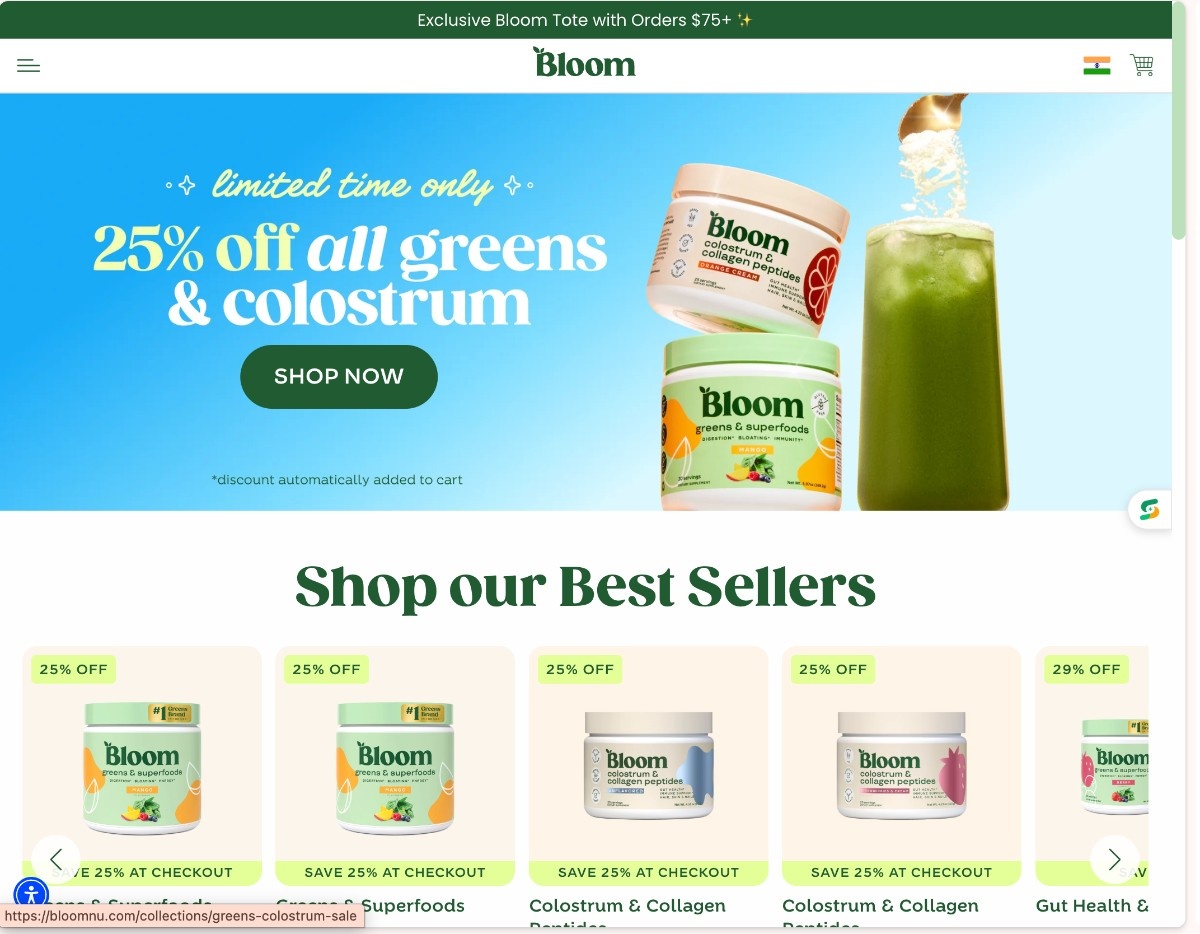
Leverage creators trust to cut through Black Friday noise. Instead of generic sitewide sales, partner with influencers to share unique, personalized discount codes. This strategy moves beyond vanity metrics by enabling precise conversion tracking per creator.
For BFCM, this is highly effective: consumers are far more likely to convert on a vetted offer from a trusted creator than a faceless corporate ad.
DTC and ecommerce brands face a specific BFCM challenge: they cannot win on discount depth against large retailers, and they should not try to. The brands that use BFCM most effectively are the ones that are more targeted, more personal, and more creative than their larger competitors.
As we said before, in 2025, Cyber Monday was expected to reach $14.2 billion in sales, a 6.3% year-over-year increase, maintaining its position as the season's biggest online shopping day. For Shopify merchants, BFCM is not a single day. It is a four-day minimum, and increasingly a full-week promotional window.
The most effective Cyber Monday strategies differentiate the offer from Black Friday rather than simply extending it. Here are some of the time-tested Black Friday Strategies that you can extend to your upcoming Cyber Monday sale
No single Black Friday promotion idea works in isolation. The brands that generate the highest BFCM revenue combine two or three complementary tactics that each serve a different moment in the customer journey.
Here is how to stack them by store type:
The underlying principle across all store types is the same: pair an AOV-driving tactic with a conversion-driving tactic. Volume discounts plus a progress bar. Bundle deals plus a checkout exclusive offer. Tiered discounts plus a flash sale window for a specific category. Each pairing addresses a different point of hesitation in the customer journey.


.avif)