.svg)
.svg)

.svg)
.svg)



.jpg)
Our Apps Have Driven
5X AOV | 2X Conversions | $30M+ Additional Revenue
5X AOV | 2X Conversions | $30M+ Additional Revenue
.svg)


5.0 (3000+ Reviews)


Shopify Apps





.svg)

In this blog, I have put put together some of the best examples of BOGO or buy one get one free examples from top brands on Shopify and otherwise. Here we will look at how DTC brands capitalize on a BOGO offer to increase their sales and clear slow-moving stock and also attract value-driven customers. A BOGO is not as simple as just a buy one get one. There are many ways in which you can structure a BOGO and create an offer that best suits your type of product, industry, and the way a consumer behaves while purchasing from your store. Let's take a look.
BOGO stands for Buy One Get One: a promotional pricing strategy where a customer receives a second item free or at a discount when they purchase the first item at full price. What is a Buy 1 Get 1 in practice? It is a pricing mechanic designed to increase units per transaction while giving shoppers a strong sense of value. BOGO meaning varies slightly by variant (free, 50% off, or a set discount), but the core structure is always the same: buy one qualifying product, unlock a reward on a second.
Here's how a BOGO works. When a BOGO or Buy One Get One offer is active, the discount triggers automatically once the qualifying item is in the cart. For example: a customer adds a $30 t-shirt at full price. The Buy 1 Get 1 o offer applies, and a second $30 t-shirt is added for free. The effective price becomes $15 per item. The customer pays for one but receives two. Merchants benefit because average order value rises while the customer feels they have received exceptional value.
BOGO specifically means buying one item and getting one item in return. BXGY (Buy X Get Y) is the broader promotional category that covers any purchase combination that unlocks a reward: buy two items and get one free, or spend $50 and receive a free gift. Every BOGO offer is technically a BXGY offer, but BXGY is not always one-for-one, whereas a true BOGO always is.
BOGO free means the second item is entirely free: zero charge, no minimum spend beyond the qualifying first item. BOGO 50% off means the second item is half price. Both formats outperform standard percentage discounts in conversion, but Buy One Get One free typically wins on perceived value. Even when the net savings are identical in cash terms, shoppers respond more strongly to the word "free" than to "half off."
BOGO free means the customer receives a second item at no cost when they buy the first at full price. The discount is applied automatically at checkout: no code required, no threshold to reach beyond adding the qualifying item.
BOGO free is the most popular BOGO variant because it delivers the highest perceived value of any discount format. Research from Capital One Shopping shows that consumers purchase 73% more product under a BOGO free offer than under an equivalent percentage-off deal, and three times more consumers choose BOGO free when presented with both options side by side.
The margin math is worth understanding before running this offer. BOGO free is profitable when your product margin exceeds 50%: the revenue from the first item covers the cost of producing both units. Below 40% margin, the cost of the free second unit begins cutting into profit rather than spreading gross margin across two items. The practical rule: run BOGO free on your highest-margin products, and use BOGO 50% off for products in the 40 to 60% margin range.
Two examples of BOGO free from Shopify merchants:
Shopify merchants can manage free gift campaigns on Shopify using Kite Discounts and Free Gifts, which handles automatic cart triggers, product-level eligibility rules, and campaign scheduling without requiring custom code.
I have put together the most recent examples of real Shopify brands who have used Buy One Get One offers smartly to push inventory and drive conversions. Lets take a look.
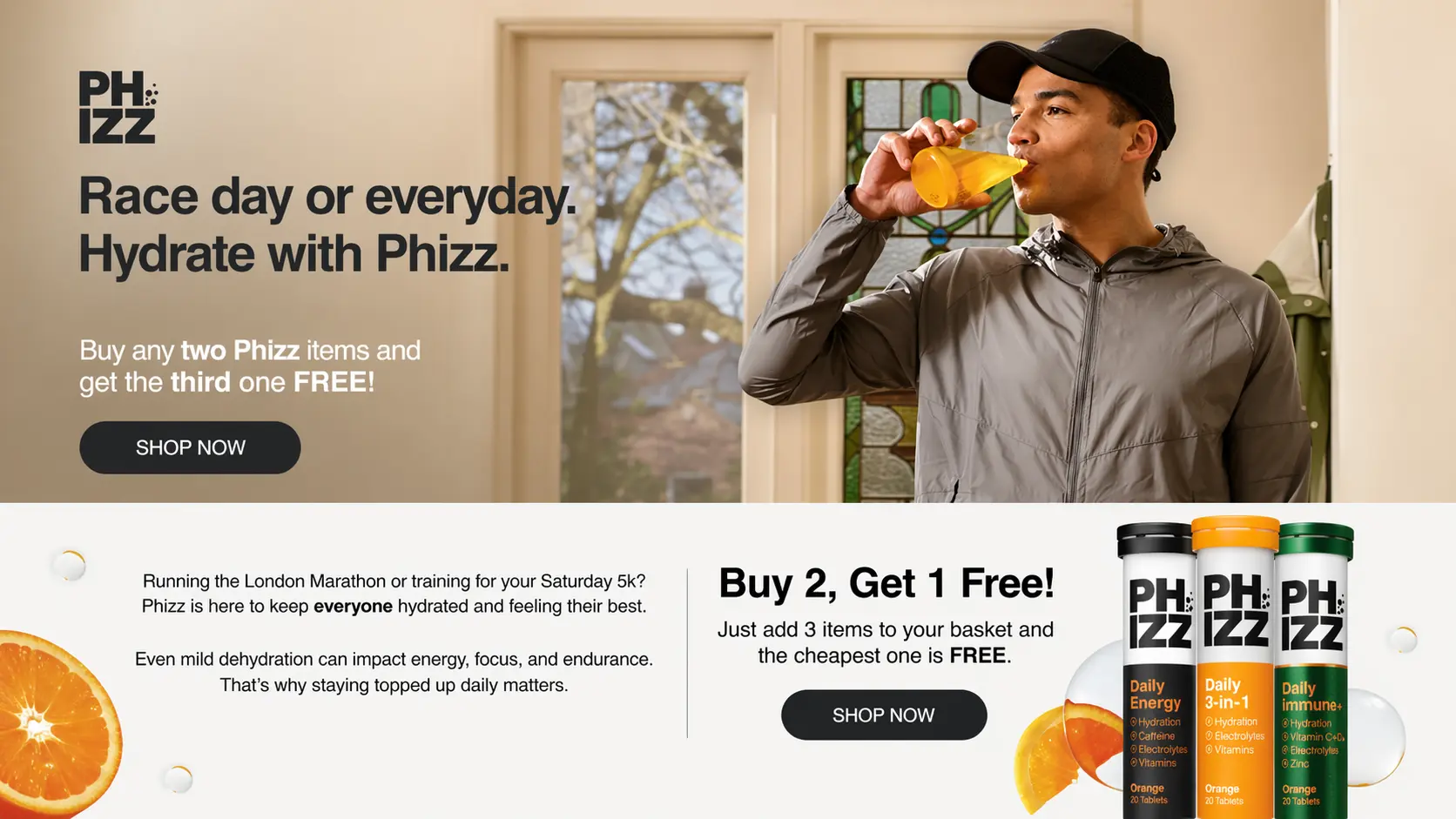
Phizz is my top pick for BOGO on repeat-purchase consumables. The offer is Buy 2, Get 1 Free on their hydration tablets, and what I really like is how well the product range itself supports the offer. The creative shows three differently coloured Phizz tubes side by side (Daily Energy in black, Daily 3-in-1 in orange, Daily Immune+ in green), which visually pre-sells the idea that you should buy one of each rather than three of the same. That is smart product-plus-promotion design. In my experience, most customers who buy hydration tablets end up buying two (stocking up) or three (family use, monthly supply) anyway, so unlocking the third unit free is a low-friction nudge that shifts the basket from one to three almost automatically. This is the best BOGO example I can point to for supplements, coffee, protein powders, pet treats, or any product where two to three units is the natural buying pattern. And it primes the next order for subscription conversion, which is the real compounding win.
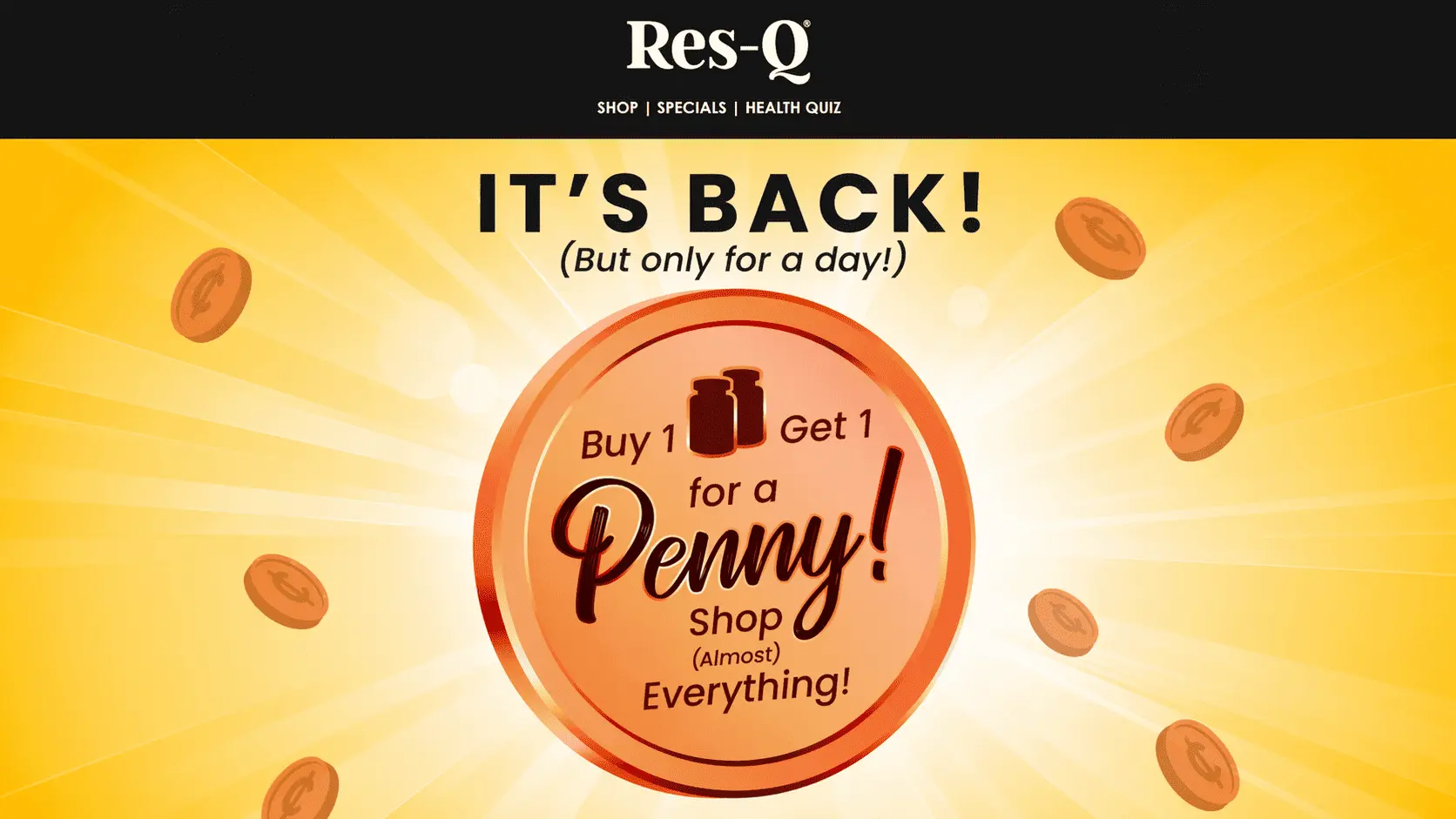
Res Q is my favourite BOGO example on this whole list because of the copy framing alone. The offer is "Buy 1, Get 1 for a Penny! Shop (Almost) Everything!" and mechanically it is almost identical to a standard BOGO free (the penny is just a token amount on the lower-priced item), but the one-penny framing is genius. I love it because "get the second for a penny" stops the scroll in a way that "get the second free" simply does not anymore. Free-item promotions have become visual noise at this point, and the penny angle forces a double-take, which builds recall for the campaign itself, not just the discount. Res Q amplifies it further with one-day urgency ("It's Back! But only for a day!") and a playful animated-coin creative that reinforces the penny hook visually. I think this is the single highest-conviction Buy One Get One copy test any brand should run, especially if you are trying to move slow-moving stock, because the unusual framing earns organic shares and screenshots that a standard BOGO free would never generate.
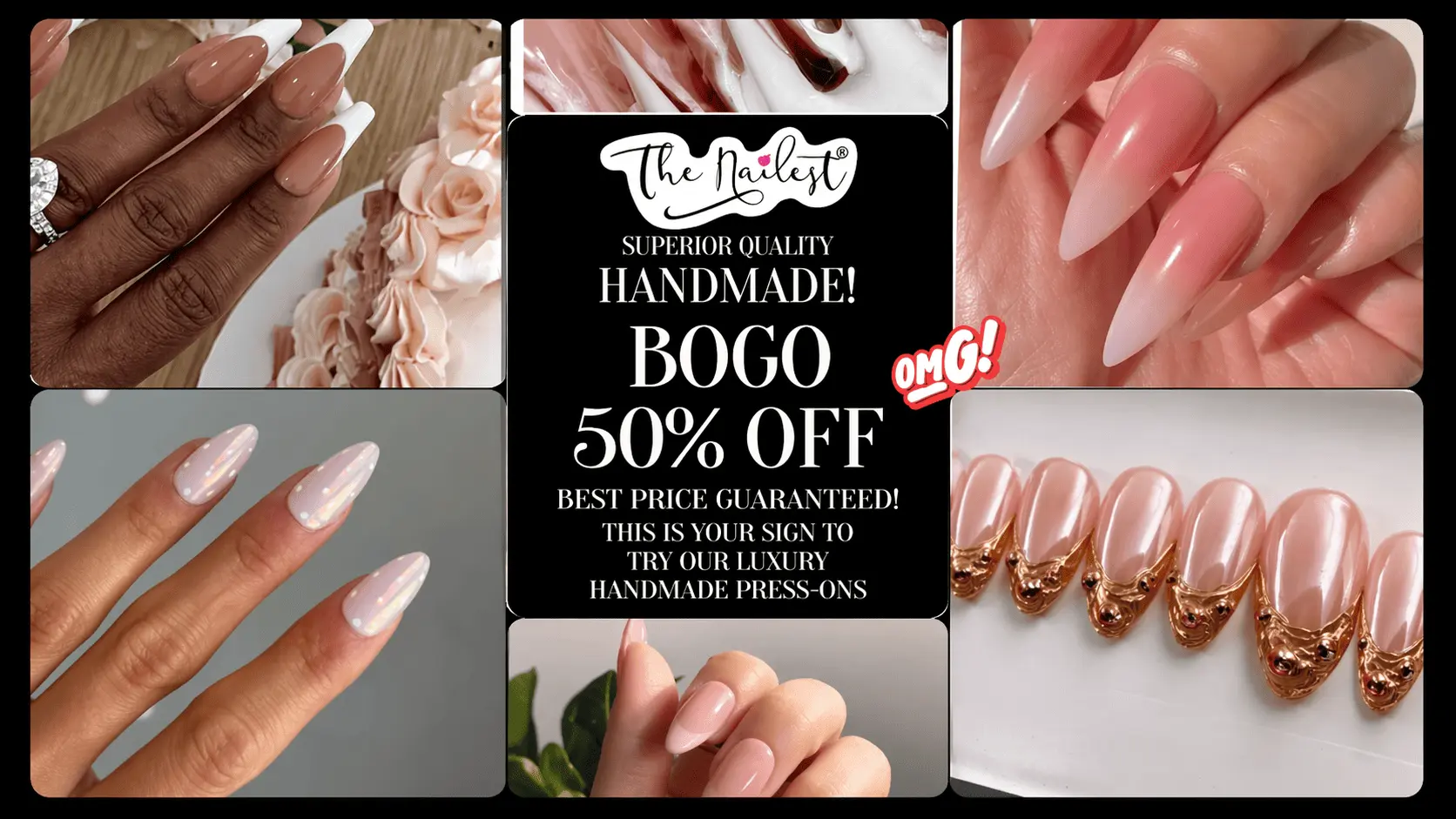
The Nailest is a good example of BOGO used the classic way: buy any set of press-on nails and get the second set at 50% off, with the discount applied to the lower-priced item. What I really like about this Buy One Get One example is how hard the creative is working. They have not just slapped a discount badge on a stock image, they have built a tight product collage of their best press-on sets with an "OMG" sticker and "Best Price Guaranteed!" microcopy sitting next to "Superior Quality Handmade!" positioning. So the ad is selling product quality and the offer at the same time, which is a gap I see in most Buy 1 Get 1 creative where stores lean on the discount and forget to actually sell the product. I think this BOGO example works brilliantly for press-on nails specifically because the product is a consumable that wears out in one to two weeks, so repeat purchase is already baked in. Any brand selling consumables (nail, skincare, haircare, supplements) can copy this structure almost word for word.
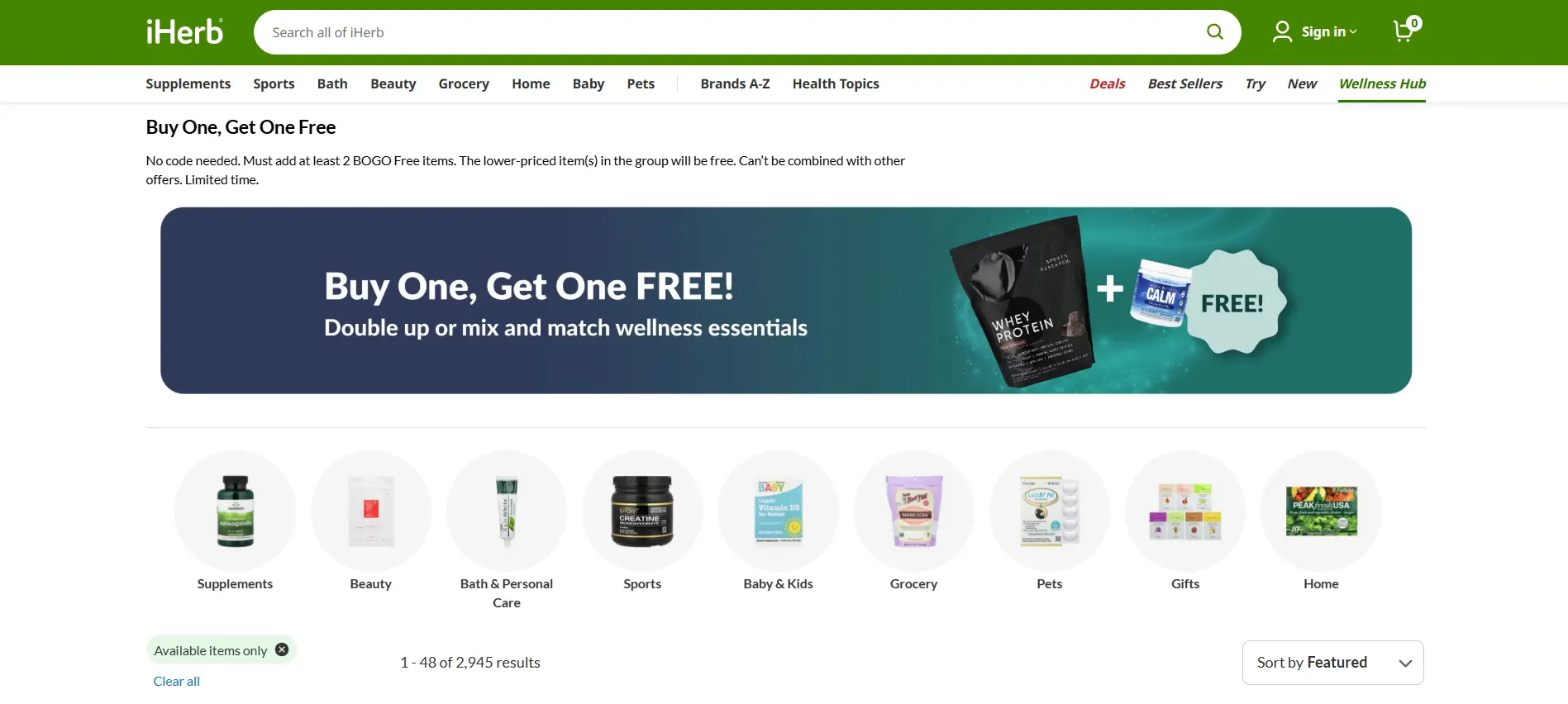
iHerb is the BOGO example I point to whenever anyone asks what a mix-and-match BOGO looks like at scale. The offer is straightforward, buy any product from their curated Wellness Essentials collection and the lower-priced item is free, with "double up or mix and match wellness essentials" as the hook line. What I love about this one is the sheer depth of the Buy One Get One pool, iHerb has 2,945 products live in the promotion across nine categories (supplements, beauty, bath and personal care, sports, baby and kids, grocery, pets, gifts, home). That catalog depth is what converts, because almost every shopper finds two things they want. I also really like that iHerb is upfront about the fine print ("No code needed. Must add at least 2 BOGO Free items. Can't be combined with other offers. Limited time."), it stops the offer from being abused and adds urgency at the same time. If you run a large-catalog store with overlapping categories, this is the BOGO example to copy.
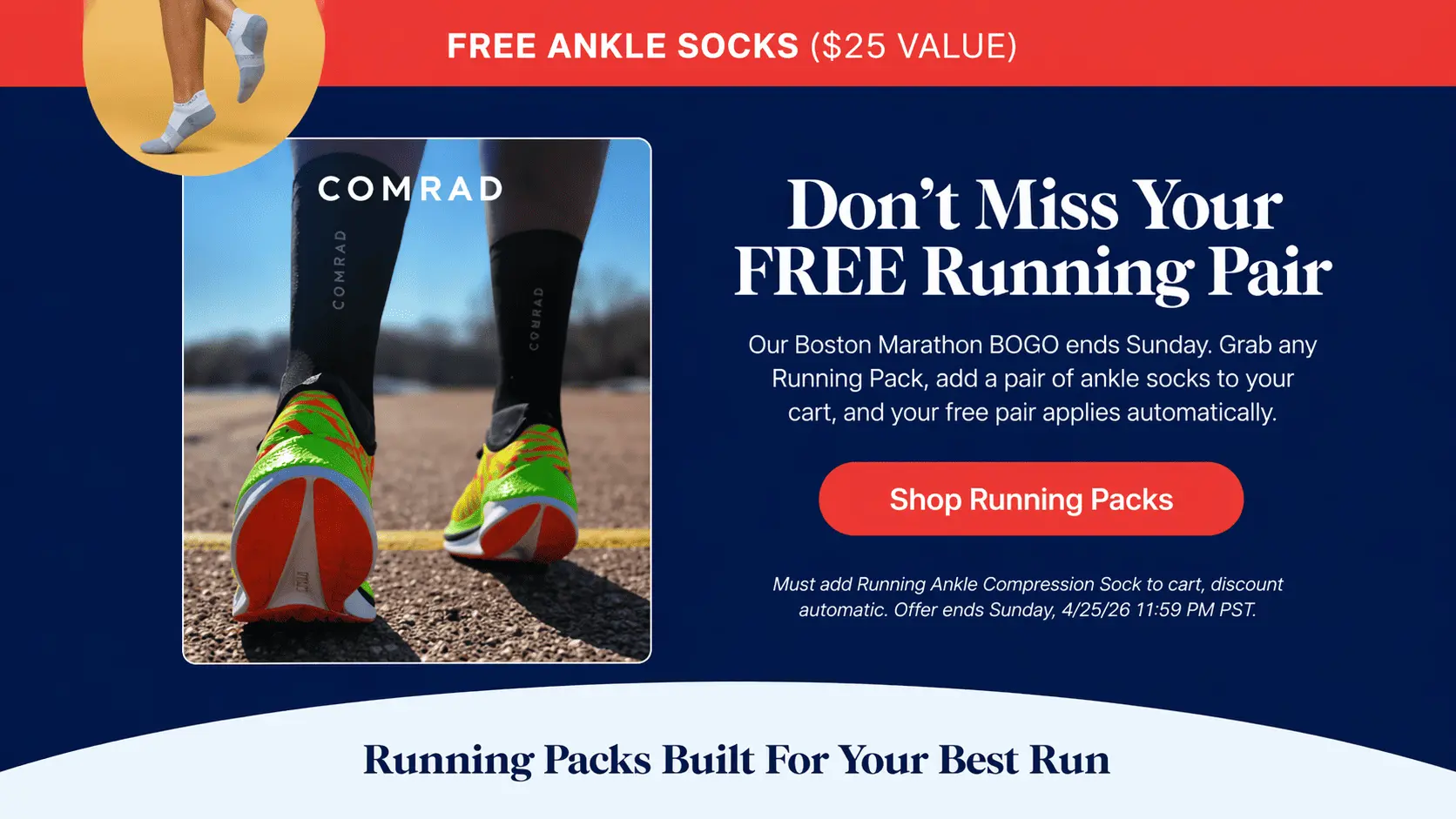
Comrad is technically a Buy X Get Y offer, but I am including it because it is one of the best BOGOexamples I have seen for tying a promotion to a cultural moment. The offer is: grab any Running Pack, add a pair of ankle socks to cart, and the $25 free pair applies automatically. What I like most is the Boston Marathon anchoring, they have built the entire campaign around a real event with a hard Sunday deadline ("Offer ends Sunday, 4/25/26 11:59 PM PST"), which turns a generic free-gift offer into a moment-driven purchase trigger. The $25 gift value is also high enough that it feels like a real two-for-one, not a throwaway freebie, which is the biggest failure mode I see in badly executed free-gift promotions. Activewear, beauty, and food and beverage brands can copy this by pairing a high-intent seasonal moment with a high-value free add-on.
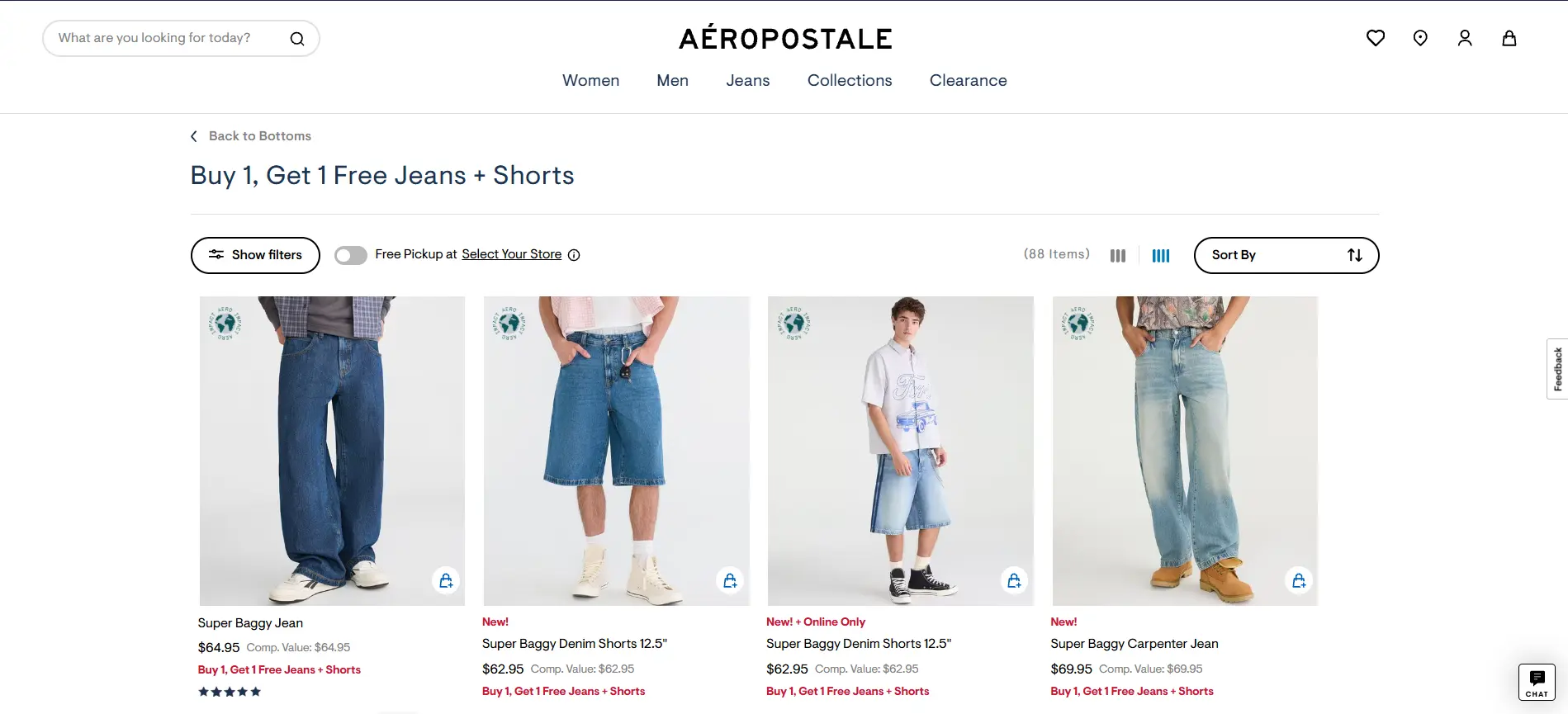
Aeropostale is a good example of Buy One Get One used as a surgical inventory-clearing tool rather than a general discount. The offer is "Buy 1, Get 1 Free Jeans + Shorts," meaning you buy any jeans and get a pair of shorts free, or vice versa. What I really like here is the merchandising discipline. They have not just run this as a banner, they have built a dedicated 88-product collection page titled "Buy 1, Get 1 Free Jeans + Shorts," with the red-text offer badge repeated on every single product card alongside the price. That repetition is doing so much heavy lifting, because customers browsing any one item are reminded that they can unlock a second free without having to re-read the promotion banner at the top. This is the BOGO example to copy if you are a fashion or apparel brand with seasonal inventory pressure (end of summer, start of back-to-school) and two categories that cannibalise each other.
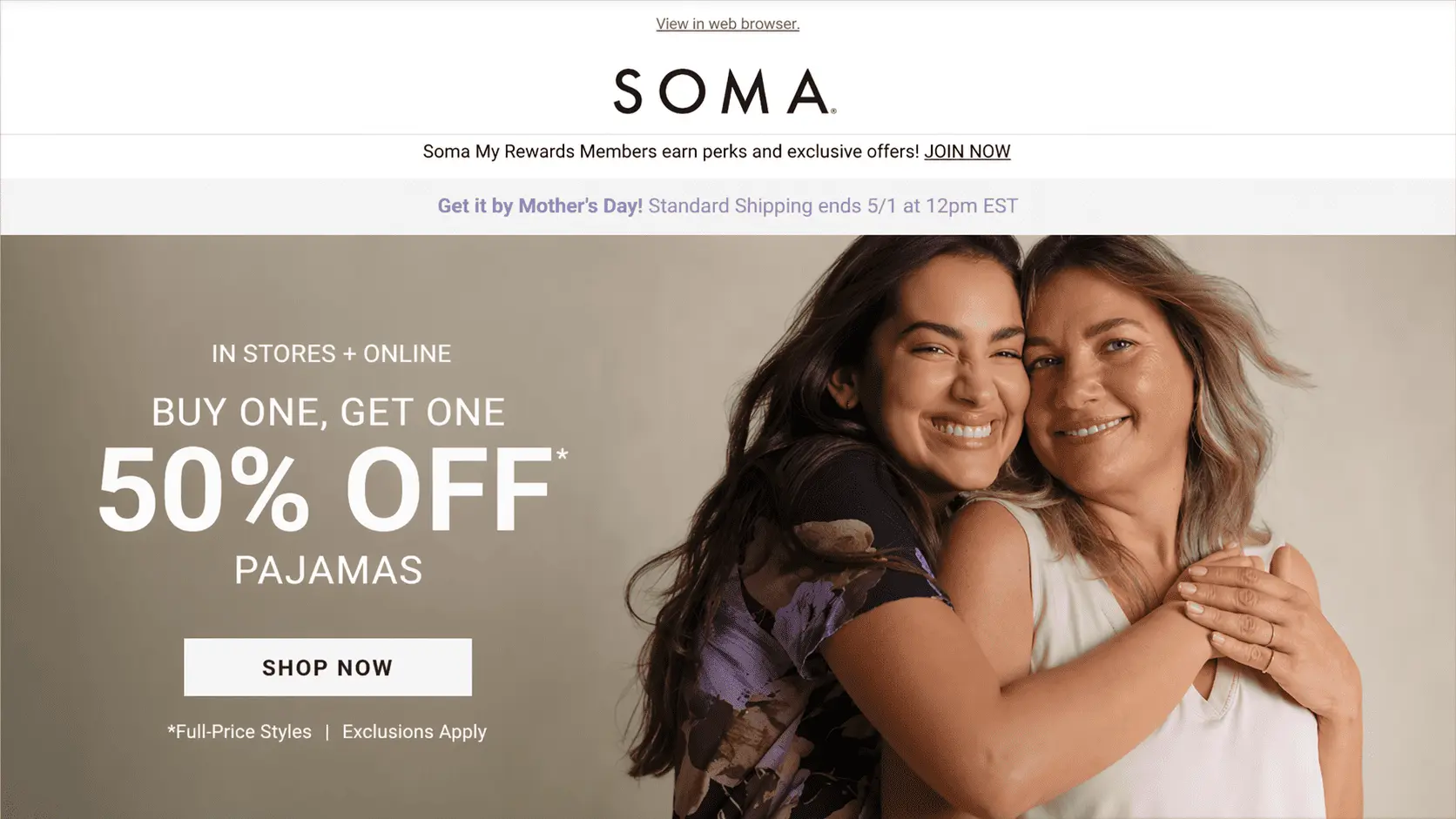
Soma's BOGO example is a focused 50% off deal restricted to pajamas only, with exclusions called out clearly ("Full-Price Styles, Exclusions Apply"). What I like about Soma is the restraint. They are a full-catalog sleepwear and intimates brand, but instead of running a sitewide BOGO (which would destroy margin across their whole range), they have narrowed the offer to one category. I also really like the creative choice here, instead of a flatlay product shot, they have gone with a warm mother-daughter embrace image, which is exactly right for pajamas where the purchase driver is comfort and intimacy, not just price. This is one of the best Buy 1 Get 1 examples I can think of for multi-category stores that want to use BOGO surgically rather than as a sitewide sale. Pick one well-defined category and concentrate your promotional firepower there.
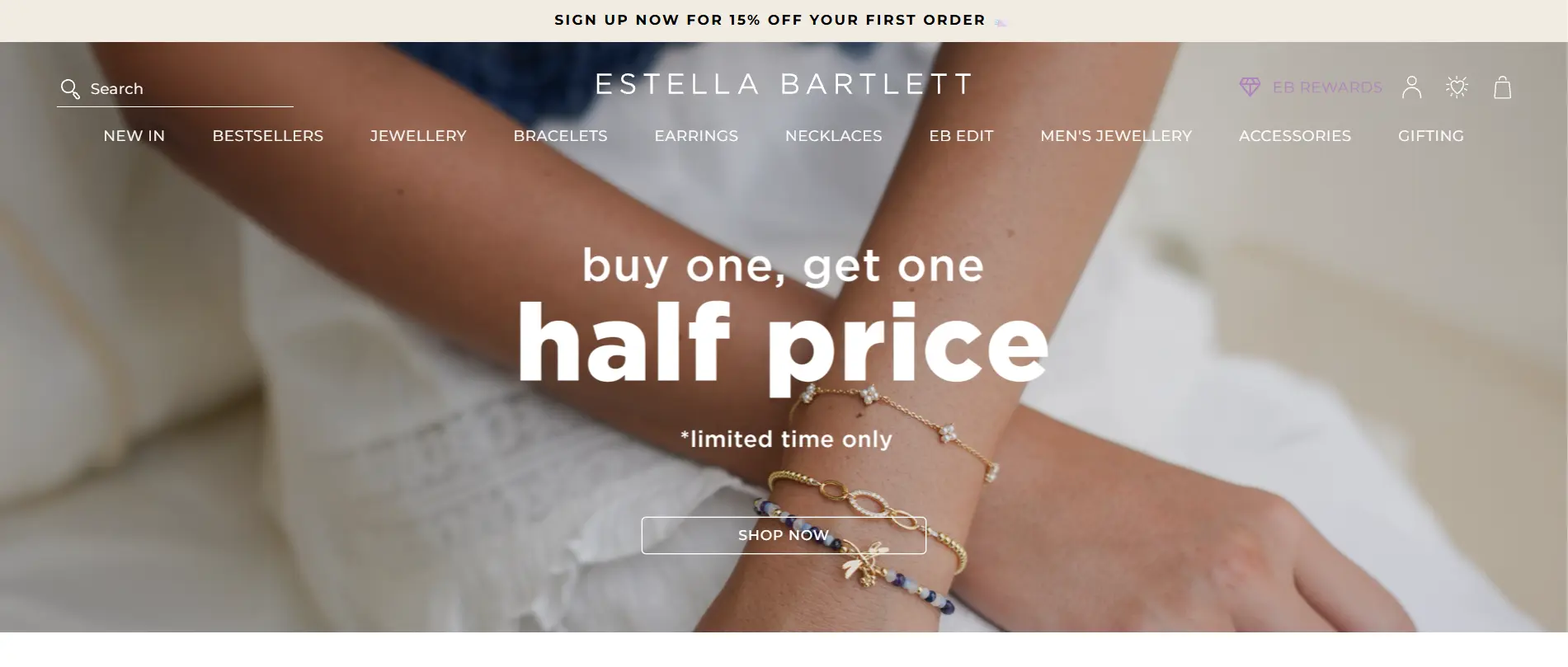
Estella Bartlett's BOGO is mechanically the same as a 50% off BOGO, but the reason it earns a spot in my best BOGO examples list is purely the copy. The banner reads "buy one, get one half price" in oversized lowercase type with a single "limited time only" asterisk, set against a soft-focus lifestyle image of a woman wearing the jewellery. I strongly prefer "half price" to "50% off" in ad creative, email subject lines, and banner placements, because "half price" reads faster, carries more emotional weight, and tests significantly better in short-form channels (Meta ads, SMS, push notifications). This is such a small copy choice but I genuinely think it is the difference between a BOGO that scales and one that stalls on paid acquisition. If you run BOGO offers through paid ads, test "half price" against "50% off" and you will probably see the lift immediately.
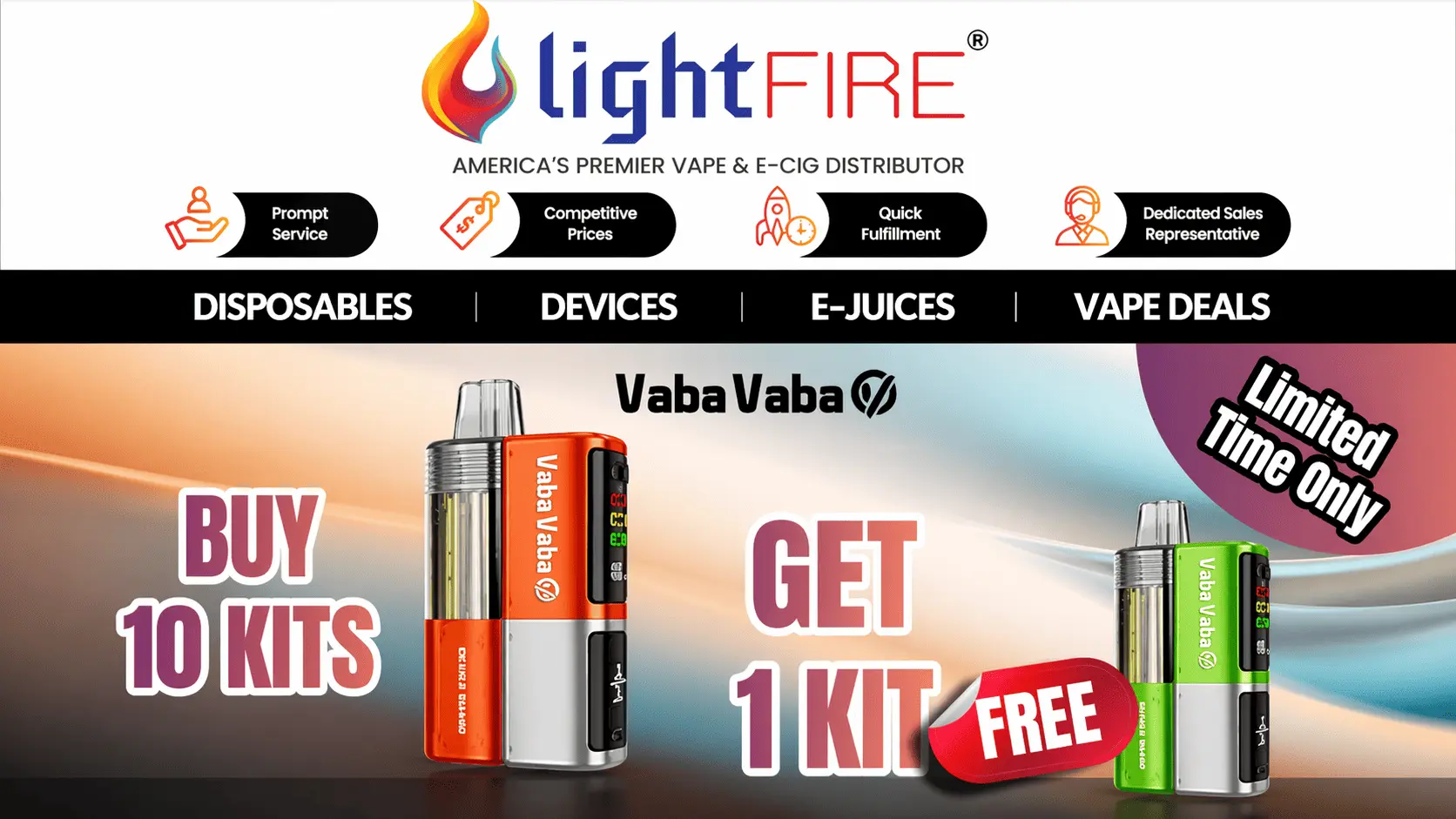
Light Fire is the most extreme BOGO example on my list, and I included it precisely because it breaks the usual one-to-one buy one get one assumption. The offer is "Buy 10 Kits, Get 1 Kit Free" on VabaVaba vape kits, run as a distributor promotion. What I like about this one is the audience targeting, Light Fire bills itself as "America's Premier Vape and E-Cig Distributor" with nav callouts for Prompt Service, Competitive Prices, Quick Fulfillment, and Dedicated Sales Representative. The moment you see those callouts, it is obvious the BOGO is not aimed at end consumers, it is a wholesale-tier incentive for retailers and resellers stocking up on vape hardware. Functionally it behaves more like a volume discount with a free unit attached than a traditional Bogof, but mechanically it is still a Buy 1 Get 1 structure. If you sell to semi-wholesale buyers, event organisers, or resellers, this is the BOGO example to copy to reward bulk basket sizes without directly discounting your unit economics.
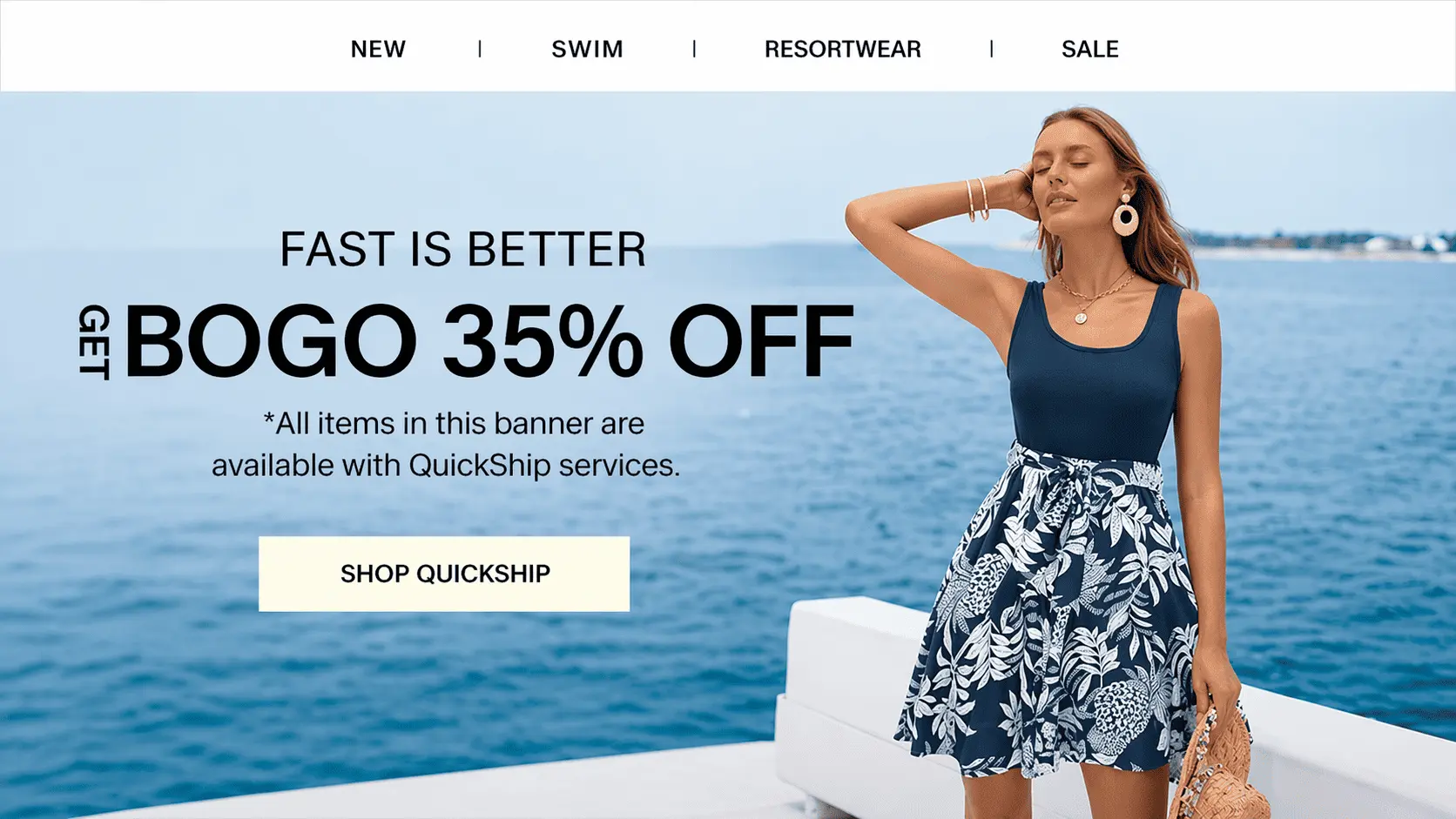
Cupshe is one of my favourite BOGO examples on this list because it does something most brands miss entirely: it ties the Buy 1 Get 1 to a logistics benefit, not just a price discount. The banner reads "Fast Is Better, Get BOGO 35% Off," with a footnote line that says "All items in this banner are available with QuickShip services." I love that because suddenly the Bogof is not just a discount, it is a speed-plus-savings bundle, which is a much more differentiated positioning than a generic 35% off deal. I also think the 35% second-item discount (instead of the usual 50%) is the smart play here, a 35% BOGO is sustainable quarter after quarter without training the customer to wait for deep-discount moments. If you have a logistics or fulfillment advantage (fast shipping, same-day delivery, premium packaging) this is the BOGO example I would copy first.

Supplement Xpress is a good example of Buy One Get One used as a seasonal, thematic campaign rather than a generic promotional banner. The offer is "October Atomic Resurrection BOGO," priced at $29.99 down from $59.98, which is effectively a 50% off BOGO structured as a single bundle SKU with flavor selectors (Blue Raz and Peach Mango). What I really love about this BOGO example is the brand-name-meets-seasonal-moment play. Their pre-workout is already called "Atomic Resurrection," so tying the October campaign to a literal "Resurrection BOGO" with orange-and-black Halloween creative, smoky graveyard background, and horror-movie typography is perfect brand alignment. Most BOGOs feel bolted on, this one feels like the product was waiting for October all year. I also like that it is packaged as a bundle product with variant pickers rather than a cart-discount mechanic, which removes conversion friction and makes the two-product offer feel like a single purchase. This is the BOGO example to copy if you sell supplements, skincare, or any category with strong seasonal hooks and branded product names you can wordplay against the moment.
Supplement Xpress specializes in nutritional supplements and employs a marketing strategy centered around impactful BOGO tactics, offering customers exceptional value with a Buy One Get One at 50% off deal.
Not all BOGO structures perform equally. The format you choose, the product categories you apply it to, and the rules you set all have a material effect on both conversion rate and final margin.
Across ecommerce categories, BOGO free consistently drives the highest conversion rate of any BOGO variant. Research from Capital One Shopping and AMG Strategic Advisors shows that consumers purchase 73% more product under a BOGO free offer than under an equivalent percentage-off deal, and three times more consumers choose BOGO free when given the choice between both formats. BOGO 50% off sits in the middle: it converts better than a standard site-wide discount but does not match the psychological pull of "free." Free gift with purchase (a BXGY variant where the reward is a different product) performs particularly well in beauty and supplements, where a curated gift carries high perceived value at a low cost to the merchant.
Beauty, supplements, and apparel consistently see the strongest BOGO conversion rates across ecommerce. In beauty, high product margins (often 70% and above) make BOGO free financially viable, and the low cost-per-unit of items like lip products means the free item does not significantly erode profit. In supplements, BOGO free drives repeat purchase: a customer who receives a second flavour for free is more likely to return for both variants. In apparel, BOGO 50% off typically performs better than BOGO free, because fashion margins are more variable and BOGO 50% off still delivers a strong perceived deal without giving a full unit away.
Kite Discounts and Free Gifts lets Shopify merchants set product-level and collection-level eligibility rules, cap offer usage per customer, and schedule BOGO campaigns with specific start and end dates, without writing custom code.
Some of the most common types of BOGO sale promotions include:
“Buy 1 T-shirt, get the second T-shirt free.”
In this classic BOGO deal, a customer purchases one item at full price and receives the second item at no cost. This promotion works well for fast-moving or low-cost inventory.
“Buy 3 candles, get the fourth at 70% off.”
In this deal, when a customer buys one or more items at full price, they can purchase another item of equal or lesser value at a discount. Instead of “free,” the bonus item is heavily discounted. Great for protecting margins while still boosting AOV.
“Buy 1 snack box, get the second for $5.”
Instead of offering a percentage discount or free item, the second item is sold at a reduced, fixed price. This protects margins while still encouraging multi-unit purchases.
"Buy one smartphone and get $100 off your second smartphone."
In this sales promotion example, customers receive a specific dollar amount discount on the second item when they purchase the first item at full price. It encourages customers to buy multiple items while saving money.
"Buy 2 shirts and get 1 shirt for free."
In a Buy X, Get Y deal, customers are required to purchase a specified number of items (X) to receive another item (Y) for free or at a discounted rate. It encourages customers to buy in bulk or spend more to unlock the offer.
"Spend $50 and receive a free skincare sample set."
This type of deal rewards customers with complimentary product samples when they reach a certain spending threshold. It allows customers to try out new products, potentially leading to future purchases.
You can provide Free samples and gifts by using this app- Kite Discount & Free Gift
"Purchase a camera and receive a free camera bag as a gift."
Free gift promotions offer customers an additional item at no extra cost when they purchase a specific product. These gifts are often related to the main product and can enhance the overall value of the purchase.
“Buy 1 jeans, get any second item of lesser value free.”
This version limits the customer’s free/discounted item to something equal or cheaper in value. Stores use this to prevent high-margin losses.
“Spend $75, get a free accessory.”
Instead of tying the promotion to a specific product, it's based on cart value. This encourages shoppers to add more items to hit the spend threshold.
"Buy 1 → no discount. Buy 2 → 20% off. Buy 3 → 40% off."
This tiered model rewards customers for purchasing larger quantities and works well for consumables and everyday essentials.
“Subscribe today and get your second month free.”
This strategy encourages first-time signups and helps increase recurring revenue for subscription-based brands.
‘Buy one, Get one’ is an effective strategy to get online shoppers to buy more than they intend to; but you need to keep the following best practices in mind:
Ensure that the products you select resonate with your target audience and seasonality. Consider customer preferences, trends, and your inventory levels to make informed choices. BOGO discounts work best when they genuinely appeal to your customers' needs and desires.
Use customers' past purchase history and browsing behavior to recommend BOGO deals that align with their interests. Sending personalized recommendations can significantly increase conversion rates and customer satisfaction.
Incorporate a sense of urgency into your BOGO promotions to encourage immediate action from customers. Use phrases like "Limited Time Offer" or "While Supplies Last" to instil a fear of missing out (FOMO) and drive quicker purchasing decisions.
Employ countdown timers or display the number of items left in stock to create a perception of scarcity, further motivating customers to make a purchase and take advantage of the enticing BOGO deal before it's gone.
Learn how to set up your e-commerce volume discounting structure.
Determine the pricing strategy for your BOGO promotion to ensure it's profitable for your business while still providing value to customers.
Calculate the discount percentage and set the BOGO price point carefully to avoid losing money on the offer. It's essential to strike a balance that benefits both your business and customers.
Experimentation is key to refining your BOGO strategy. Test various types of BOGO promotions to understand what resonates best with your audience. This could include "Buy One, Get One Free (BOGO F)," "Buy One, Get One at a Discount," or "Buy Two, Get One Free." Each type may yield different results, impacting factors such as sales volume, revenue, and customer perception.
Use A/B testing to compare the performance of different BOGO types and optimize your future promotions based on the insights gained from these experiments.
BOGO pricing is not just about the offer mechanics: the formula underneath it determines whether the promotion generates profit or destroys margin. The core principle is this: to break even on a BOGO free offer, your product margin must be high enough to cover the cost of the free unit from the revenue of the first unit alone.
For example: a product that costs $10 to make and sells for $30 has a margin of 67%. On a BOGO free offer, the merchant collects $30 in revenue and ships two units at a total cost of $20. Gross profit per order: $10. The offer is profitable. If the same product had a 35% margin (sells for $30, costs $19.50 to produce), the merchant earns $30 in revenue but spends $39 on two units. The order runs at a loss. Margin position is what determines whether BOGO free is a growth tool or a cost centre.
The table below is a simplified guide for choosing the right BOGO variant based on product margin:
The practical strategy is to apply BOGO free only to your highest-margin SKUs or collections, not your full product range. Kite Discounts lets you set collection-level and product-level eligibility rules for each BOGO campaign, so you can run BOGO free on your core beauty or supplement line while excluding low-margin accessories or bundles from the same promotion.
Also Read: Best Shopify Apps to increase your online sales
Explore more discount strategies to increase your online sales.
FAQs on 10 Best BoGo Examples to Skyrocket your Sales


.avif)