.svg)
.svg)
.svg)
.svg)
.svg)


.svg)
%20(1).jpg)
.jpg)
Our Apps Have Driven
5X AOV | 2X Conversions | $30M+ Additional Revenue
5X AOV | 2X Conversions | $30M+ Additional Revenue
.svg)


5.0 (3000+ Reviews)


Shopify Apps





.svg)

During peak seasons, there's a notable increase in returns and chargebacks, because merchants' target higher sales volumes, leaving room for errors. Retailers are constantly sprinting to get products from the factory to the buyer during peak seasons and accept orders they might ordinarily reject due to insufficient oversight of transaction risk profiles.
Also, many shoppers make impulsive purchases during holidays and later decide to return them or even request chargebacks. Some of these buyers intentionally abuse the merchant's return policy to defraud your business by either returning items or seeking chargebacks.
That’s why fraudulent returns and chargebacks repeatedly surge during holiday seasons. But don’t fret. We’re here to give you actionable insights on minimizing such purchases and give you a way to avoid a chargeback in case of fraud.
Besides the negative impact on retailers' earnings, fraudulent returns and chargebacks also damage reputation, increase scrutiny from payment processors and banks, and cannibalize sales.
According to the National Retail Federation, return fraud costs retailers $17.8 billion annually. Return fraud is often a precursor to chargebacks – a forced payment reversal by the cardholder's bank. It occurs when a customer returns an item in a different condition than when it was shipped, or when they didn't make the purchase in the first place.
For example, the fraudster can steal an item from a physical store and try to return it for a refund. Scammers then use chargeback threats to strong-arm sellers in issuing refunds and the retailer ultimately bears the brunt of the loss in:
Chargebacks are a consumer protection instrument that redresses transaction issues or unauthorized billing, but scammers now manipulate the chargeback system for personal gain. Industry records show that such pre-meditated disputes account for 40% to 80% of all eCommerce fraud losses.
To mitigate the risk of fraudulent returns and chargebacks, eCommerce leaders need to take proactive measures across multiple fronts to manage exposure and safeguard their businesses. So, let’s look into how you can prevent chargebacks at the checkout stage and how you can manage chargebacks effectively should they still occur.
Want to learn more about minimizing cart abandonment and boosting conversions?
The pre-checkout stage is critical for fraud prevention since payment hasn't been processed yet. Implementing the right steps at this stage can help detect and prevent fraudulent transactions, saving both money and the complexity of handling chargebacks.
Here's how you can avoid fraud during the checkout stage:
Implementing these automated measures may seem complex, but it's not. You can simply use Checkout Wiz to implement everything. So, optimize your Shopify checkout and never lose unnecessary money even during the holiday season.
Looking for effective ways to optimize your Shopify cart page for better conversions?
Our customer, a leading CBD brand faced a significant challenge with chargebacks, mainly due to fraudulent transactions.
So, they implemented comprehensive validation steps at every stage of their checkout process, thanks to Checkout Wiz:
This holistic approach led to a marked decrease in chargebacks, safeguarding the brand’s revenue and reputation.
Even after taking all the measures, fraud can happen. In such a case, you can automate your chargeback recovery with Chargeflow. Let’s show you the effectiveness of Chargeflow through the example of WordTune.
Curious about other strategies to enhance your Shopify checkout experience?
Research shows that while the chargeback rate baseline stays at 0.5% to 0.7% for most verticals, SaaS companies experience up to 5% chargeback rates, with an average win rate below 12%.
WordTune, a fast-rising AI-powered Writing Companion, faced consistent chargeback fraud issues and sought a reliable solution. Their in-house manual chargeback resolution was proving unsustainable and time-consuming.
Need to boost your Shopify store's trust and reliability with trust badges?
Choosing Chargeflow was an easy decision due to its seamless integration, transparent processes, user-friendly dashboard, and excellent customer service with success-based pricing. This means that Wordtune can make profits regardless of what happens.
Chargeflow proved to be a more practical solution than available options. The results were immediate and definitive, significantly increasing Wordtune's chargeback win rates. As a result, they saved time and could refocus on scaling their business while enjoying complete transparency over the entire process. Chargeflow helped Wordtune recover high-ticket chargebacks previously written off as a cost of doing business.
Interested in integrating upselling techniques into your Shopify checkout process?
In less than six months since automating their chargebacks, Wordtune says they’ve seen:
Says Matt Lewis, Product Manager at Wordtune:
"I spent months handling disputes, but my low win rate made it impractical. I needed to scale the business efficiently. Chargeflow's seamless pricing and operations, accessible with a single click, were a game-changer. Working with them is a real partnership; they prioritize what matters to us, especially reducing dispute rates. The user-friendly dashboard is a bonus."
Protecting your eCommerce store from returns and chargebacks during peak seasons is crucial for your business's success. The success stories of our customers showcase the effectiveness of chargeback management solutions. Safeguarding your business is an ongoing process that requires the right tools. By investing in prevention and resolution, you can confidently navigate peak seasons, preserve your revenue, and bring a positive customer experience.
Ready to transform your checkout process and safeguard your Shopify store?


.avif)

Free webinar
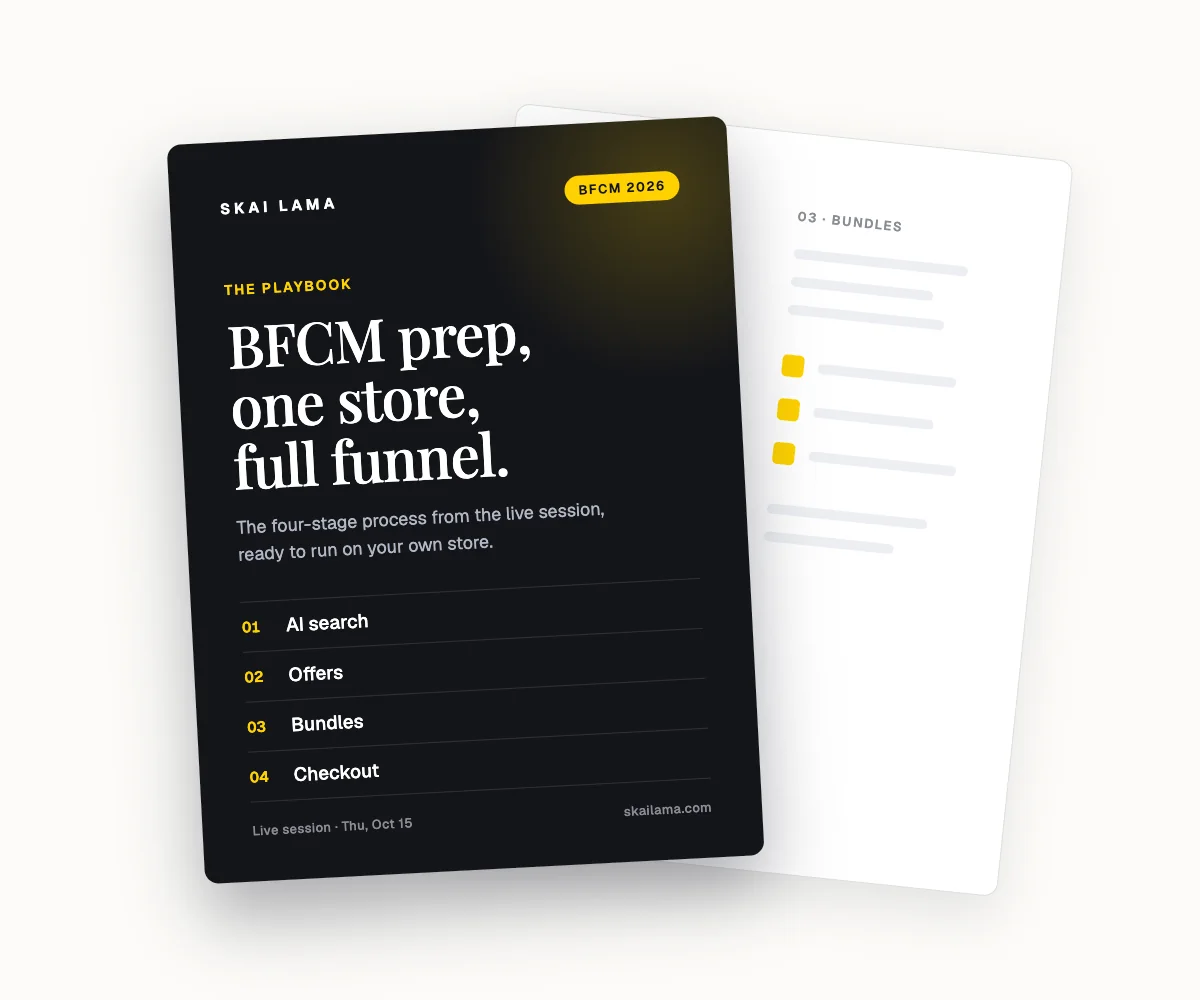
BFCM prep, live on one store.
We take one Shopify store through the whole BFCM funnel on screen, from AI search to checkout. You leave with the playbook to run the same on yours.
Thu, Oct 15
1 PM ET · 10 AM PT
60 minutes
Can't make it live? Register anyway. The recording and the playbook go to everyone who signs up.
Save your free seat
BFCM Prep Live. Thu, Oct 15 at 1 PM ET, 10 AM PT, 6 PM UK. 60 minutes.