eCommerce Conversion Rate Optimization (CRO) focuses on improving how many visitors turn into paying customers, boosting revenue without needing more traffic.
Key metrics to track include conversion rate, AOV, bounce rate, and cart abandonment, using tools like Google Analytics, Shopify Analytics, and SEMrush for performance insights.
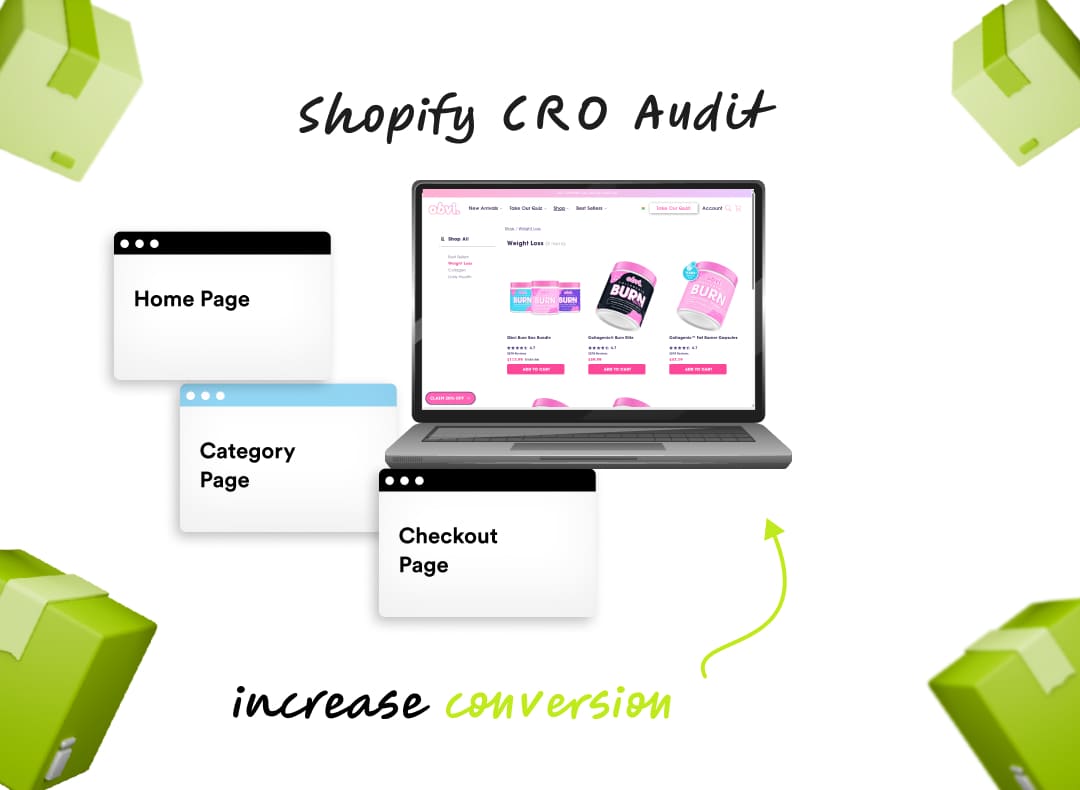
CRO strategies span every stage of the shopping journey optimizing homepages, category pages, product detail pages, landing pages, carts, and checkout flows to reduce friction and improve conversions.
Techniques like urgency triggers, personalized recommendations, exit intent popups, and trust signals build confidence and encourage purchases across devices.
A/B testing, site speed improvements, and mobile optimization are essential for identifying what drives conversions and ensuring seamless user experiences.
Tools like Hotjar, Unbounce, OptinMonster, Checkout Wizard, and Loox help track user behavior, test ideas, and automate improvements for sustained CRO growth.
Any ecommerce store will have one singular goal, i.e., optimizing their conversion rate. Conversion Rate Optimization (eCommerceCRO) refers to the practice of improving the percentage of ecommerce store visitors who check out a product and pay for it.
For online stores, this can make a significant difference in revenue without needing to invest in additional traffic. eCommerce CRO focuses on converting the existing traffic into customers.
Conversion Rate Optimization (CRO) in eCommerce is the practice of enhancing a website’s ability to turn visitors into customers. This involves testing and optimizing various elements of the site, such as product pages, checkout flows, and overall user experience, to increase the likelihood of a conversion. By focusing on improving the conversion rate (CVR), businesses can boost sales without needing to invest in additional traffic. This blog covers key CRO strategies, tools, and metrics, including A/B testing, Shopify-specific apps, and best practices for optimizing various pages like the homepage, product pages, and checkout. With the right CRO tactics, you can unlock the full potential of your current traffic and achieve sustained business growth.
What is eCommerce Conversion Rate?
eCommerce conversion rate is the percentage of total visitors who carry out a transaction on your Shopify or ecommerce store. It is also known as CVR.
How to Calculate eCommerce Conversion Rate (Formula)
CVR = ( Number of Conversions / Total Visitors )×100
Conversions refer to when a customer checks out a product and pays for it.
Total Visitors refers to the total number of people who visited your site within a given time frame.
Checkout CVR = ( Number of Conversions/ Total Visitors in Checkout )×100
Page CVR = ( Number of Click Throughs/ Total Visitors in Checkout )×100
You can use a page CVR and checkout CVR to do page wise CRO which ultimately leads to increasing the ecommerce site’s CRO.
Is There a Good Conversion Rate?
A "good" conversion rate, also known, is subjective and can differ based on factors such as the type of business, industry, and the specific product or service being offered.
Average eCommerce Conversion Rates
Typically, eCommerce stores see an average conversion rate of 2-3%. However, this can differ depending on the niche and business model.
For instance, a luxury goods site may have a lower conversion rate but higher average order value (AOV), while a fast-fashion site might have a higher conversion rate but lower AOV.
Tracking your industry’s benchmarks and striving for gradual improvements are key to determining your success.
Key Metrics that Impact eCommerce CRO Success
CRO optimization is crucial for turning visitors into customers. To assess the effectiveness of your CRO efforts, tracking Key Performance Indicators (KPIs) is essential.
Key Performance Indicators (KPIs):
Page Views: More page views mean more opportunities for conversions.
Average Order Value (AOV): Higher AOV can boost overall revenue.
Cart Abandonment Rate: A high abandonment rate can signal friction points in your checkout process.
Conversion Rate: Percentage of visitors completing a desired action, such as making a purchase or subscribing to a service. It's the primary metric for measuring CRO success.
Bounce Rate: It's the percentage of visitors who leave after viewing just one page. High bounce rate suggests low engagement or site problems.
Exit Rate: The percentage of visitors leaving after viewing a particular page. Monitoring this helps identify friction points in your conversion funnel, especially on critical pages like checkout.
Tools for Analysis:
Google Analytics: Provides data on conversion rates, bounce rates, and exit rates, along with insights into user behavior.
SEMrush: Offers traffic analysis and competitor insights, helping you optimize your website and improve conversions.
Shopify Analytics: Offers in-depth eCommerce metrics like sales performance, customer behavior, and conversion rates, helping you track key business outcomes and optimize your store's performance.
Practical Strategies for eCommerce CRO
Optimizing your eCommerce site for higher conversion rates is not just about attracting more visitors, but about ensuring the visitors you already have are encouraged to complete their desired actions.
Below, we will expand on key eCommerce CRO strategies that can significantly improve your eCommerce conversion rates.
1 .Homepage: Optimizing for eCommerce Conversions.
First impressions matter. Your homepage is ground zero. Here’s what you need to keep in mind while designing & optimizing your homepage.
Prominently Display Promotions: Make your promotions the focal point, with clear call-to-actions (CTAs), bold banners, and strategically placed discounts to avoid any confusion.
Clear Visual Hierarchy: Organize your content with a clear visual hierarchy, showcasing primary product categories at the top with descriptive images to help new visitors understand your offerings quickly.
Primary Offers & CTAs: Avoid overwhelming customers with too many choices. Feature two key offers at the top of your homepage (e.g., "Offers for Men" and "Offers for Women") and save secondary offers for product pages, ribbon banners, and checkout.
Sticky Bars: Use sticky announcement bars at the top of your homepage to highlight important offers like free shipping or sitewide discounts, ensuring they remain visible as users scroll.
Countdown Timer: Add a countdown timer at the top of the homepage to create urgency and remind customers of limited-time offers, pushing them to make faster decisions.
Emphasize Limited Stock: Highlight offers with limited stock to create a sense of scarcity and prompt quicker purchase decisions.
Keep It Clean: Avoid cluttering the homepage with too much information. Use clear navigation and CTAs to guide visitors to other pages for more details.
Search-Friendly: Position the search bar prominently at the top to help focused shoppers quickly find what they're looking for.
Social Proof & Trust Signals: Build trust with new visitors by displaying ratings, reviews, and positive feedback prominently on your homepage, especially near product categories.
Mobile-First Design: Ensure your website is optimized for mobile with easy-to-tap buttons, legible text, and fast load times. Test on multiple devices to guarantee a seamless user experience.
2. CRO for Category Pages
The category page is often overlooked in eCommerce CRO. However, it plays a crucial role in enhancing the user experience by providing a clear navigation structure. This page helps drive traffic to individual product pages that might otherwise be missed in searches and allows new visitors to easily understand your product categories.
Sorting & Filtering Options: Discounts are often a priority, and the category page is where customers filter products by price and discount. Include filters like "Biggest Discount," "Limited Stock," or "Best Sellers," and consider using sticky filters to allow users to filter while scrolling.
Showcase Products Effectively: Display products by category with high-quality images and engaging descriptions. A 3-4 product grid per row works well, and incorporating zoom functionality or short videos for key items can enhance the shopping experience.
Highlight Savings: Use visual elements like tags or badges to emphasize savings in each category. Best-sellers, trending items, or top-rated products should be prominently featured at the top of the page.
Navigation: Ensure customers are returned to the same spot on the category page after visiting a product page. This often-overlooked CRO feature improves overall user experience and helps keep the browsing flow intact.
3. Optimizing Your Product Pages (PDP)
Product pages are where the action takes place. Your goal should be to minutely optimize every aspect of this page so that the customer move through to the cart.
Clear Pricing
Clear and visible pricing reduces confusion and builds trust with potential buyers. Hidden or ambiguous prices can lead to cart abandonment as users may worry about hidden fees.
How to Optimize:
Include Taxes and Shipping: Display the final price including taxes and shipping before the checkout stage to avoid surprises.
Price Range: For product variations, show the full price range of available options upfront.
Concise Descriptions
How you present your products significantly impacts results. A concise and compelling product description provides all necessary details without overwhelming the customer.
How to Optimize:
Highlight Key Features: Use bullet points for easy-to-read key features and benefits. For consumables, make sure you show the ingredients.
Focus on Benefits: Highlight how the product will improve the customer’s life, not just the technical specifications.
High-Quality Images
Clear, high-resolution images can boost user confidence and give customers a detailed view of the product. Multiple angles, zoom functionality, and lifestyle images can all enhance the shopping experience.
How to Optimize:
360-Degree Views: Implement 360-degree product views to give customers a full view of the product.
Zoom Functionality: Allow users to zoom in on product images to examine details closely.
Highlight Discounts
Displaying discounts effectively can create a sense of urgency and incentivize customers to complete their purchase. If shoppers see they’re getting a deal, they’re more likely to follow through with a purchase. However, how you present these discounts matters in terms of clarity and impact.
How to Optimize:
Clear Discount Visibility: Ensure discounts are prominently displayed on the product page, ideally near the product title or price. Avoid burying it in the description where it can easily be overlooked.
Strike-Through Prices: Use strike-through pricing to clearly show the original price alongside the discounted price. This visually demonstrates the savings.
Percentage Off: Consider using both the dollar amount and percentage off to appeal to different shopper preferences.
Time-Sensitive Offers: Add urgency by displaying time-limited discounts with countdown timers, such as “Limited time offer” or “Sale ends in 24 hours.” This motivates customers to act quickly.
Bundled Discounts: Offer discounts on product bundles, like "Buy 2, Get 1 Free," and showcase the savings clearly.
4. Optimizing Landing Pages for eCommerce Campaigns
Landing pages are the focal point of many marketing efforts, from paid ads to email campaigns. They leave a lasting first impression and can significantly impact the success of your campaigns. Here's how to optimize your landing pages:
Types of Landing Pages: Direct traffic to specific offers or your entire product range. Choose the approach that maximizes your conversion potential.
Message Match: Ensure the landing page message aligns with your marketing campaign. For instance, if you're promoting a particular offer, make sure it's prominently featured on the page.
Clear Call-to-Actions: Shoppers have little time. Place your primary CTAs above the fold, making them instantly visible. Keep CTAs sticky as users scroll to maintain visibility.
Distraction-Free Design: Remove unnecessary links or navigation. Focus solely on the offer with minimal text and a few compelling visuals.
Showcase Products/Offers: Single-page bundles are perfect for landing pages. Ensure product titles and descriptions are clear and easy to read, accompanied by high-quality visuals.
Social Proof & Trust Signals: Add customer reviews, ratings, and user-generated content to build trust and credibility on your landing page.
5. Enhancing Cart Page eCommerce CRO
The cart page is where many retailers lose sales. Abandoned carts are a reality, and shoppers are more likely to leave a site if they experience even a small hiccup. Here are some key eCommerce CRO tips that will help you get shoppers to the ‘checkout’ button.
Urgency & Scarcity Triggers: Use urgency and scarcity triggers like “Your cart isn’t reserved until you check out” to reduce cart abandonment.
Progress Bar for Free Shipping: Show how close a shopper is to earning free shipping. A message like "Add $10 more for free shipping!" can effectively increase cart value
Recommend Product Upsells: Introduce widgets to upsell and cross-sell products. You can recommend “customers also bought” or “add our best-sellers.”
Keep Shoppers Engaged with a Side Cart: Implement a side cart to enhance the shopping experience by letting customers view their cart contents without interrupting their browsing.
Persistent Cart: Enable the persistent cart functionality so carts are saved for when shoppers come back.
Abandoned Cart Recovery Emails: Set up abandoned cart emails that trigger automatically after a shopper leaves your site.
6. Checkout Page eCommerce CRO
The checkout page is a crucial piece of real estate in a shopper’s purchase journey. Here are some eCommerce CRO tactics that you can implement:
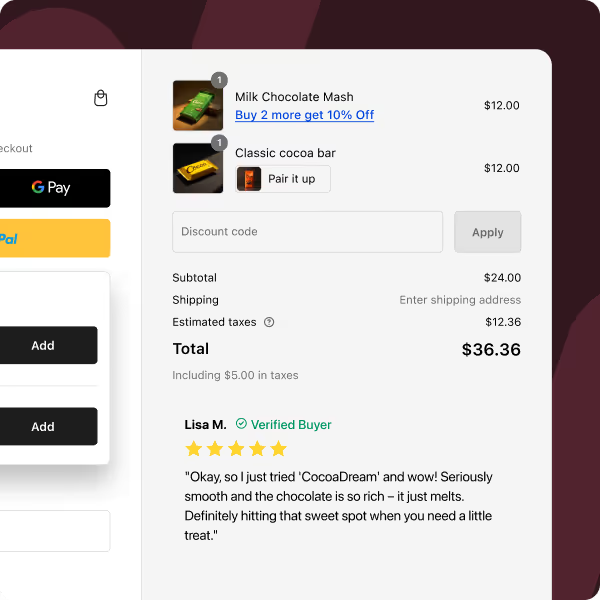
Checkout Upsells: Create upsell and cross-sell blocks at checkout to increase AOV. Offer attractive discounts on recommended products.
Free Shipping Progress Bar: Add a free-shipping progress bar in the checkout to remind customers of this benefit.
Gifting Upsells: Offer gift wraps and cards during checkout to capitalize on gift-giving motivations.
Custom Gift Message: Allow customers to write personalized messages during checkout.
Social Proof & Trust Badges: Use badges to reinforce trust and credibility in the checkout stage.
The 'thank-you' and 'post-purchase' pages offer valuable opportunities to enhance eCommerce CRO.
Clear Confirmation: Confirm the purchase with essential details such as tracking information and customer support contacts.
Post Purchase Upsells: Use your order confirmation page to suggest additional products. Add urgency with time-limited offers.
Encourage Repeat Purchases: Offer discounts on their next purchase to incentivize further shopping.
Gift Card Promotions: Promote customer loyalty with gift cards for future purchases.
Launch a Referral Program: Incentivize customers for referring others, helping to grow your customer base.
Customer Profile Surveys: Collect consumer behavior information with incentives like discounts.
8. Mobile Optimization for eCommerce CRO
With mobile shopping on the rise, you should be able to provide a seamless experience across devices.
Responsive Design: Ensure your website adjusts seamlessly to various screen sizes for an intuitive mobile experience.
Fast Load Times: Aim for a load time under three seconds. Optimize images and streamline code to boost speed.
Mobile-Friendly Checkout Process: Simplify the checkout experience with autofill and guest checkout options.
Easy Mobile Payment Solutions: Integrate popular mobile payment methods like Apple Pay and Google Pay.
9. Site Speed: Technical Optimization for eCommerce CRO
Optimizing your site’s performance is essential for eCommerce CRO. It’s crucial to ensure that your eCommerce site loads quickly, especially since visitors expect a seamless experience.
Choose a Lightweight Theme: For high-traffic events, use a responsive theme optimized for performance.
Compress and Optimize Images: Compress images to improve load times without sacrificing quality.
Lazy Loading: Speed up initial page loads by using lazy loading for images and videos.
Minimize HTTP Requests: Improve website speed by minimizing HTTP requests through CSS and JavaScript optimization.
Use a Content Delivery Network (CDN): CDNs can distribute your content across multiple servers worldwide, speeding up the time it takes for content to load.
Enable Caching: Implement caching to store certain elements so they don't need to reload each time a visitor visits your site.
10. A/B Testing: Key Step in Your eCommerce CRO Strategy
When optimizing your Shopify store, A/B testing is crucial for identifying high-performing elements that drive conversions.
Set Clear Goals: Define goals for your tests, like increasing add-to-cart rates or reducing cart abandonment.
Choose Key Pages to Test: Focus on product page layouts, headlines, and CTAs.
Analyze Results: Run the test for at least two weeks to gather enough data and implement changes based on the results.
11. User Experience (UX)
An intuitive website structure makes it easy for visitors to find what they’re looking for, which can significantly reduce bounce rates and increase conversion rates. Clear navigation improves the overall shopping experience, increasing the likelihood of users making a purchase.
How to Optimize:
Simplified Menu: Avoid cluttered navigation and prioritize the most important categories.
Search Functionality: Implement a powerful search bar with filters, allowing users to quickly find products.
Sticky Navigation: For longer pages, sticky navigation bars that stay visible while users scroll can help maintain easy access to essential links.
12. Trust Signals
1. Customer Reviews and Testimonials
Trust heavily influences buying choices. Consumers are more likely to buy products that others have reviewed positively. Including user-generated content like customer reviews, ratings, and testimonials can increase consumer confidence.
How to Optimize:
Customer Reviews: Enable a review section on your product pages where customers can share their experiences.
Video Testimonials: Feature video testimonials from happy customers, as these offer an added layer of authenticity.
Third-Party Trust Badges: Display trusted payment methods (e.g., Visa, PayPal) and security certifications (e.g., SSL) on your site.
2. Security Badges
A lack of trust signals can deter customers from making purchases, especially when dealing with sensitive financial information. Make sure to display SSL certificates, payment security icons, and data protection seals prominently.
How to Optimize:
Place Security Badges: Show these badges on checkout and payment pages to reassure customers that their information is safe.
Add a Privacy Policy: Include a clear privacy policy that informs users about how their data is handled.
13. Personalization and Product Recommendations for eCommerce CRO
Personalized recommendations and dynamic content are key for boosting eCommerce CRO. When customers see products that align with their interests, they are more likely to add them to their cart, increasing AOV and driving conversions.
1. Personalized Product Recommendations
Tailoring product suggestions to individual customers is a powerful strategy for eCommerce CRO. By recommending relevant products based on customer behavior, you can guide them toward additional purchases.
Use Purchase History: Suggest products based on past purchases to increase repeat sales.
Behavioral Targeting: Display personalized suggestions based on browsing behavior, like viewed or abandoned items.
Complementary Products: Suggest items that enhance what customers are already considering, like a camera lens when purchasing a camera.
Incorporating Recommendations at Checkout: Offer last-minute add-ons or upgrades at checkout to increase AOV, like accessories or protection plans.
Use Data to Refine Recommendations: Leverage customer data to make personalized suggestions more accurate and relevant.
Cross-Platform Recommendations: Ensure consistent product recommendations across your website, mobile app, and email campaigns to keep customers engaged.
Email Personalization: Send targeted offers via email based on past shopping behavior, which can drive higher engagement and conversions.
2. Dynamic Content
Personalizing the content shown to users based on their interests, location, or demographics can significantly enhance eCommerce CRO.
Location-Based Personalization: Show region-specific products to increase relevance and drive conversions.
Behavioral Popups: Use popups triggered by user behavior to offer special discounts or deals, nudging them toward a purchase.
14. Exit-Intent Popups
Exit-intent popups are designed to appear when a user attempts to leave the site, often offering an incentive like a discount to prevent them from leaving.
How to Optimize:
Offer Discounts: Provide a limited-time discount or free shipping offer to users about to exit.
Request Feedback: Use popups to ask why the user is leaving. Understanding customer reasons for exit can provide valuable insights into areas for improvement.
Make it Non-Intrusive: Ensure that exit-intent popups are well-timed and not disruptive to the user experience.
Top eCommerce CRO Tools
For eCommerce businesses, utilizing the right eCommerce CRO tools can significantly enhance the customer experience and drive more conversions. Let's explore various eCommerce CRO tools available:
A well-optimized landing page can make all the difference when it comes to conversions. Unbounce allows you to create highly customizable landing pages without needing to code. It offers templates optimized for conversions and integrates with many third-party apps like Google Analytics and A/B testing tools. With Unbounce, eCommerce store owners can quickly create and test landing pages tailored to specific products, promotions, or seasonal campaigns, resulting in better conversion rates.
Checkout Wizard is an app for customizing and optimizing conversion within checkout. Using it’s powerful A/B testing feature, you can make data backed decisions for every aspect of your checkout.
OptinMonster is a leading CRO tool that helps you convert abandoning visitors into subscribers or customers. With features like exit-intent pop-ups, slide-ins, and floating bars, OptinMonster allows you to capture visitors’ attention at the right moment. It also offers A/B testing features to help optimize your campaigns and enhance conversion rates over time. This tool can be particularly effective for capturing leads and improving sales on high-traffic pages.
Hotjar provides insights into user behavior, which is crucial for optimizing CRO. Hotjar provides heatmaps, session recordings, and surveys to help you visualize how visitors interact with your pages. By identifying friction points—such as areas where customers are abandoning their carts—you can make informed decisions on how to improve the user experience. This tool is invaluable for identifying usability issues that may be hindering your conversion rates.
Kite is a powerful tool for creating customizable discounts and free gift offers that can encourage shoppers to make a purchase. Using Kite you can create personalized offers for specific customers based on customer tags and incentivize them to convert.
For example, customers can be offered a free gift or a discount based on their shopping behavior or cart size. This type of targeted promotion can effectively boost conversion rates by appealing directly to customer needs.
6. Shopify (Built-in CRO Features)
Shopify offers several built-in tools that can help with CRO, including abandoned cart recovery emails, product recommendations, and discounted pricing options. Shopify also integrates with various CRO apps from the Shopify App Store, allowing you to enhance your store’s functionality.
A/B Testing Tool VWO is a comprehensive platform designed for A/B testing, multivariate testing, and personalization. By testing different variations of your site, such as changing headlines, images, or calls to action, you can determine which elements lead to higher conversion rates. VWO also offers behavior analysis tools, heatmaps, and segmentation, giving you deeper insights into how different visitors engage with your content.
ReConvert enhances the post-purchase experience by providing upsell opportunities once a customer completes their purchase. It integrates with Shopify to provide a customized thank-you page that increases conversions and repeat sales.
A social proof app that displays real-time notifications of recent sales, reviews, and activities, creating a sense of urgency and trust among visitors.
This app helps drive conversions by offering enticing discounts like "Buy X, Get Y" or free gifts, which encourage customers to complete their purchase. It's great for boosting AOV (Average Order Value) and reducing cart abandonment.
Enhances product discovery with intelligent search and filtering, which helps customers find the products they are looking for faster. A smoother search experience improves user satisfaction and can increase conversion rates by reducing friction in the shopping process.
This app helps you create optimized landing pages, improving both user experience and conversion rates. With easy drag-and-drop functionality, it allows for A/B testing and custom layouts to ensure your pages are fully optimized for conversions.
Product reviews are crucial for building trust and social proof, which can lead to higher conversion rates. Loox allows you to collect and display product reviews with photos, encouraging more purchases by showing customers the experiences of others.
This app focuses on upselling and cross-selling, increasing AOV and boosting conversions by suggesting complementary or higher-value products at the right time during the customer’s journey (e.g., in the cart or checkout).
Flair enhances product pages by allowing the addition of dynamic elements like badges and notifications, which can create a sense of urgency or highlight offers, improving customer engagement and increasing conversions.
This app optimizes the cart experience by offering upsells directly in the cart drawer, reducing cart abandonment and increasing conversion rates byprompting customers to add more products before completing the checkout process.
MIDA provides heatmaps, session recordings, and user interaction insights, helping you understand where users are engaging or dropping off. This data can be used to identify friction points and optimize pages for better conversions.
Continuous Improvement:
CRO is an ongoing process. Regularly test and optimize your website through A/B testing to continually improve your conversion rates. Complement quantitative data with user feedback and heatmaps to identify and fix areas of friction. By continuously learning from customer behavior, your CRO efforts can lead to sustainable growth and improved customer experience.
Conclusion
In today’s competitive eCommerce landscape, Conversion Rate Optimization (CRO) is essential for driving sales and making the best use of incoming traffic.
From understanding the metrics that impact your conversion rates to implementing tools and strategies tailored to specific customer segments, CRO offers a cost-effective way to maximize revenue.
As you continuously test and refine your approach, the result will be not only higher conversion rates but also a better overall experience for your customers, ensuring long-term success for your online store.
Hurrify customers to buy within a given timeframe with a sales countdown timer & improve conversions
Another popular Shopify checkout app is Checkout Promotions. The app comes with the ability to leverage a collection of highly robust visibility rules that help show customers one-click post purchase upsell promotions after an order payment has been made. Some of its key features include:
Features
AI recommended and manual recommendations for upselling.
Complete branding control.
Checkout Upsell for increasing AOV.
AI recommended and manual recommendations for upselling.
Pricing
Development
Free
Monthly Plan
$99/ month
Plus Plan
$99/ month
Plus Plan
$99/ month
FAQs on eCommerce CRO
What is CRO in eCommerce?
How do I increase my CRO on Shopify?
What is the CRO for Shopify?
What is CRO in Amazon?
What is a good conversion rate for eCommerce?
What does website CRO mean?
Neetika M
Neetika is the founder of Skai Lama. Passionate about building SaaS, Product Development, and Marketing, she talks about eCommerce Growth, Product Bundling, Gifting, Retention, and Shopify.

.svg)
.svg)
.svg)
.svg)
.svg)


.svg)
.jpg)
.svg)









.svg)


.avif)