.svg)
.svg)

.svg)
.svg)


Our Apps Have Driven
5X AOV | 2X Conversions | $30M+ Additional Revenue
5X AOV | 2X Conversions | $30M+ Additional Revenue
.svg)


5.0 (3000+ Reviews)


Shopify Apps





.svg)


Personalization is key to capturing and retaining customer interest during online shopping. You can show multiple products but if the customer isn't interest, you can't sell. One effective way to get customer's attention is through product recommendation quizzes. These quizzes not only engage customers in a fun and interactive manner but also provide personalized suggestions based on their unique preferences and needs.
In this blog, we will explore five standout examples of product recommendation quizzes that successfully blend customer interaction with personalized marketing strategies. From eyewear to coffee, these brands have mastered the art of making recommendations feel bespoke and insightful. Let’s dive into these examples and uncover the best practices that make them so effective.

Warby Parker's quiz handles the key challenge of buying glasses online – making sure you get a good fit.
Focus: Face Shape & Style Preferences

Warby Parker's quiz is also a masterclass in combining personalization with subtle upselling and exceptional customer service. Just before revealing your quiz results, they cleverly ask if you'd also like sunglasses recommendations. This taps into the possibility that someone looking for eyeglasses might also be interested in sunglasses, increasing their product consideration.

Based on your answers, the quiz recommends frames that will complement your face shape and suit your style choices.

Online glasses shopping can be tricky regarding fit. To address this, they further offer their Home Try-On program where they allow you to choose 5 frames to try at home for free for 5 days. This lets you see how the glasses look and feel in person, ensuring a perfect fit before you commit to buying.

Death Wish Coffee knows its audience craves a bold brew, and its "Find Your Perfect Blend" quiz is designed for them to find their ideal cup.

Based on your answers, the quiz narrows down the Death Wish lineup to the blends that best fit your personality. It might even suggest trying a blend alongside their iconic dark roast for a taste comparison.
Ultimately, Death Wish Coffee's quiz is a playful and informative way to navigate their selection and discover the perfect cup to jumpstart your day (or conquer that afternoon slump) according to your unique coffee personality.


Sephora's quiz goes beyond just color selection, aiming to find the perfect foundation for your unique complexion and needs. Here's how:
Focus: Skin Tone, Coverage & Finish Preferences:

Based on your answers, the quiz recommends foundations that match your skin tone and cater to your coverage and finish preferences.


Andie Swim understands that swimsuit shopping can be frustrating. Their quiz tackles this head-on by appearing right on the navigation bar, making it easy to find. The quiz keeps it simple with just a few key questions focused on:

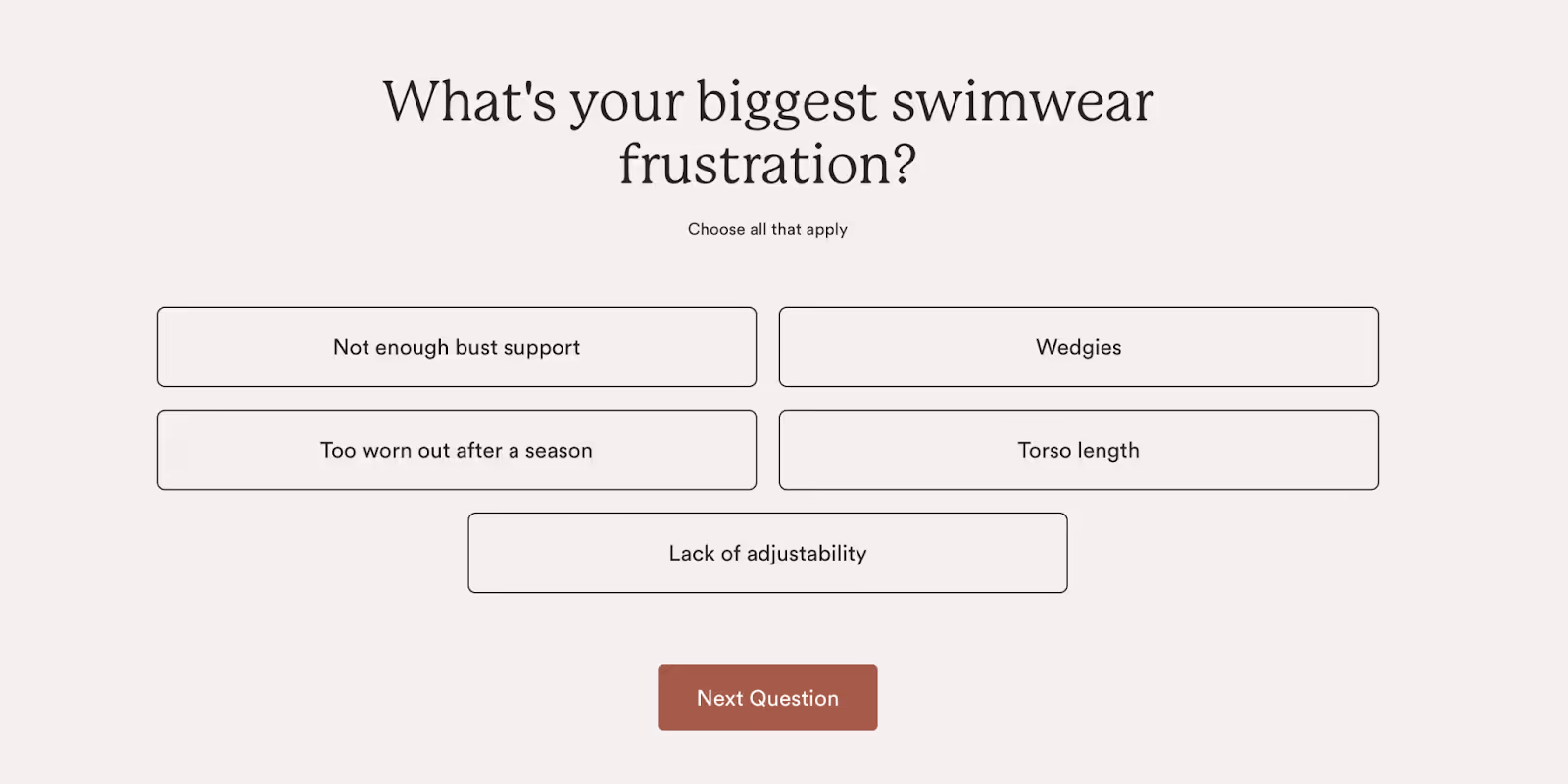
This way, Andie Swim prioritizes a positive user experience throughout the quiz. The best part? The quiz carefully uses inclusive language that focuses on fit and style preferences rather than body negativity. Of course, the customers love it and keep coming back for more.


Dollar Shave Club understands that achieving a comfortable, irritation-free shave isn't a one-size-fits-all thing. That's why they developed their Grooming Quiz, a personalized tool that takes the guesswork out of finding the right shaving products for you. Here's how it works:

Finally, based on your answers, the quiz creates a personalized shaving plan with Dollar Shave Club products.

Think of the product recommendation quiz as a conversation. The quiz is like the first meeting where you get to know someone a little bit. You learn about their interests and what they're looking for. Then, you can use this knowledge to stay in touch and recommend things they might actually like.
Here’s how you can leverage that data:
Targeted Email Marketing: Once a user completes the quiz, you can use their answers to segment your email list. This allows you to send them personalized emails with product recommendations, special offers, or educational content that aligns with their interests revealed in the quiz.
Retargeting Ads: Utilize quiz data to inform your retargeting ad campaigns. These ads appear to users who have previously interacted with your brand online. By understanding a user's quiz preferences, you can display targeted ads showcasing products that closely match their needs, increasing the chance of a conversion.
This personalized approach makes people feel like you're actually listening and trying to help them find what they need. This way, you get a better chance of making a sale or building a stronger connection with potential customers.
Don't just try to sell your products. Understand what your customers are trying to achieve and tailor your questions to identify their needs and preferences. Instead of "What kind of headphones do you like?" ask "What will you be using the headphones for? Working out, commuting, or listening to music at home?"
Imagine two customers: an athlete and a musician. Their needs for headphones are vastly different. This is where segmentation comes in. Group your customers based on shared characteristics like demographics, interests, or past purchases. This will help you create targeted questions and recommendations that resonate more effectively.
For example, the athlete might be recommended sweatproof headphones, while the musician might be recommended noise-canceling studio headphones.
Aim for 5-10 questions. People are busy and short on attention spans. A concise quiz is more likely to be completed than a lengthy one. Think of it like a conversation - you want to get to the point quickly but keep it interesting.
People don't enjoy feeling interrogated! Frame your questions in a friendly, conversational tone. Use "you" and "your" to personalize the experience and make users feel like you're having a dialogue with them. Also, avoid jargon or technical terms that might confuse users. For instance, instead of "What level of lumen output do you prioritize?" ask "How bright do you need the light to be?".
A progress bar shows users how far they've progressed through the quiz and keeps them motivated to finish. It's like a little nudge that says, "Hey, you're almost done!" This can be especially helpful for quizzes with more questions.
This refers to how your questions build upon each other. Imagine a branching path where each answer leads them closer to a product that perfectly suits their needs. For instance, for a makeup store, an early question might ask about skin type (dry, oily, combination). The next question could then be specific to their chosen type, like "For dry skin, are you looking for a moisturizer that's more lightweight or deeply hydrating?"
Once the buyers have their recommendation, provide a clear call to action (CTA). This tells them what to do next, whether it's "Shop Now," "Read Reviews," or "Add to Cart." Also, make the CTA easy to follow. Ideally, it should take them directly to the product page, shopping cart, or relevant signup form with minimal clicks.
Sometimes, a little nudge can go a long way. That’s why you can consider offering an incentive to encourage users to complete your quiz. This could be a discount on their recommended product, free shipping, or even entry into sweepstakes. An incentive can make the quiz feel more rewarding and increase the chances of users completing it.
Product recommendation quizzes are a game-changer for boosting customer engagement and sales. By zeroing in on what each person really wants and needs, these quizzes create a shopping experience that feels personal and satisfying.
By focusing on understanding customer needs, grouping users into segments, and keeping the tone friendly and conversational, you can create a quiz that not only recommends the perfect product but also builds a stronger bond with your customers. Start creating your own product recommendation quiz today, and watch your customer engagement and sales take off.
To make it easier for you to run product recommendation quiz on your Shopify store, try Byte on the Shopify app store.


.avif)