



Our Apps Have Driven
5X AOV | 2X Conversions | $30M+ Additional Revenue
5X AOV | 2X Conversions | $30M+ Additional Revenue



5.0 (3000+ Reviews)


Shopify Apps





Prices checked against Shopify's US pricing page on November 23, 2026 [2].
Shopify pricing starts at $39/month for the Basic plan and rises to $399/month for Advanced when billed monthly, or $29 to $359/month when billed yearly. Shopify Plus starts at $2,300/month, and the Agentic plan for selling in AI channels costs $0/month [2]. On top of the subscription, every plan pays card fees on each sale, so your real monthly cost depends on your sales. Monthly fees, transaction fees, POS add-ons, app costs and Shopify Plus pricing all vary depending on your store's needs. This guide breaks down exactly how Shopify pricing works, what each plan includes, what you will pay at $5K, $30K and $100K a month in sales, and how to choose the right one for your business.
Shopify says merchants have collectively made $1.1 trillion in sales on its platform and that an entrepreneur makes their first sale on Shopify every 26 seconds [1]. It also says its checkout converts 15% better on average than other platforms [1]. (All three figures as published on Shopify's pricing page, November 2026.)
Shopify costs $39/month on Basic, $105/month on Grow and $399/month on Advanced when billed monthly, or $29, $89 and $359/month when billed yearly. Shopify Plus starts at $2,300/month, and the Agentic plan is $0/month [2].
Shopify pricing is based on a monthly subscription plus card processing fees on each sale. Each plan includes ecommerce features like product management, payments, checkout and reports. Higher plans offer lower payment fees, more staff accounts and lower third-party transaction fees. You'll also pay separately for apps, themes and POS hardware if needed.
If you need help tailoring your Shopify store, hiring a Shopify developer can make setup, customization and growth much easier.
Here is how Shopify's plans and pricing compare for US merchants. All prices are in USD and come from Shopify's US pricing page [2].
| Plan | Billed monthly | Billed yearly | Best for and key features | Shopify Payments card rate | Third-party fee |
|---|---|---|---|---|---|
| Basic | $39/month | $29/month | Solo entrepreneurs. Full online store; sell online, in person and in AI chats; 10 inventory locations; 24/7 live chat support; no additional staff accounts. | Online 2.9% + 30¢; in person 2.6% + 10¢ | 2% |
| Grow | $105/month | $89/month | Small teams. Everything in Basic plus up to 5 staff accounts. | Online 2.7% + 30¢; in person 2.5% + 10¢ | 1% |
| Advanced | $399/month | $359/month | Global reach. Everything in Grow plus up to 15 staff accounts, live third-party shipping rates and region-specific storefronts. | Online 2.5% + 30¢; in person 2.4% + 10¢ | 0.6% |
| Shopify Plus | From $2,300/month | $2,300/month on a 3-year term, $2,500/month on a 1-year term | Complex, high-volume businesses. Unlimited staff accounts, fully customizable checkout, up to 200 POS Pro locations, unlimited B2B catalogs, priority 24/7 support. | Online 2.25% + 30¢; in person 2.3% + 10¢ | 0.2% |
| Agentic | $0/month | Not applicable | Selling in AI channels: add products to Shopify's Catalog, choose your AI channels, pay only when you make a sale. | Online 2.9% + 30¢ | Not listed |
| POS Pro (add-on) | +$89/month per location | Not listed | Physical stores. Unlimited staff roles and permissions, in-store inventory management, in-store pickup and flexible delivery. Plus includes 20 locations, up to 200 with Shopify Payments. | Your plan's in-person rate | Not applicable |
Each Shopify plan below shows its US price in the heading and what it adds over the plan before it [2].
The Shopify Basic plan costs $39/month billed monthly or $29/month billed yearly. It is best for new stores that want a full online shop with core ecommerce features [2].
Includes:
The Grow plan costs $105/month billed monthly or $89/month billed yearly. It is best for growing brands that need a small team in the admin and lower card rates [2].
Includes:
The Advanced plan costs $399/month billed monthly or $359/month billed yearly. It is best for scaling stores that sell across regions and want the lowest card rates below Plus [2].
Includes:
Shopify Plus starts at $2,300/month on a 3-year term, or $2,500/month on a 1-year term [4]. It is the enterprise plan for high-growth, complex brands. For a deeper breakdown, see our Shopify Plus pricing guide and Shopify Plus features guide.
Includes:
The Agentic plan is Shopify's $0/month plan for selling in AI channels. You add your products to Shopify's Catalog, choose which AI channels to sell in and only pay when you make a sale, at card rates from 2.9% + 30¢ online [2].
It suits brands that want their products to be bought inside AI assistants without paying a monthly subscription. You can build an online store on the Agentic plan, but it stays password protected: to publish it and take orders through its checkout, you need to move to a paid plan such as Basic [3].
POS Pro is not a plan. It is an add-on you attach to Basic, Grow or Advanced for $89/month per location, and Shopify Plus includes it for 20 locations (up to 200 with Shopify Payments) [2]. It adds unlimited staff roles and permissions, in-store inventory management, and in-store pickup and flexible delivery [2]. Read more in our Shopify POS system guide.
With Shopify Payments, Shopify charges 2.9% + 30¢ per online sale on Basic, 2.7% + 30¢ on Grow, 2.5% + 30¢ on Advanced and 2.25% + 30¢ on Plus. If you use a third-party payment provider instead, Shopify adds a transaction fee of 2%, 1%, 0.6% or 0.2% on top of what that provider charges [2].
| Fee (US, Shopify Payments) | Basic | Grow | Advanced | Plus |
|---|---|---|---|---|
| Online standard card rate | 2.9% + 30¢ | 2.7% + 30¢ | 2.5% + 30¢ | 2.25% + 30¢ |
| Online premium card rate | 3.5% + 30¢ | 3.3% + 30¢ | 3.1% + 30¢ | 2.95% + 30¢ |
| Online international cards | +1% | +1% | +1% | +1% |
| In-person card rate | 2.6% + 10¢ | 2.5% + 10¢ | 2.4% + 10¢ | 2.3% + 10¢ |
| Third-party transaction fee (no Shopify Payments) | 2% | 1% | 0.6% | 0.2% |
Higher plans reduce these fees, which is why upgrading often makes sense for brands with high monthly order volume. Shopify has no setup fees on any plan [1].
Shopify Payments handles payments inside the Shopify admin with no extra Shopify fee beyond the card rate. If you use an external provider such as PayPal as your main gateway, Shopify charges its third-party transaction fee (2% on Basic, 1% on Grow, 0.6% on Advanced, 0.2% on Plus) on top of that provider's own fees [2]. Some features, such as built-in fraud analysis, shipping insurance and local currency pricing, also require Shopify Payments [2]. Shopify Payments is usually more cost effective if it is available in your country.
For in-person sales using Shopify POS, card rates are lower than online rates. For example, Basic plan in-person rates are 2.6% + 10¢, compared with 2.9% + 30¢ online [2]. If you have a physical store, consider the POS Pro add-on for more advanced features; your in-person rate follows your base plan.
At a $50 average order value, a store selling $30,000 a month pays about $1,089 on Basic, $1,095 on Grow and $1,329 on Advanced in subscription plus card fees. These are estimates using Shopify Payments online card rates and monthly billing [2].
Assumptions:
| Monthly sales (orders) | Basic ($39) | Grow ($105) | Advanced ($399) |
|---|---|---|---|
| $5,000 (100 orders) | $39 + $145 + $30 = $214 | $105 + $135 + $30 = $270 | $399 + $125 + $30 = $554 |
| $30,000 (600 orders) | $39 + $870 + $180 = $1,089 | $105 + $810 + $180 = $1,095 | $399 + $750 + $180 = $1,329 |
| $100,000 (2,000 orders) | $39 + $2,900 + $600 = $3,539 | $105 + $2,700 + $600 = $3,405 | $399 + $2,500 + $600 = $3,499 |
Because the 30¢ per-order fee is fixed, it costs 0.6% of a $50 order but only 0.3% of a $100 order, so raising your average order value lowers your effective fee rate on any plan.
To run these numbers with your own sales, order value, billing cycle and payment provider, use the free Shopify fee calculator. It compares every plan side by side and shows the sales level where the next plan becomes cheaper.
If card fees are your only reason to upgrade, move from Basic to Grow above about $33,000 a month in online sales and from Grow to Advanced above about $147,000 a month (monthly billing). Below those points, the higher subscription costs more than the lower card rate saves. The breakeven is the extra subscription cost divided by the card-rate saving, using Shopify Payments online rates [2]:
Upgrade earlier when you need the features: staff accounts (5 on Grow, 15 on Advanced), live third-party shipping rates and region-specific storefronts on Advanced, or full checkout control on Plus [2].
The Shopify fee calculator works out these switch points for your own numbers, including yearly billing and third-party payment providers.
Beyond monthly subscription fees and card fees, Shopify stores also pay for apps, themes, email tools, shipping labels and POS hardware.
While your Shopify subscription includes hosting for your online store, there are a few optional costs you might incur to fully set up your shop:
Shopify gives every store a free myshopify.com address, but for branding you'll likely want a custom domain (yourstore.com) [1]. You can buy and manage one in the Shopify admin: the price depends on the extension, and Shopify says domains typically start at $9/year [5]. This cost is separate from your Shopify plan.
Shopify provides free themes, but you can buy a premium theme from the Shopify Theme Store for $100 to $500 [6]. Premium themes are a one-time purchase, and many merchants start with free themes until they need a more unique design.
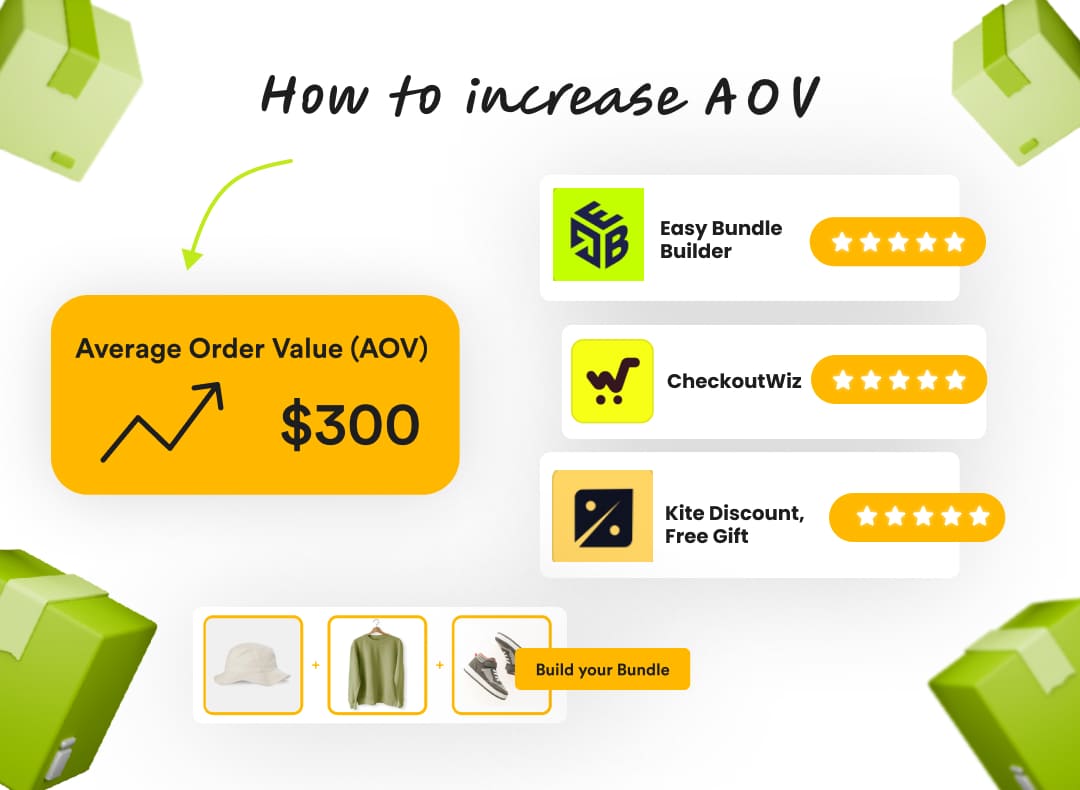
The Shopify App Store offers free and paid apps to extend functionality. Apps range from a few dollars to $50+/month depending on the feature. While these apps enhance your store, they add to your Shopify costs and should be selected based on ROI. Some examples of Shopify apps are Easy Bundle Builder, Checkout Wiz and Kite Discount & Free Gift.
With mobile commerce continuing to grow, some brands also explore using a Shopify mobile app builder to create app-based shopping experiences for their customers. Features like push notifications and faster checkout can help improve engagement and repeat purchases depending on the brand's mobile strategy.
Shopify doesn't provide email hosting, so you'll need a separate service like Google Workspace, whose Business Starter plan costs $7/user/month on a 1-year commitment [7]. Some domain providers offer free email forwarding, but for a professional setup, expect to pay a few dollars each month.
For in-person sales via Shopify POS, you'll need hardware like card readers, barcode scanners and receipt printers. Shopify offers a basic $49 card reader, which is a one-time purchase [8]. If you need advanced in-store features, budget for the POS Pro add-on at $89/month per location too [2].
Shopify pricing doesn't include postage, but every plan gets discounted rates of up to 87% off through Shopify Shipping, and you buy and print labels in the Shopify admin [2]. Fulfillment costs are operational expenses tied to running your store.
Shopify can calculate and track sales tax for you. If you use its self-managed tax mode, Shopify lists a tax calculation fee of 0.35% on Basic, Grow and Advanced and 0.25% on Plus, after an introductory discount [2].
Every Shopify plan includes email campaigns, customer segments and marketing automations [2]. Shopify Email, now part of Shopify Messaging, includes 10,000 free emails a month, then costs $1 per 1,000 emails [9]. If you use a third-party platform like Klaviyo or Omnisend, expect tiered pricing based on the number of contacts or emails sent.
In short, Shopify's base pricing covers the essentials to get your store online, but you should budget for a few extras like a custom domain, possibly a theme, and perhaps a couple of apps or services that your specific business might need. Many of these costs are flexible: you can start with free options (free theme, no paid apps) and only add paid extras once you see the need or ROI.
Shopify is a top ecommerce platform, but it's not the only option. Here is how Shopify's pricing compares with a few major alternatives in 2026: WooCommerce, BigCommerce and Wix eCommerce. For a wider comparison, see our guide to the top ecommerce platforms.
| Platform | Starting plan cost | Platform transaction fees | Notes / best for |
|---|---|---|---|
| Shopify | $39/month (Basic), or $29/month billed yearly | 0% extra with Shopify Payments; 0.2% to 2% if you use an external gateway | All-in-one hosted solution, very user friendly, huge app ecosystem. Great for most small to mid-sized businesses scaling online. |
| BigCommerce | $39/month (Core plan), or $29/month billed annually [10] | No extra fee with its embedded payment provider; 2% (Core) to 0.6% (Scale) with other providers [10] | Hosted solution similar to Shopify. Has annual sales limits per plan. Good if you use its embedded payment provider. |
| WooCommerce | $0 (free plugin) + hosting, which WooCommerce estimates at $25 to $350/month for most stores [11] | 0% platform fee (you pay your payment processor) | Self-hosted (WordPress). Low-cost software but requires technical work. You manage security and updates. |
| Wix eCommerce | $29/month (Core plan, billed yearly) [12] | 0% platform fee (you pay your payment processor) | Hosted website builder with ecommerce. Very easy design tools. Best for small stores integrated with content sites. |
Shopify sets local prices by country, and Shopify Payments is only available in certain countries, so card rates and third-party fees differ outside the US [1]. For local prices, check Shopify's regional pricing pages for Canada, the UK, Australia and India.
Choose Basic if you're starting out or selling under about $33,000 a month. Choose Grow if you need staff accounts or sell between roughly $33,000 and $147,000 a month. Choose Advanced above that, or when you need 15 staff accounts, live third-party shipping rates or region-specific storefronts. Large brands that need a fully customizable checkout, B2B at scale or expansion stores should move to Shopify Plus. If you only want to sell through AI channels, the Agentic plan costs $0/month plus card fees.
Shopify plans can be paid monthly or annually. Paying annually saves about 25% on Basic, about 15% on Grow and about 10% on Advanced. Basic drops from $39/month to $29/month when billed annually, Grow from $105 to $89 and Advanced from $399 to $359 [2]. That is $120, $192 or $480 saved a year, but it's a commitment: Shopify plan charges are non-refundable, so cancelling mid-term does not give you a refund [13].
Shopify allows easy plan upgrades or downgrades on Basic, Grow and Advanced. When you upgrade, the new plan starts immediately and the billing difference is prorated for the days left in your cycle; a downgrade takes effect at the end of your current billing cycle [14]. Shopify Plus is different: it runs on a 1- or 3-year term, and you can cancel when the term commitment expires [1].
Shopify offers a 3-day free trial with no credit card required. After the trial, most plans cost $1/month for the first 3 months, then switch to standard monthly pricing [1]. If Shopify isn't the right fit, you can cancel anytime.
In summary, Shopify pricing is straightforward: you pay a subscription fee, which you can reduce by paying annually, and card fees on sales. There are no setup fees, and you can cancel anytime on standard plans [1].
For small businesses, managing Shopify pricing is key to staying within budget. Here are some actionable tips to optimize costs:
Start with the plan that fits your current needs. The Basic plan is likely sufficient if you're just launching. Upgrade only when necessary, as each upgrade should justify itself in fee savings or more sales. For example, moving from Basic to Grow cuts online card fees by 0.2 percentage points, but it only pays off once that saving exceeds the $66/month price difference, at about $33,000 a month in sales.
If possible, opt for annual billing to save up to about 25% on your Shopify plan (the biggest discount is on Basic). For example, the Basic plan costs $29/month with annual billing instead of $39/month, saving you $120 a year [2]. Many businesses start with monthly billing and switch to annual once they see consistent sales.
Shopify provides free themes and many apps to cover basic needs like SEO, product reviews and marketing. Use these before paying for premium versions. Every plan also includes built-in tools like abandoned checkout recovery, which can save you from paying for additional apps [2].
Install only necessary apps and regularly remove those you no longer use. Apps can add significant recurring costs, so focus on those that drive sales or save time.
Stick to Shopify Payments to avoid Shopify's third-party transaction fee of 0.2% to 2%, depending on your plan [2]. This simplifies payouts and keeps your costs lower.
Shopify lists up to $5,000, $7,500 and $10,000 in credits on Basic, Grow and Advanced, earned as 1% back on sales [2]. Keep an eye out for other Shopify promotions, especially if you're switching from another platform. Also, use free trials for apps to test their value before committing. You can also look for coupons and deals to lower your upfront costs. For example, websites like Cybernews share helpful Shopify coupon codes.
Shopify's tools can save you time, reducing the need for outsourcing. Use free resources like the Shopify Help Center and community forums to handle tasks in-house, which can lower costs.
Watch for any apps that may increase costs based on usage (for example, emails sent or page views). Check your Shopify billing page to avoid surprises. Note that over 50 synced marketplace orders a month cost 1%, up to $99/month, on every plan [2].
By following these strategies, you can manage Shopify pricing effectively, keeping costs low while scaling your business. Many small businesses start on Basic with minimal apps, which can keep fixed costs below $50/month before card fees. As your sales grow, reinvest profits to improve your store's performance.
Shopify's pricing in 2026 offers flexible options for businesses of all sizes, from the $39/month Basic plan ($29 billed yearly) to enterprise-level Shopify Plus from $2,300/month, plus a $0/month Agentic plan for AI channels [2]. Higher-tier plans reduce card and third-party fees and provide advanced tools, while Shopify Payments helps avoid extra charges. Optional costs like domains, themes and apps can be managed to keep expenses low.
Compared to competitors, Shopify excels with its all-in-one solution, scalability and app ecosystem, while others like WooCommerce and Magento require more technical expertise. BigCommerce charges no extra fee with its embedded payment provider but caps sales on each plan, and Wix is better for small-scale stores. By choosing the right plan, using free resources and monitoring expenses, businesses can scale profitably while keeping Shopify pricing manageable. Take advantage of Shopify's free trial to explore which plan suits your needs.