Shopify and Etsy serve different seller needs: Shopify is a standalone e-commerce platform for building branded stores, while Etsy is a marketplace focused on handmade, vintage, and craft items with built-in buyer traffic.
Pricing differs by model: Shopify charges a monthly subscription (starting at $5) with lower transaction fees, while Etsy has no subscription but charges per listing (20¢) plus 6.5% + processing fees per sale.
Ease of use: Etsy is faster to set up with minimal customization; Shopify offers more flexibility, control, and scalability for long term brand growth.
Audience and reach: Etsy gives instant exposure to millions of buyers but with high competition and limited branding. Shopify requires generating your own traffic but allows full ownership of customer data and experience.
Scalability and integrations: Shopify’s 8,000+ app ecosystem, advanced features, and multi-channel tools make it better for expanding businesses; Etsy’s integrations are limited.
Best fit: Start on Etsy for low-cost exposure and test your market; move to Shopify when ready to scale, customize, and build a sustainable, independent e-commerce brand.
Choosing the right platform for your online business is crucial for your e-commerce success. Shopify vs Etsy is a common question in the minds of entrepreneurs setting up shop online. Both platforms are hugely popular but cater to different needs.
Shopify vs Etsy differs in that Shopify is a comprehensive e-commerce website builder, while Etsy is a specialized online marketplace.
This guide will provide a detailed, comparison of Shopify vs Etsy across key factors like pricing, usability, features, security, audience reach, and more. So read on!
Shopify and Etsy: An Overview
Before diving into the head-to-head comparison, it’s important to understand what makes Shopify and Etsy fundamentally different.
Shopify is an all-in-one e-commerce platform that allows you to create a standalone online store with your own domain.
It provides the tools to design your storefront, list unlimited products, process payments, and manage shipping, all under your brand.
Shopify is used by all kinds of businesses, from small startups to large brands, because it’s highly customizable and scalable.
Essentially, Shopify gives you a private online shop that you fully control.
Etsy, on the other hand, is a large online marketplace known for handmade, vintage, and craft items.
When you sell on Etsy, you’re joining a marketplace where millions of buyers browse for unique products.
You create an Etsy shop as part of Etsy’s website, your listings appear alongside other sellers’ products.
Etsy provides a ready-made audience interested in creative goods, which is great for niche artisans or vintage collectors. However, you operate within Etsy’s ecosystem and rules, and the look and feel of your shop is largely defined by Etsy’s platform.
Shopify vs Etsy: Platform Overview
Feature
Shopify
Etsy
Platform Type
Standalone online store builder
Marketplace for handmade, vintage, and craft goods
Customization
Fully customizable
Limited customization (Etsy-defined shopfront)
Domain & Branding
Custom domain (e.g., YourBrand.com)
Etsy subdomain (etsy.com/shop/YourShopName)
Audience
You drive traffic through marketing
Built-in audience of buyers
Fees Structure
Monthly subscription + transaction fees
Pay-per-use model with listing, transaction, and payment fees
Store Ownership
Full ownership and control
Etsy owns the marketplace and controls policies
As you can see in the Shopify vs Etsy comparison reveals Shopify is best for creating an independent, customizable store, whereas Etsy is great for leveraging a built-in audience with limited control.
Pricing: Shopify vs Etsy
Cost is a key factor when choosing between Shopify vs Etsy, as they have different pricing models. Shopify follows a monthly subscription model, while Etsy operates on a pay-per-use fee structure.
External Gateways: Pay third-party processing fees plus Shopify’s transaction fee.
4. Optional Fees
Premium Themes: One-time cost: $180 - $350.
Shopify Apps: Free and paid apps with various pricing models.
Shopify POS Pro: $89/month per location (for advanced in-person selling).
Shopify Email: Free for up to 10,000 emails/month, then $1 per additional 1,000 emails.
Marketing & Ads: No Shopify fees; ad costs depend on platforms like Google/Facebook.
Etsy Pricing Breakdown
Etsy operates on a pay-as-you-go model with no mandatory monthly fee, making it an attractive option for sellers who prefer lower upfront costs.
However, Etsy’s listing, transaction, and payment processing fees can add up, especially for high-volume sellers.
1. Listing Fee
Etsy charges $0.20 per listing when you publish a product.
Listings remain active for 4 months or until the item sells.
If the item does not sell within 4 months, it must be renewed for another $0.20.
If a listing sells and you have more inventory, Etsy auto-renews the listing, charging another $0.20.
This can become a recurring cost if you have multiple listings that don’t sell immediately.
2. Transaction Fee
Etsy deducts 6.5% of the total order amount on every sale.
This includes the item price + shipping cost + gift wrapping fee (if applicable).
Example: If you sell a product for $50 with $5 shipping, Etsy’s 6.5% fee applies to the full $55 total, meaning you pay $3.58 in transaction fees.
3. Payment Processing Fee
If you use Etsy Payments (which allows customers to pay via credit card, PayPal, Apple Pay, etc.), Etsy charges an additional payment processing fee.
This varies by country. In the U.S., it’s 3% + $0.25 per transaction.
Example: If a buyer pays $55, Etsy’s payment processing fee is $1.90 ($1.65 + $0.25).
This fee is separate from the 6.5% transaction fee, increasing the total cost of selling on Etsy.
4. Optional Fees
Etsy offers additional paid features that sellers can use to boost sales:
Etsy Ads: Pay-per-click (PPC) ads to promote listings within Etsy’s search results.
Offsite Ads: Etsy advertises listings on platforms like Google and Facebook. If a sale happens through these ads, Etsy charges a 12-15% fee (mandatory for sellers making over $10,000/year).
Etsy Plus ($10/month): A subscription that provides perks like listing credits, shop customization options, and a discount on custom domains.
To compare these costs more clearly, here’s a breakdown in table form of Shopify vs Etsy pricing:
Cost Aspect
Shopify
Etsy
Platform Subscription
Basic plan $39/month (or ~$29/month annual); higher plans $105 to $399/month for more features.
No mandatory subscription (free to open a shop). Optional Etsy Plus at $10/month for extra features.
Listing Products
No per-item listing fee (list unlimited products on any plan).
$0.20 per listing, charged when you list an item (and every 4 months if unsold).
Transaction Fee (Platform)
No Shopify fee on sales if using Shopify Payments. If using external payment gateway, 2.0% fee on Basic (lower on higher plans).
6.5% of the total order value on each sale (applies to item price + shipping).
Payment Processing
Shopify Payments: ~2.9% + $0.30 per transaction (varies by country). Third-party gateways have their own fees + Shopify’s extra % if not using Shopify Payments.
Etsy Payments: ~3% + $0.25 per transaction (varies by country). This is on top of the 6.5% transaction fee.
Additional Fees
Cost of any paid apps or premium themes you choose to add (optional).
Offsite Ads fee 12-15% (only if an offsite ad leads to a sale). Etsy Ads (optional PPC). Currency conversion or regulatory fees in some regions.
In summary, Shopify has a higher upfront cost (monthly subscription) but lower marginal fees per sale, while Etsy is pay-as-you-go with no monthly fee but higher fees taken from each transaction. If you plan to scale up significantly, Shopify’s predictable costs might benefit you, whereas if you’re just testing the waters or selling occasionally, Etsy lets you start with minimal expense.
Shopify vs Etsy: Ease of Use (Usability)
Choosing between Shopify vs Etsy depends on how much control you want over your store and how quickly you want to start selling.
Feature
Shopify
Etsy
Setup Complexity
Requires setup, theme selection, and configuration
Meta tags, blogging, email marketing, Google & Facebook ad integrations
Basic marketing tools, Etsy Ads, social media sharing
Discounts & Gift Cards
Built-in discount codes and gift card options
Coupons and limited promotional tools
Analytics
Sales reports, visitor data, Google Analytics integration
Basic stats on visits, orders, and traffic sources
Mobile App
Store management on the go
Etsy Seller app for mobile store management
Shopify is ideal for businesses wanting full control, branding, and scalability.
Etsy is best for handmade, vintage, or niche sellers looking for a built-in audience with minimal setup.
Many sellers use both platforms, leveraging Etsy for traffic and Shopify for brand growth.
Shopify vs Etsy: Security Comparison
Security is critical in e-commerce. Both Shopify and Etsy provide secure platforms, but their approaches differ.
ShopifySecurity
Shopify ensures high-level security with:
Free SSL encryption for secure transactions
Level 1 PCI DSS compliance (the highest standard for payment security)
Fraud analysis tools to detect suspicious transactions
Two-factor authentication (2FA) for account protection
Regular software updates and patches
While Shopify provides a secure infrastructure, store owners must implement best practices like using strong passwords and vetting third-party apps.
Etsy Security
Etsy, as a centralized marketplace, manages security for all sellers by handling:
SSL encryption for all shops
PCI-compliant payment processing via Etsy Payments
Fraud detection and seller protectionpolicies
Since Etsy controls security at the platform level, sellers don't have to worry about handling technical risks, making it a low-maintenance option.
Comparing Security: Shopify vs Etsy
Both platforms provide strong security measures, but the key difference is control vs convenience:
Shopify gives sellers full control over security, customer data, and checkout experience.
Etsy offers built-in security and buyer trust but limits control over customer data and policies.
If you prefer hands-off security, Etsy is a worry-free option. If you want full ownership and protection of your store and customer data, Shopify is the better choice.
Shopify vs Etsy: Audience, Market Reach, and Visibility
Etsy: Audience and Market Reach
Built-in Buyer Traffic: Etsy has 95-96 million active buyers (as of 2025), providing immediate exposure for sellers. It’s ideal for handmade, vintage, and unique goods, with shoppers actively searching for one-of-a-kind items.
Niche-Focused Marketplace: Etsy specializes in a specific category, attracting customers who are interested in unique or handcrafted products.
Competitive Landscape: With over 100 million listings, the competition on Etsy is intense. To stand out, sellers need to optimize product images, keywords, and pricing, and perform well in Etsy’s algorithm.
Promotions & Visibility: Etsy runs marketplace-wide promotions, Google Shopping ads, and featured listings, which indirectly boost visibility. However, success on Etsy relies on ranking well in its search algorithm.
Shopify: Audience and Market Reach
Independent E-commerce Platform: Shopify provides sellers with the ability to create a customizable online store on their own domain, but there’s no built-in traffic. Sellers must generate their own through SEO, social media, ads, and email campaigns.
Brand Control & Growth: Shopify offers complete control over branding, customer relationships, and marketing strategies, allowing businesses to build a distinct brand identity. Unlike Etsy, where all shops follow the same layout, Shopify stores reflect the seller’s unique brand.
No Direct Competition: Shopify's customers see only the seller’s products, which can improve conversion rates. Shopify also allows sellers to capture customer data (e.g., emails) and retarget past visitors, something Etsy restricts.
Traffic Generation: Shopify offers SEO tools, social media integrations, and ad features to help merchants attract customers via Google, Facebook, Instagram, TikTok, and Amazon.
Key Differences in Buyer Intent
Etsy: Buyers often browse Etsy’s marketplace, discovering shops via Etsy’s search algorithm. They are typically looking for unique or handmade items.
Shopify: Buyers on Shopify are more intentional, arriving through targeted marketing, ads, SEO, or social media campaigns, and visiting the brand’s website directly rather than browsing a marketplace.
Scaling Strategy: Etsy to Shopify
Transitioning from Etsy: Many sellers begin on Etsy to benefit from organic traffic and exposure. Once they’ve established their brand, they transition to Shopify for greater control, scalability, and long-term profitability.
Marketplace Connect App: Shopify’s Marketplace Connect app allows sellers to manage both Etsy and Shopify stores simultaneously, maximizing visibility.
Recent Trends & Seller Visibility Updates
Etsy: Prioritizes sellers with high ratings, fast response times, and excellent customer service. Features like free shipping and frequent promotions also enhance visibility.
Shopify: Expands multi-channel selling tools, integrates with marketplaces, and enhances Shop Pay (with over 150M users) to streamline checkout and increase conversions.
Final Takeaway
Etsy: Ideal for niche sellers looking for built-in traffic but requires competing within a crowded marketplace.
Shopify: Better for long-term growth, offering full control over branding, customer relationships, and marketing strategies.
Many successful businesses leverage both platforms, using Etsy for exposure and Shopify for sustained growth and brand-building.
Customer Support: Shopify vs Etsy
Shopify and Etsy both offer strong customer support but differ in accessibility. Shopify provides 24/7 live chat and email support for all users, with phone support for Plus members. Etsy offers live chat, email, and callback phone support, along with extensive self-help resources. Each platform’s support options are important to consider when choosing the right e-commerce platform.
Support Comparison
Feature
Shopify
Etsy
24/7 Support
Yes (chat, email); Phone: Plus plan only
No (Chat available during business hours)
Live Chat
Yes (24/7)
Yes (Limited hours, sign-in required)
Phone Support
Plus plan only (priority access)
Callback-based only (no direct number)
Help Center
Extensive, with an AI assistant
Help articles, automated responses
Community Forums
Yes
Yes
Educational Content
Shopify Learn (courses, guides, webinars)
Seller Handbook, tips, newsletters
Recent Changes
AI chatbot added; phone support now Plus-only
Live chat expanded to all sellers
Shopify provides round-the-clock support with live chat and email for all merchants, while Etsy focuses on self-service resources, with limited live chat and callback-based phone support. If fast, dedicated seller support is a priority, Shopify is the better option.
Integrations & Scalability: Shopify vs Etsy
Shopify: Extensive App Store & Growth Potential
Shopify’s 8,000+ apps provide:
Marketing tools (SEO, email marketing, social media integrations).
Advanced e-commerce features (upsells, reviews, multi-channel sales).
Third-party integrations (Amazon, eBay, Facebook, Instagram, Google Shopping).
Scalability: Shopify scales with your business, from small shops to enterprise-level stores.
Etsy: Limited Integrations
Etsy offers fewer integration options:
Basic tools for social media sharing.
API connections for inventory management and accounting software.
Pattern by Etsy, a separate paid website service, but with fewer features than Shopify.
For businesses looking to grow, Shopify’s integrations make it the superior choice.
Shopify vs Etsy: Which Platform is Right for You?
Choose Shopify if:
You want full control over branding, customer relationships, and policies.
You plan to scale your business and sell across multiple platforms.
You need extensive e-commerce features and integrations.
You want reliable 24/7 customer support.
Choose Etsy if:
You sell handmade or vintage products and want instant exposure.
You prefer low upfront costs and a simple selling process.
You don’t need extensive branding or customization.
You’re testing the waters before launching your own store.
Many successful sellers start on Etsy for visibility and later transition to Shopify for brand ownership and scalability. If you’re serious about growing a long-term business, Shopify offers more flexibility and control.
Conclusion
Choosing the right e-commerce platform is a crucial step in building a successful online business. Shopify vs Etsy presents two distinct opportunities, one offering full control and scalability, the other providing a ready-made marketplace with instant exposure. Each platform comes with its own advantages, and the decision ultimately depends on your business goals and growth plans.
No matter which platform you choose, success relies on a strong product, effective marketing, and a clear strategy for reaching your customers. Understanding the strengths of Shopify vs Etsy will help you make an informed decision and create a sustainable online presence. Focus on what aligns best with your vision, and take the next step toward growing your e-commerce business.
Hurrify customers to buy within a given timeframe with a sales countdown timer & improve conversions
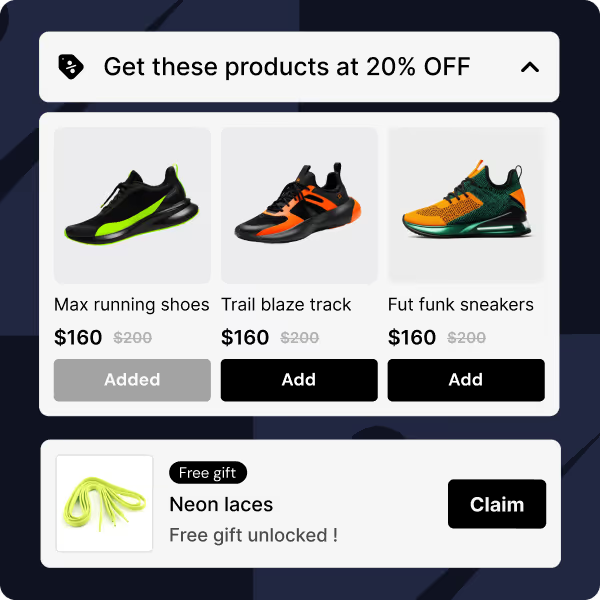
Another popular Shopify checkout app is Checkout Promotions. The app comes with the ability to leverage a collection of highly robust visibility rules that help show customers one-click post purchase upsell promotions after an order payment has been made. Some of its key features include:
Features
AI recommended and manual recommendations for upselling.
Complete branding control.
Checkout Upsell for increasing AOV.
AI recommended and manual recommendations for upselling.
Pricing
Development
Free
Monthly Plan
$99/ month
Plus Plan
$99/ month
Plus Plan
$99/ month
FAQs on Shopify vs Etsy
Which is better to sell on: Shopify or Etsy?
Why switch from Etsy to Shopify?
How much does Shopify take per sale?
Is Shopify hard to sell on?
Do you need a business license to sell on Etsy or Shopify?
Is Shopify good for beginners?
Neetika M
Neetika is the founder of Skai Lama. Passionate about building SaaS, Product Development, and Marketing, she talks about eCommerce Growth, Product Bundling, Gifting, Retention, and Shopify.

.svg)
.svg)

.svg)
.svg)



%20(1).jpg)
.jpg)
.svg)








.svg)


.avif)