.svg)
.svg)

.svg)
.svg)


%20(1).jpg)
.jpg)

Our Apps Have Driven
5X AOV | 2X Conversions | $30M+ Additional Revenue
5X AOV | 2X Conversions | $30M+ Additional Revenue
.svg)


5.0 (3000+ Reviews)


Shopify Apps





.svg)

Product bundles are a simple way to sell related products together, give customers more value, and increase the amount they spend in a single order. Shopify supports several ways to create bundles. You can create Shopify product bundles without an app, use the free Shopify Bundles app for fixed bundles and multipacks, or use a third-party bundle app for more advanced options such as mix-and-match bundles.
If you are looking for how to bundle products on Shopify, this guide covers the three methods, their limitations, and the types of bundles you can create.
A product bundle consists of two or more items sold together at a discounted price. These can be fixed bundles like a Christmas gift basket or a mix-and-match bundle where customers select each item. E.g. Build your own cookie box of 12 cookies.
Bundles help drive AOV & overall revenue. From a customer perspective, bundles drive the perception of getting more value for the price they are paying. Stores using product bundles see an average 10-30% lift in AOV, and bundling is significantly more cost-effective at retaining existing customers than acquiring new ones.
Skai Lama's bundle apps have driven $30M+ in additional revenue across thousands of Shopify merchants, making product bundling one of the highest-return growth tactics available on the platform.
Fixed Bundles vs. Bundle Builders
Fixed bundles are pre-set combinations (e.g., a skincare kit with cleanser, toner, and moisturizer). These are easy to set up and provide convenience for customers. Bundle builders allow customization where customers choose their products and avail of dynamic pricing (e.g., buy more, save more, tiered discounts).
There are three ways to bundle products on Shopify:
The first method uses existing Shopify products, variants, collections, and discounts to create a bundle or bundle-like offer. It is useful for simple setups, but inventory management can become manual.
The second method uses Shopify Bundles, Shopify's free first-party app. It is designed for fixed bundles and multipacks and automatically calculates bundle availability based on component inventory.
The third method uses a third-party bundle app like Easy Bundle Builder. This gives you more flexibility if you want customers to build their own bundles or if you need advanced bundle discounts and merchandising options.
If you want to know how to bundle products on Shopify without an app, you can create a separate product, use product variants, or use a collection with a discount.
These are workarounds rather than full bundle-management systems. Shopify will not automatically understand that a manually created product contains several other products.
This means you need to consider inventory and fulfillment before choosing this approach.
One straightforward approach is to treat your bundle like a completely new product. This is perfect if you're offering fixed sets - for example, a "Winter Skincare Kit" or a "3-Pack of Coffee Blends." You'll create a separate product page that represents the bundle as a single offering.
Steps:
1. From your Shopify admin, go to Products > Add products
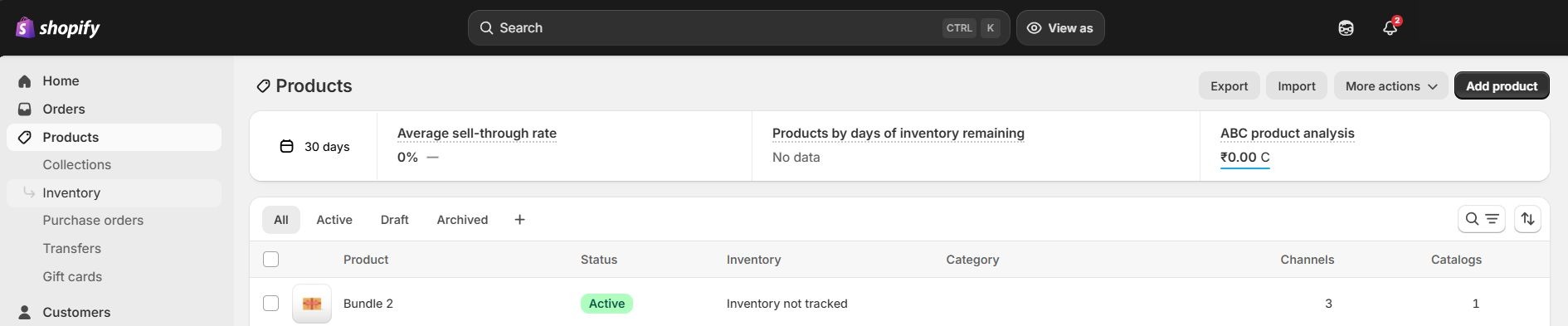
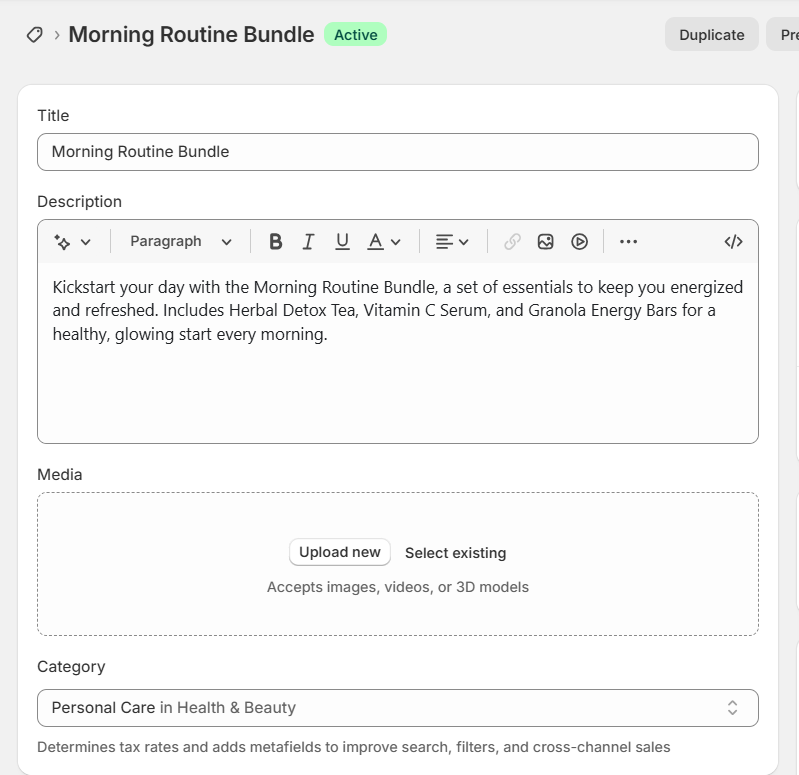
2. Give your bundle a clear title (e.g., Morning Routine Bundle). In the description, list every item included and highlight the value - such as "Save 15% when you buy these together."
3. Upload photos that show the products side by side or create a collage to make the bundle feel cohesive.
4. Set a bundle price that's lower than the combined total of each item. Use the "Compare at price" field to show customers the savings.
5. Assign a unique SKU for the bundle and decide how you'll handle inventory. Since Shopify won't automatically reduce stock for each individual product, you'll need to adjust quantities manually if you also sell those items separately.
6. Save and publish the bundle so customers can find it in your store.
Instead of creating a separate product, you can use variants to give customers bundle choices right on a single product page. This works well if you're offering different pack sizes - for example, "Single," "2-Pack (Save 15%)," and "3-Pack (Save 25%)."
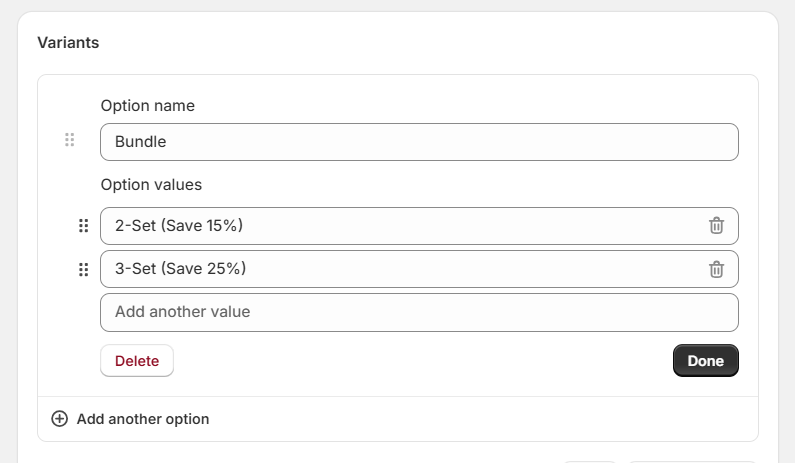
Steps:
1. Open the product you want to edit (or create a new base product).
2. Go to the Variants section and click Add options like size or color.
3. In the Option name field, type something relevant, like "Bundle" or "Pack Size".
4. In the Option values field, add values such as Single, 2-Set (Save 15%), 3-Set (Save 25%) - and save.
5. Update each variant's price, SKU, and inventory level. For example, the 2-Pack should show the discounted price.
6. You can add variant-specific images if helpful, like a photo of all three items together for the 3-Pack.
7. Click Save at the top and view your bundle
For a more flexible approach - like a build your own bundle - you can use Shopify's collections and discount rules together. This lets customers choose from a group of products and automatically get a discount when they meet your set conditions.
Steps:
1. Go to Products > Collections and create a new collection (e.g., Bundle & Save).
2. Add the products you want to include. You can select them manually or use the Smart collection feature. Click Browse to add bundle items
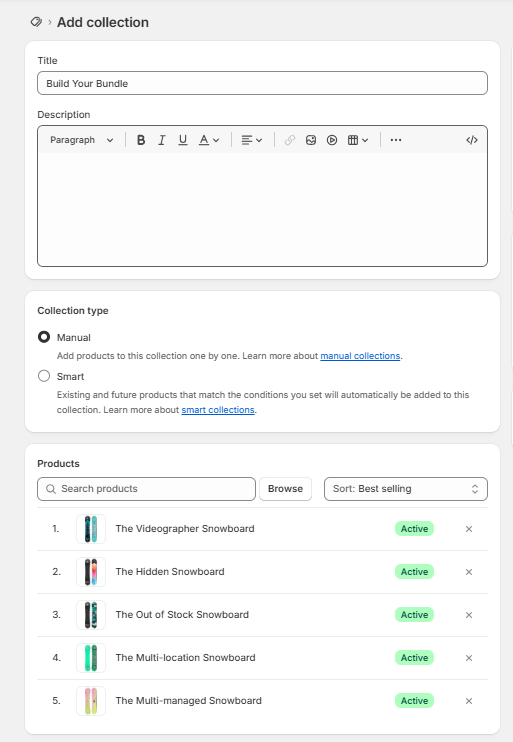
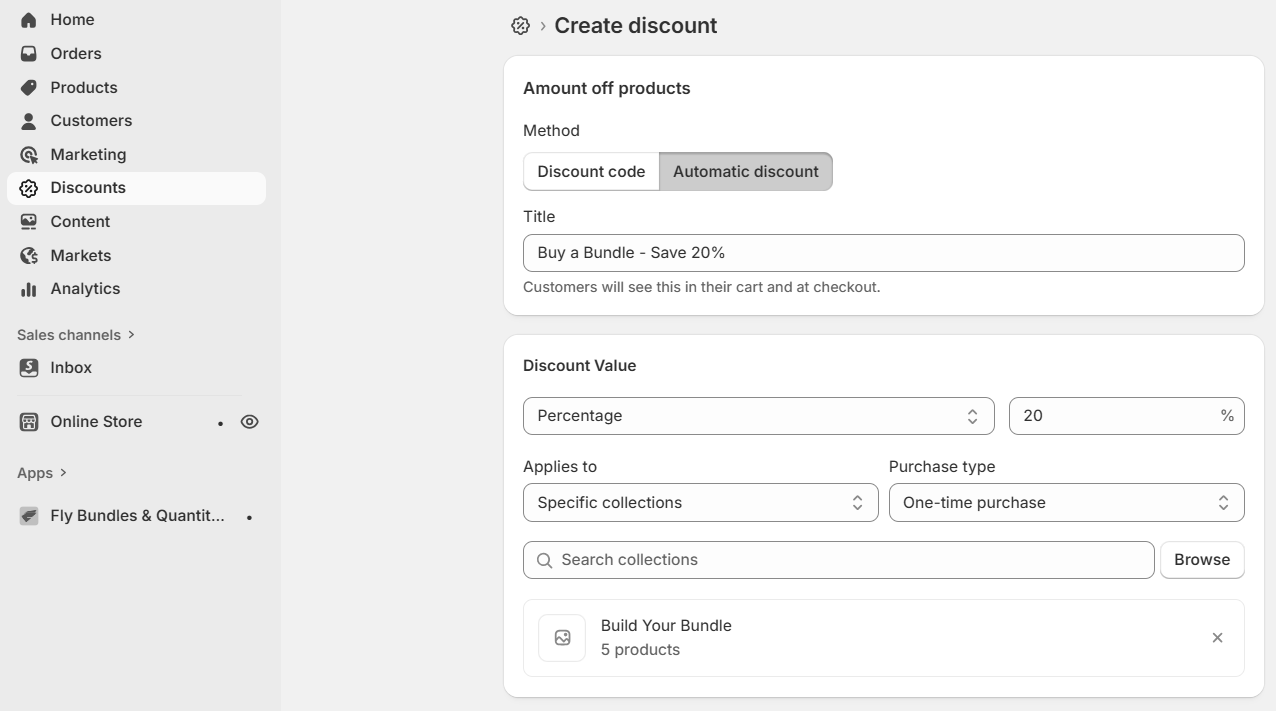
3. Next, head to Discounts > Create discount.
4. Choose an Automatic discount so it applies at checkout without needing a code.
5. Set your rules - for example get 20% off and apply it to your collection.
6. Save and promote the deal on your store so customers know how it works.
Note: Shopify's automatic discounts cannot be stacked with other automatic discounts natively. If multiple promotions are running at the same time, only one automatic discount will apply at checkout. Discount codes can be combined with automatic discounts depending on your settings.
Shopify offers a native solution for bundling products with the Shopify Bundles app. This free app integrates directly into your Shopify admin, allowing you to create Shopify bundles with real-time inventory syncing, making it ideal for fixed bundles and multipacks. Here's how to set it up:
1. Install the Shopify Bundles App:
Install the app from the Shopify App Store and find it under Apps in your admin.
2. Create a Bundle:
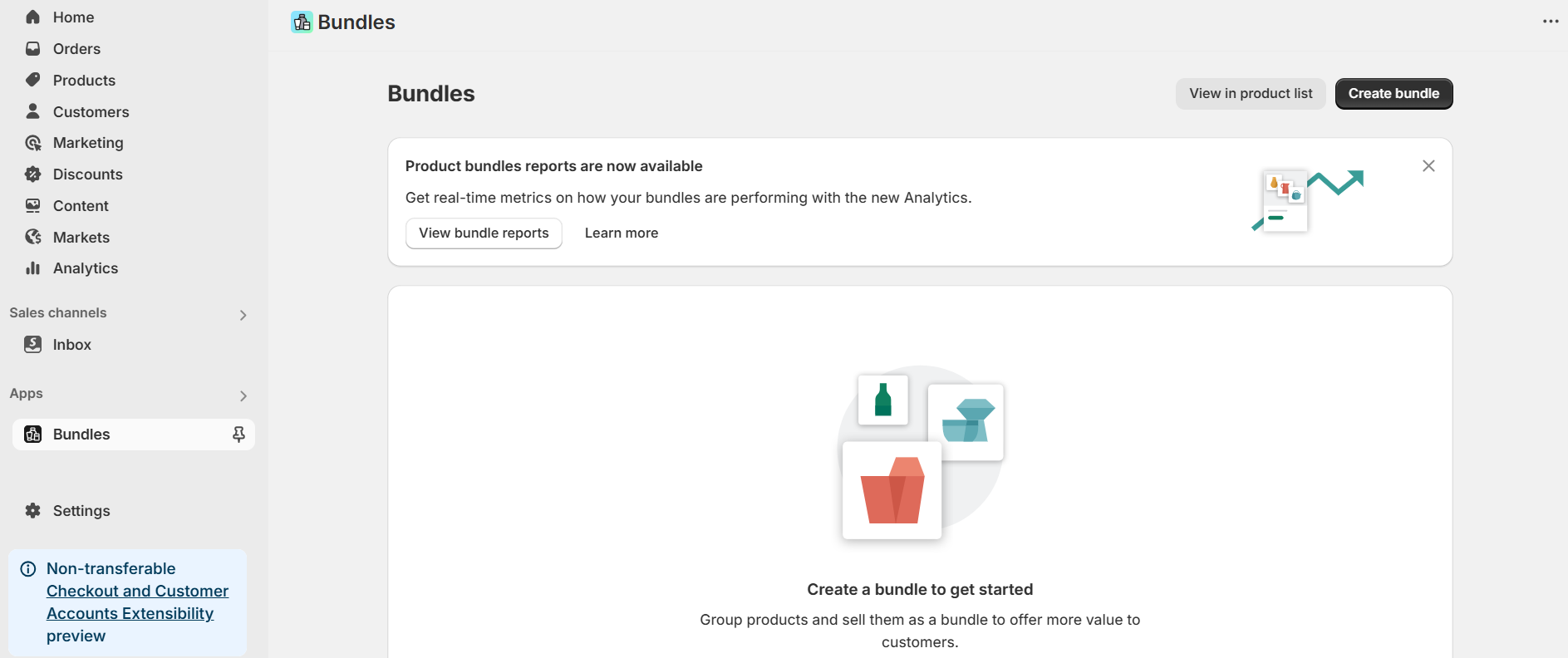
Click Create Bundle to start.
3. Enter Bundle Title:
Name the bundle (e.g., "The Skateboard Collection").
4. Select Products:
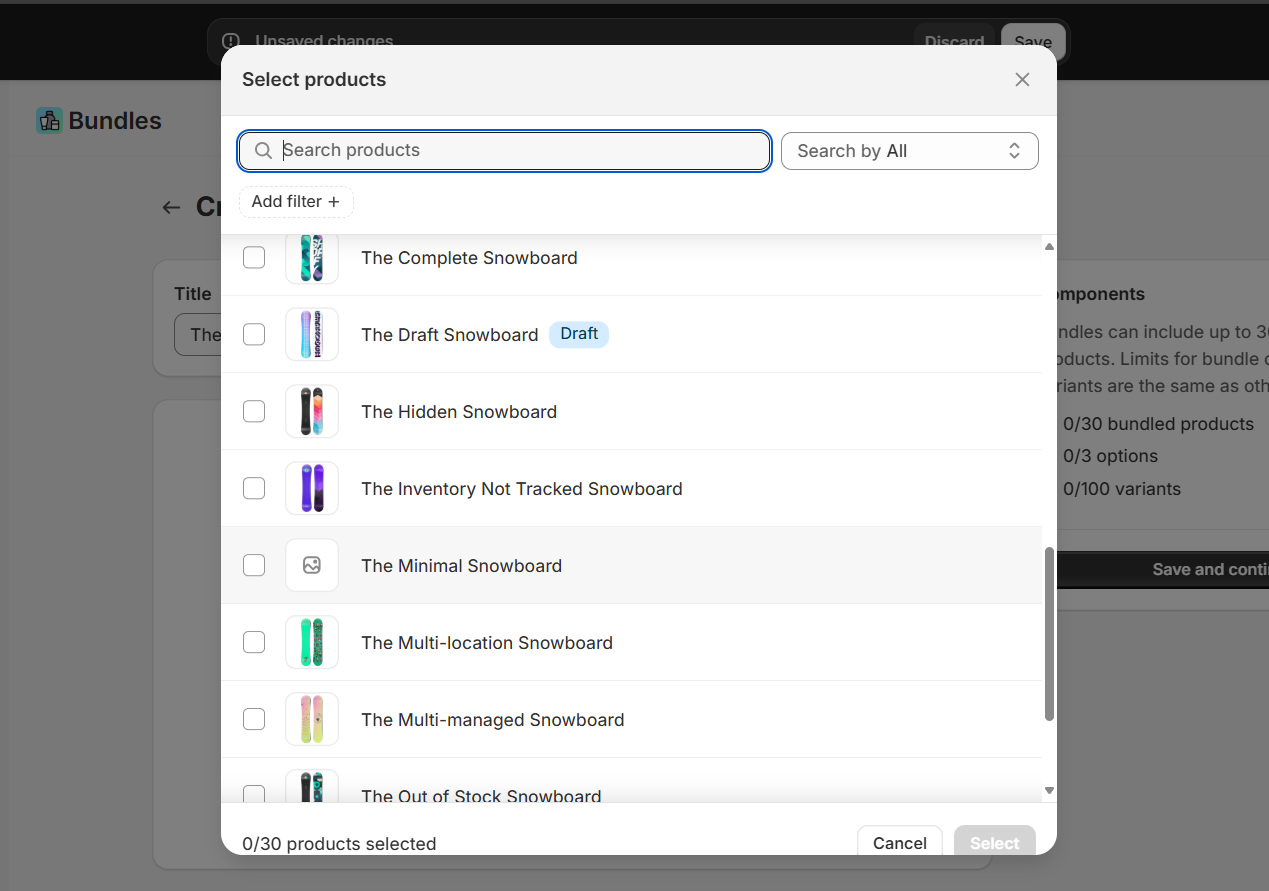
Choose the products you wish to add to the bundle. Adjust the quantity for each item, such as 2 of Item A and 1 of Item B.
5. Refine Variants (Optional):
If you want specific variants (e.g., size or color), choose which variants to include in the bundle. You can also allow customers to select their preferred variants.
6. Save and Continue:
The app creates the bundle product. Add a description, upload images, set the price, and adjust SEO settings.
7. Publish the Bundle:
When ready, mark the bundle as Active and make it visible on your sales channels (Online Store, etc.).
For example, if you sell skincare products, you can create bundles on Shopify with a cleanser, toner, and moisturizer. This Shopify bundle allows customers to get a discounted set while you manage inventory easily. When they buy it, the app automatically adjusts the stock of each individual product.
Now your Shopify product bundle is live, and customers can add it to their cart just like any other product. The backend ensures each component is tracked and fulfilled correctly.
The Shopify Bundles app is ideal for fixed bundles and multipacks where customer choice is limited. It's perfect for managing inventory and integrates seamlessly with Shopify's infrastructure, including Shopify POS and Shop app. Being free, it's a great starting point to creating bundles on Shopify before considering paid solutions.
⚠️ Important limitation: The Shopify Bundles app is not compatible with purchase options, including subscriptions, pre-orders, and try-before-you-buy. If any component product has purchase options enabled, the bundle will break at checkout. Use a third-party app if your store uses subscriptions or any purchase options. Additionally, all component products must have their status set to Active (not Draft) before they can be added to a bundle in this app.
Limitations:
The app doesn't support mix-and-match or "choose your own items" bundles. For more dynamic bundling options, consider using third-party Shopify bundle apps.
Third-party bundle apps offer more flexibility than manual methods or the Shopify Bundles app. For example, apps like Easy Bundle Builder let you create custom bundles and give customers more control over their product selections.
The exact features depend on the app and pricing plan. This approach is particularly useful when you want customers to choose their own products rather than purchase a predetermined combination.
Easy Bundle Builder is a Shopify app that helps merchants create product bundles with flexible pricing and discount options. It supports different bundle types, including Build Your Own, Mix & Match, Build-a-Box, and Quantity Breaks. Merchants can also use AI to create bundles based on their store's needs and business goals.
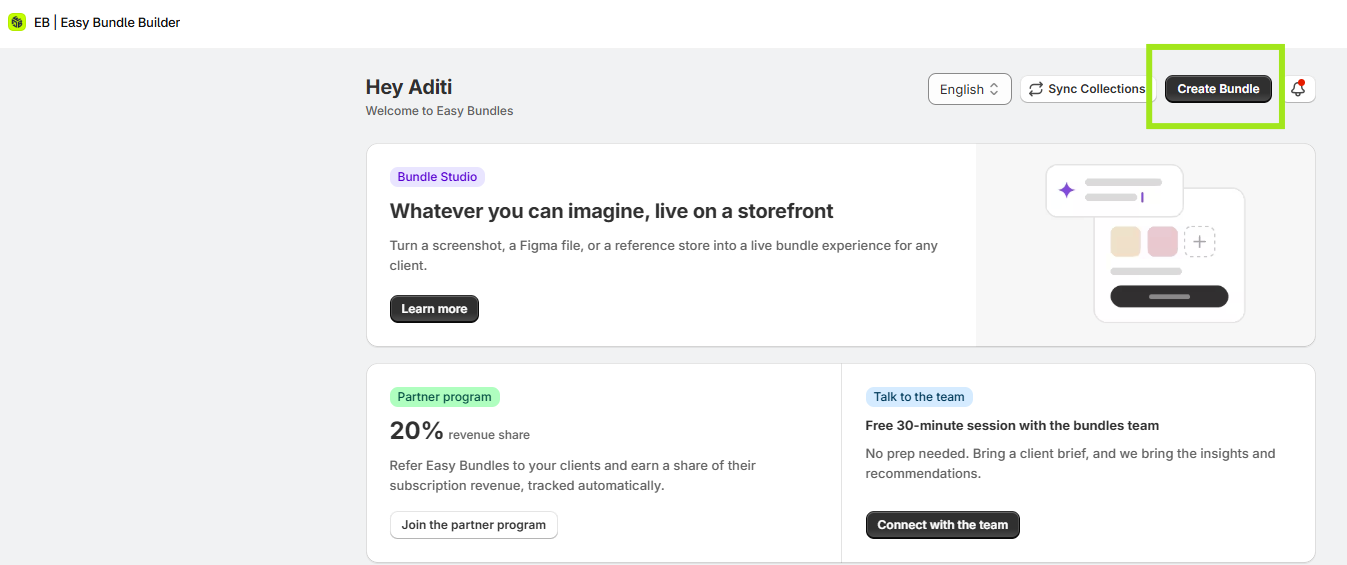
Easy Bundle Builder can be used to create customizable bundle experiences where customers select products from a predefined group. To start with, open Easy Bundle Builder and head to the Create Bundle tab.
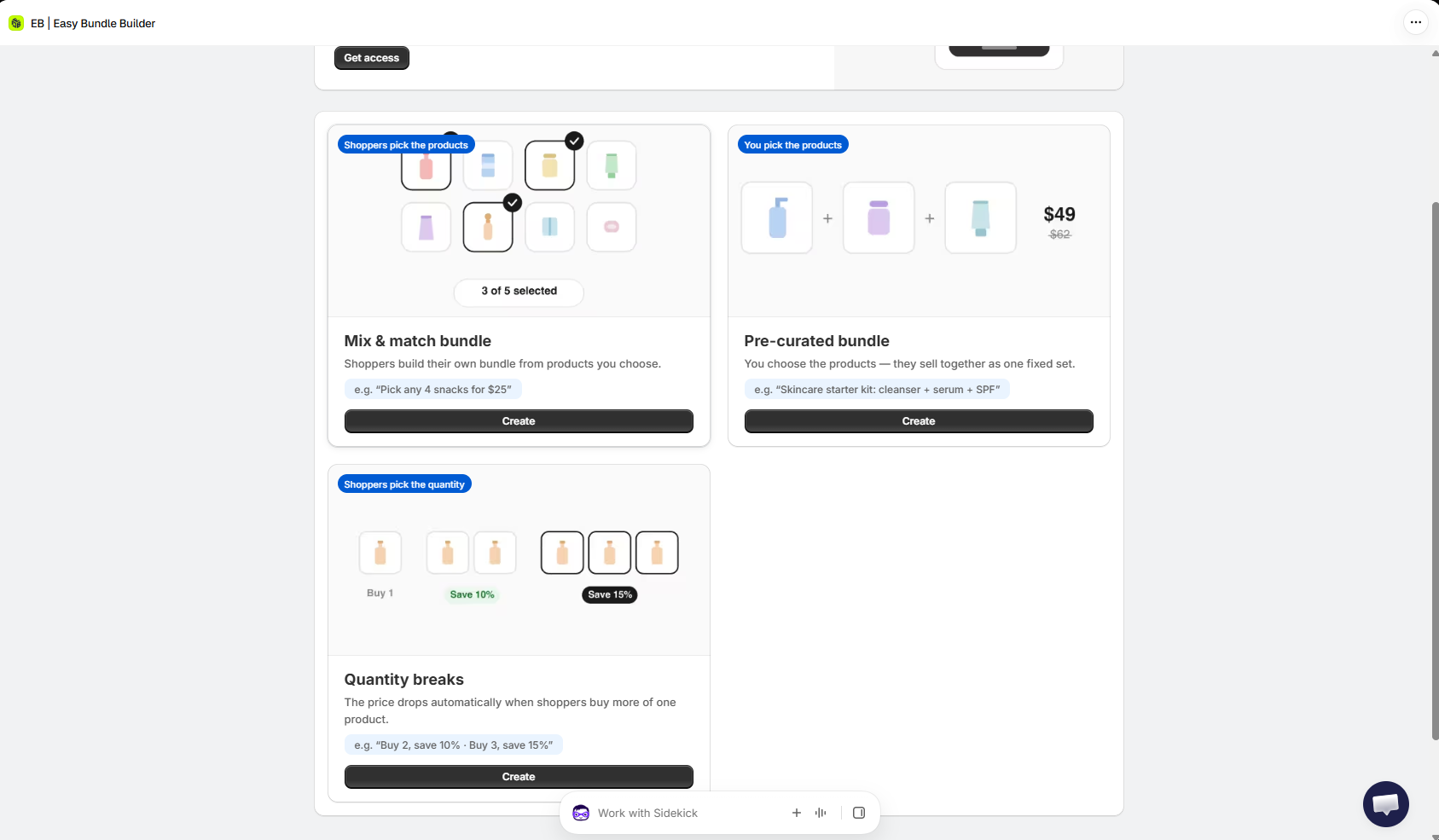
After clicking Create Bundle, you’ll be redirected to a page with three bundle options: Mix & Match Bundle, Pre-curated Bundle, and Quantity Breaks. Choose the option that best fits your store’s needs and click Create to start setting up your bundle
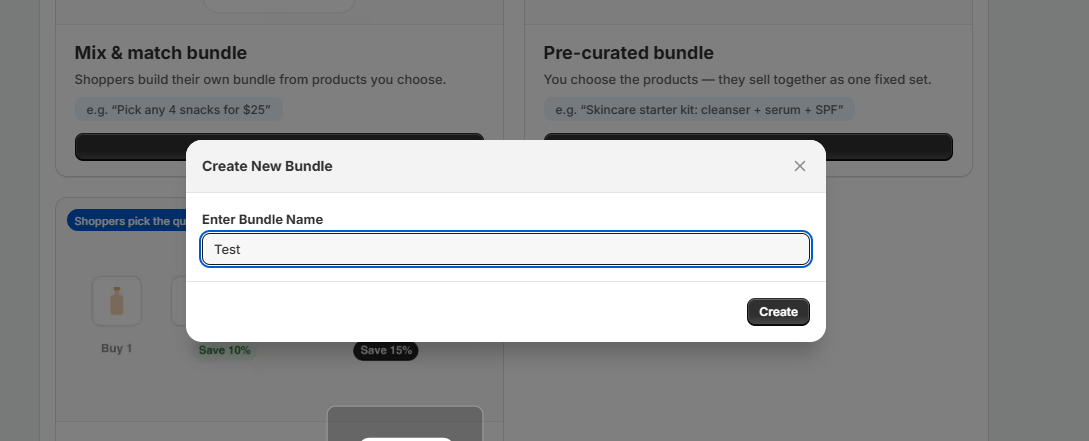
You can then name your bundle and proceed with the setup.
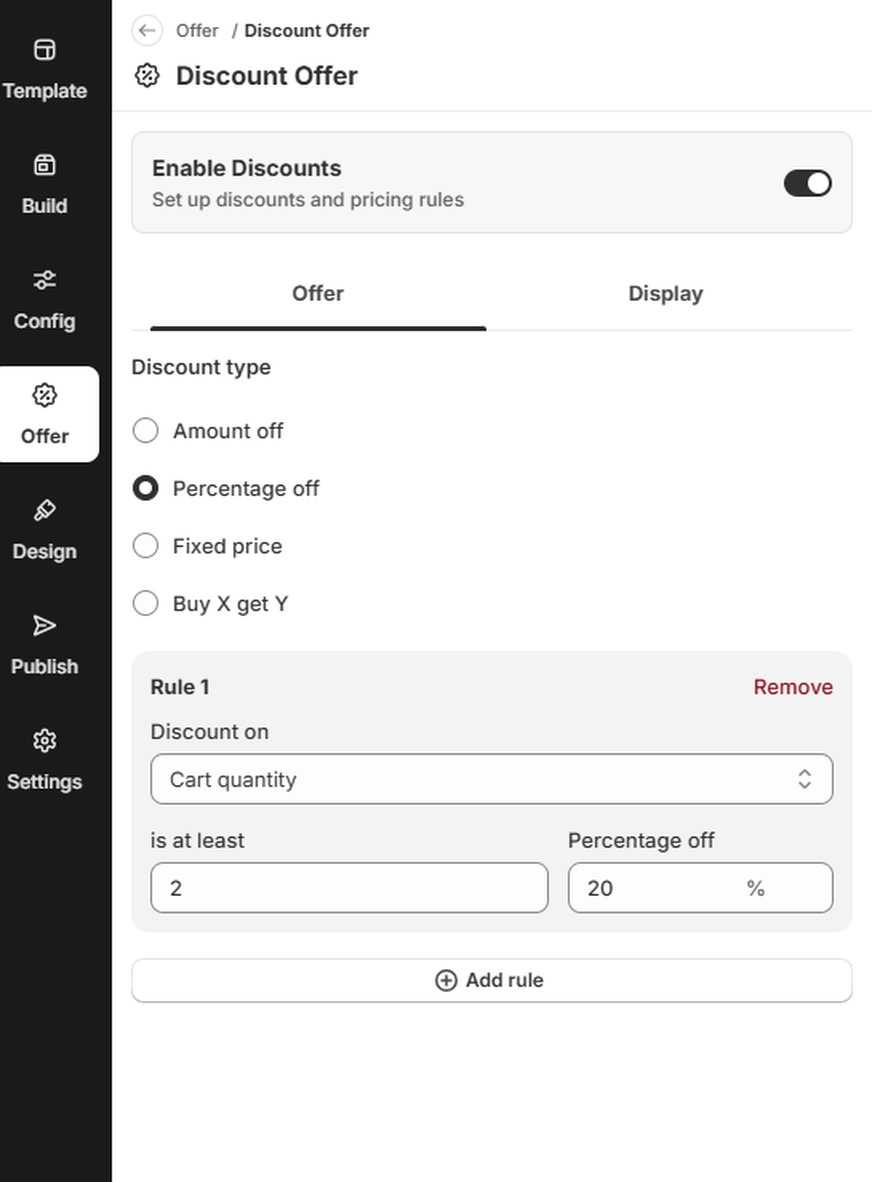
Then, add the products you want in the bundle and adjust the available settings. After configuring the bundle, go to the Offer tab and choose Discount Offer. Select the discount type you want to use and enter the relevant offer details.
For example, a skincare store could allow customers to select:
Instead of forcing every customer to buy the same combination, the store can let shoppers choose the products they prefer. This makes a third-party bundle app useful for mix-and-match and build-your-own bundles.
The right method depends on the type of bundle you want to create and how much flexibility you need.
If you only need a simple fixed bundle, a third-party app may not be necessary. If you want customers to build their own bundles, you will need a more flexible solution.
If you are simply testing whether customers will buy a particular product combination, creating a simple bundle product without an app can be a practical starting point.
Once you understand how to bundle products on Shopify, you can choose the bundle format that makes sense for your products and customers. Different bundle types work for different purchasing situations, from simple product combinations to customizable offers. Here are some common types of Shopify bundle products.
A pre-curated bundle contains a fixed set of products selected by the merchant. For example, a skincare store could create a Morning Skincare Set containing cleanser, vitamin C serum, moisturizer, and sunscreen. Customers purchase the complete set instead of choosing every product individually.
This works well when the products naturally belong together. It can also help customers who may not know which products to combine. The merchant handles the product selection, so the shopping experience is relatively simple.
Mix-and-match bundles allow customers to choose products from a defined selection. For example, a clothing store could let shoppers choose any two tops, one pair of jeans, and one accessory. The customer creates the combination rather than purchasing a fixed set.
This type of bundle is useful when customers have different preferences but the products still belong to the same category. It can create a more personalized shopping experience than a fixed bundle. You generally need a third-party bundle app or a custom Shopify Plus implementation to create this type of offer.
Cross-sell bundles combine products that naturally complement one another. For example, a store could sell running shoes with running socks or a laptop with a laptop sleeve and wireless mouse. The products are different, but they solve related needs.
The goal is to make related products easier to purchase together. It can also help customers discover products they may need after choosing the main product. These bundles work particularly well when the relationship between the products is obvious.
Gifting bundles package products around a particular recipient, occasion, or theme. Examples include birthday gift sets, self-care boxes, holiday gift sets, new-parent kits, and corporate gift bundles. The products do not necessarily need to be used together.
The value comes from the curation and convenience of the complete set. Customers can purchase one ready-made gift instead of choosing each item separately. This can also make seasonal merchandising easier for ecommerce stores.
Bundles can help move products that are selling slowly. For example, a clothing store could combine a slower-selling top with a popular pair of jeans at a bundle price. This gives customers an additional reason to purchase the slower-moving item.
The goal is not simply to hide an unpopular product inside another offer. Instead, the bundle should give the customer a genuine reason to want both products. A relevant combination can make inventory clearance feel more useful to the customer.
Buy One, Get One offers can be structured around a bundle or promotional offer. Examples include Buy One, Get One Free, Buy Two, Get One Free, and Buy One, Get the Second at 50% Off. These offers can encourage customers to purchase more units in a single order.
BOGO offers work particularly well for products that customers can use repeatedly. They can also help merchants increase the number of units sold per transaction. The exact promotion should still be based on product margins and inventory levels.
Build-your-own bundles give customers control over what goes into their bundle. For example, a snack company could allow customers to choose any six products from a larger list. This gives shoppers more control than a fixed bundle.
This format is similar to a mix-and-match bundle, but it is often positioned around personalization. It can work well for food, beauty, apparel, gifts, and other categories with several compatible products. A third-party bundle app is usually needed to create this experience on Shopify.
Quantity Breaks let customers purchase more of the same product to unlock better discounts. For example, a skincare store could offer 10% off when customers buy three products and 20% off when they buy five. The discount increases as customers move to higher quantity tiers.
This bundle type works well for products customers regularly buy in multiples, such as supplements, beverages, and food items. It gives shoppers an incentive to add more products to their carts to unlock greater savings. For merchants, Quantity Breaks can help increase average order value (AOV) and encourage customers to purchase more in a single order.
Subscription bundles combine several products into a recurring purchase. For example, a coffee company could offer a monthly bundle containing three different coffee products. Customers receive the products together on a recurring schedule.
However, Shopify's native product bundles are not compatible with subscription purchase options. If recurring bundles are important to your store, check the compatibility of your chosen third-party bundle and subscription apps before setting them up.
Seasonal bundles combine products around a specific event, holiday, or shopping period. Examples include Valentine's Day gift sets, Diwali gift boxes, Christmas bundles, back-to-school kits, and summer travel sets. These bundles give stores a way to package products around a timely customer need.
Seasonal bundles can also help store merchandise products that are particularly relevant during a specific period. They can be promoted through seasonal landing pages, email campaigns, and homepage merchandising. Once the season ends, the same products can be returned to their regular offers.
These bundles combine products that customers commonly purchase together. For example, a camera store could offer a camera, memory card, and camera bag as one recommended combination. The combination can be based on sales data, product relationships, or merchandising decisions.
This approach can make it easier for customers to find products they are likely to need after buying the main item. It can also reduce the effort involved in finding compatible accessories. The products should have a clear relationship so the recommendation feels useful rather than random.
Upsell bundles encourage customers to purchase a larger or more complete product combination. For example, instead of buying a single grooming product, a customer might be offered a complete grooming kit at a bundle price. The additional products should provide a clear reason to increase the order.
Upsell bundles are often presented during the product or cart experience. They can help customers discover a more complete solution while increasing the value of the order. The offer works best when the additional products are genuinely relevant to the original purchase.
Bundles offer several advantages for both customers and store owners:
Whether you're using manual methods or a Shopify bundle app, follow these best practices to create bundles that drive sales and increase conversions:
1. Highlight the Savings
Make the bundle's value clear by showing the regular price vs. the bundle price (e.g., "Get $60 worth for just $49.99"). Use compare-at pricing or labels like "Save 20%" to emphasize the deal.
2. Use High-Quality Imagery
Display all the bundle's components together in one image. This helps customers visualize the bundle and feel it's cohesive and complete.
3. Create Urgency
Add time-sensitive phrases like "Limited Time Offer" or "Only 50 Bundles Left" to encourage immediate action. Highlighting a bonus gift for a limited time can also boost urgency.
4. Ensure Relevance and Complementarity
Bundle products that naturally go together (e.g., "Morning Routine Skincare Set" or "Baking Essentials Bundle"). Make sure the bundle addresses a specific problem or fulfills a need.
5. Price Bundles Wisely
Offer a substantial discount (15-30%) to entice customers[2]. Consider tiered pricing incentives (e.g., "Buy 1, get 5% off; Buy 3, get 15% off").
6. Test and Optimize
Use A/B testing to refine your bundles. Try different combinations, bundle types, and images to see what drives the highest conversion rate and AOV.
7. Promote Your Bundles
Feature bundles prominently on your site with banners or dedicated pages. Use email marketing and upsell prompts during checkout to remind customers about bundle deals.
8. Use Social Proof
Display reviews or testimonials for your bundles to add credibility and reassure customers about the value.
9. Mind the Logistics
Ensure smooth fulfillment by preparing and shipping bundles correctly. Set shipping settings based on the bundle's size and weight to avoid issues.
There are several ways to bundle products on Shopify, and the right option depends on what you want the customer to experience.
If you are testing a simple idea, you can create a bundle without an app. This approach is easy to start with, but inventory management becomes more manual as your catalog grows. For fixed bundles and multipacks, Shopify Bundles provides a free first-party option with component inventory management.
If you want customers to choose their own products, create mix-and-match bundles, or build a more advanced bundle experience, a third-party bundle app can provide additional flexibility. The important part is to start with the type of bundle your customers actually need. Once that is clear, choosing how to bundle products on Shopify becomes much easier.


.avif)