

Our Apps Have Driven
5X AOV | 2X Conversions | $30M+ Additional Revenue
5X AOV | 2X Conversions | $30M+ Additional Revenue
.svg)


5.0 (3000+ Reviews)


Shopify Apps





.svg)

Tailor your search to find the perfect Shopify store.
Categories
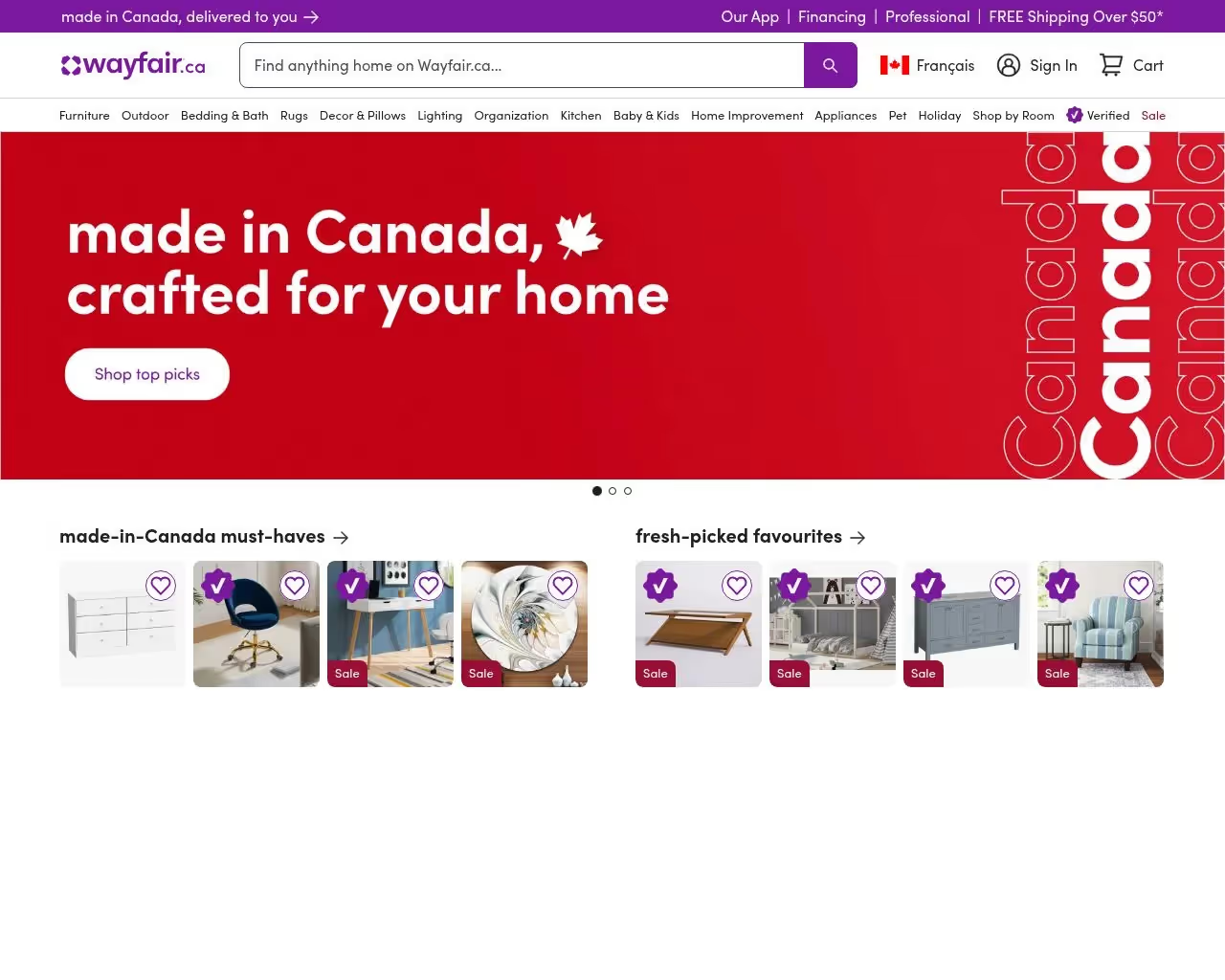
An online destination for home furnishings and décor, offering a vast selection of products to suit every style and budget.
Top Selling Product
Furniture and home décor items
Country
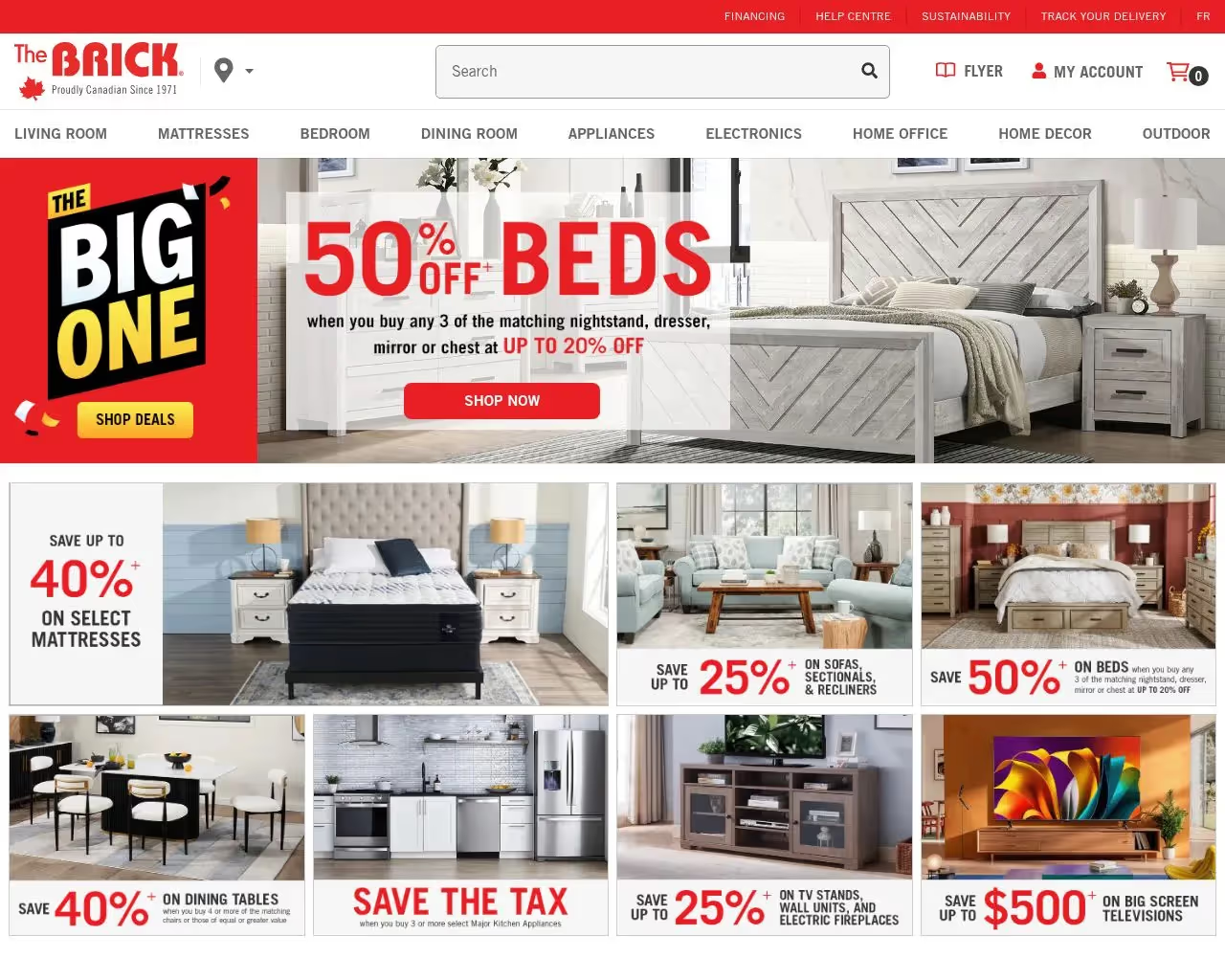
One of Canada's largest retailers of furniture, mattresses, appliances, and home electronics, offering a wide selection at competitive prices.
Top Selling Product
Home furniture sets
Country
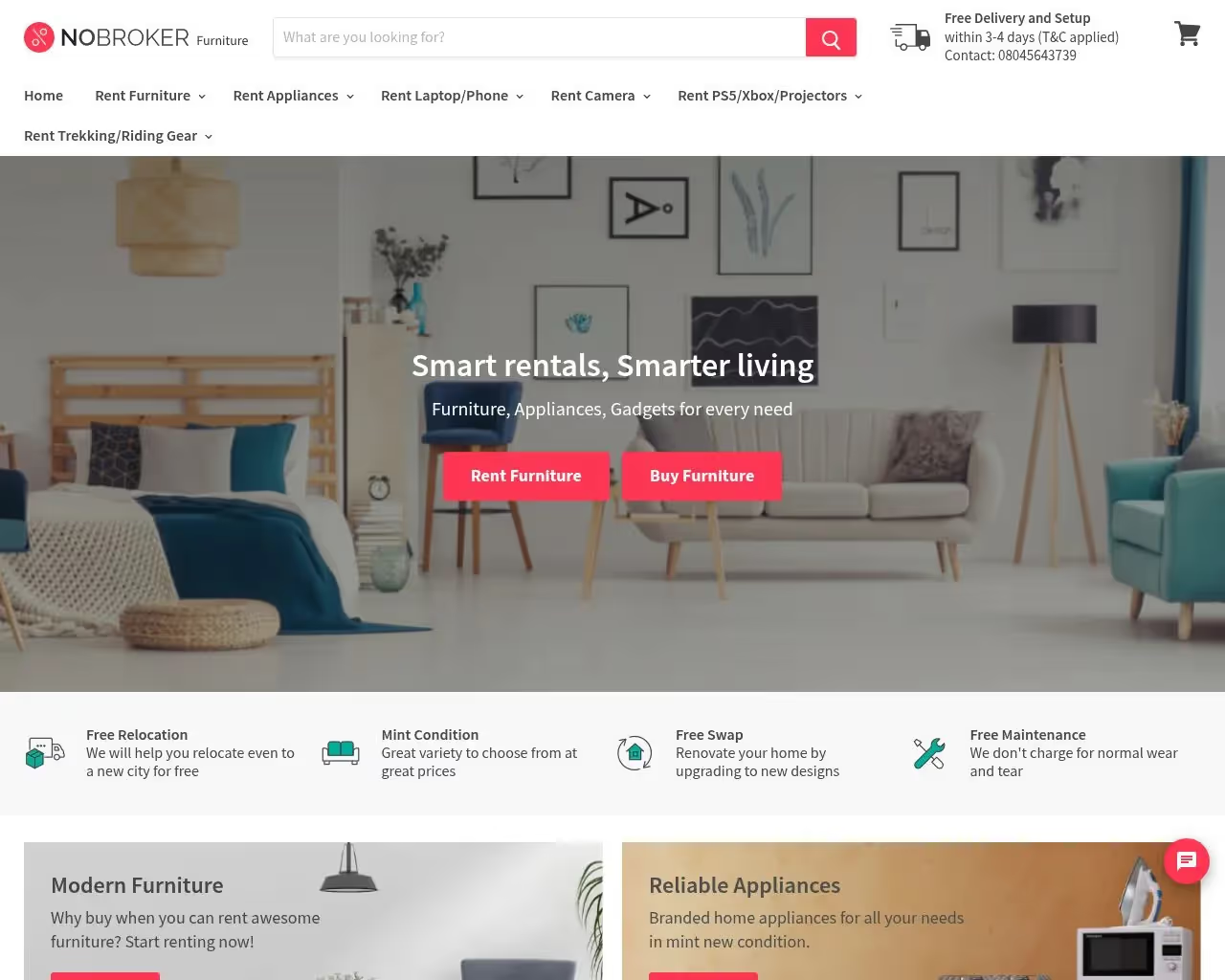
NoBroker Furniture is part of the NoBroker ecosystem, offering high-quality, affordable furniture for rent and sale, targeting urban customers with flexible lifestyle needs.
Top Selling Product
Beds and sofas
Country
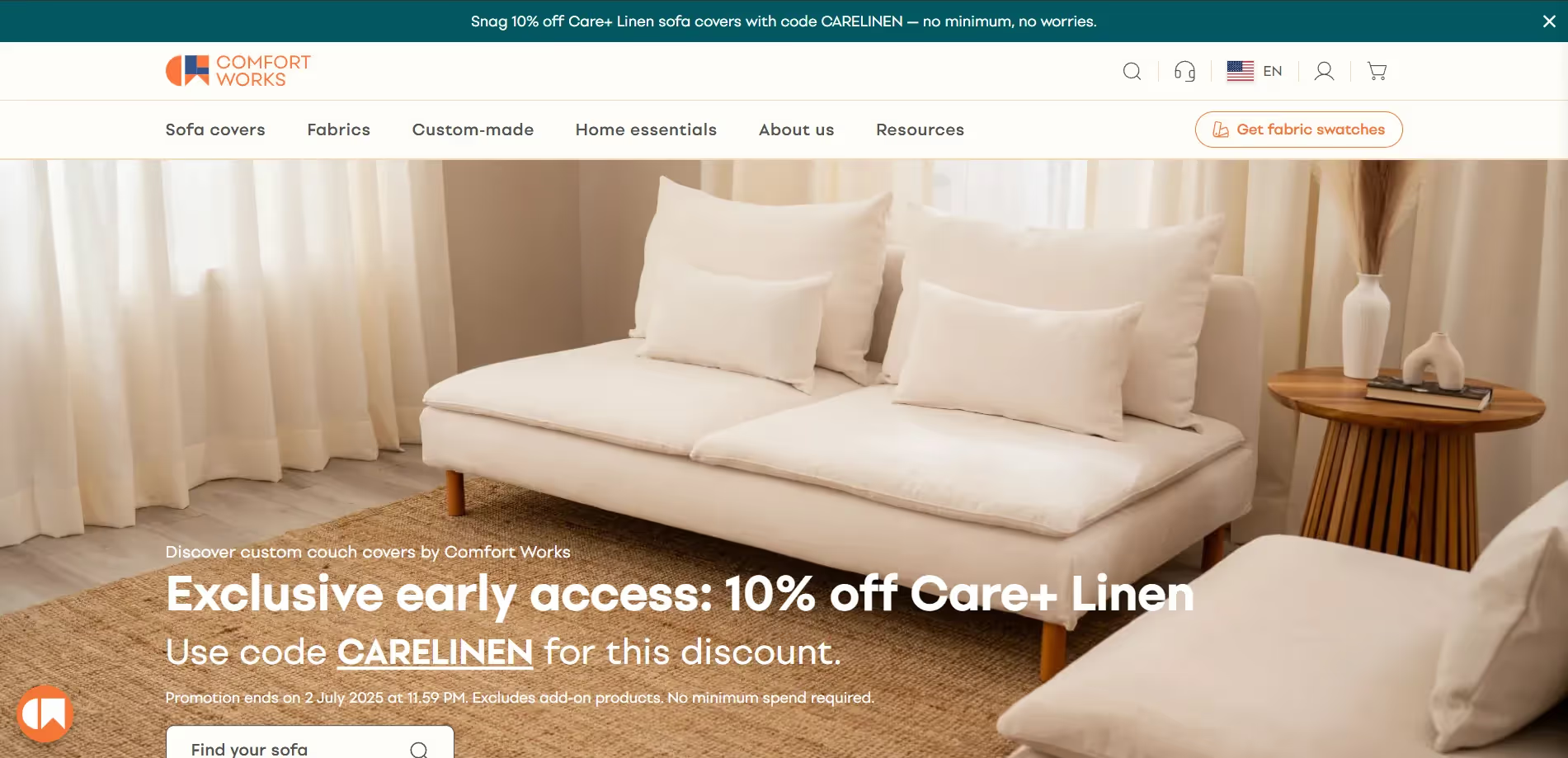
Custom slipcovers and home textile products for various furniture brands.
Top Selling Product
Custom furniture slipcovers
Country

Rumah Casa provides stylish and functional home furnishings, offering a curated selection of furniture and decor items that blend contemporary design with comfort.
Top Selling Product
Scandinavian Dining Tables
Country
The online furniture market is valued at $30 billion in 2026, with an average order value of $546, the highest of any ecommerce category. Return rates are among the lowest at 3.9%, reflecting the effort buyers invest before committing to high-ticket furniture purchases. Conversion rates are the challenge: 0.5 to 1.5% is the standard range because furniture is the highest-consideration category in consumer ecommerce. Stores with AR and room visualisation tools see 40% higher conversion and 60% fewer returns, making visualisation technology the single most impactful investment available to furniture merchants.
The DTC furniture brands that have scaled successfully have each cracked a different piece of the trust and visualisation problem that defines the category.
• AR room placement as conversion infrastructure: Article integrated AR functionality that allows buyers to place furniture in a photo of their actual room before purchasing. This feature reduced returns by 60% and increased conversion by 40% within the first year of deployment. For a category with $400 to $800 average order values, a 40% conversion lift is transformational.
• Modularity as a retention mechanic: Burrow built their sofa brand around modular designs that allow buyers to start with a two-seater and add sections as their home or family grows. This turns a one-time $800 purchase into a $2,500 lifetime furniture relationship, with each addition reactivating the buyer without requiring new acquisition spend.
• Made-to-order to eliminate return risk: Interior Define built a $200M+ business on fully customisable furniture with 8 to 12 week lead times. The buyer chooses every aspect of their piece, which creates a deeply personal relationship with the product and makes returns nearly non-existent. Buyers who wait 10 weeks for furniture they designed do not return it.
• BNPL for high AOV conversion: Furniture is the category where BNPL has the most direct impact on conversion. Splitting a $700 sofa into 12 monthly payments of $58 expands the buyer pool by 35 to 45% and captures buyers who would otherwise delay or purchase a lower-quality alternative.
• Work-from-home and home office furniture: Ergonomic desk setups, standing desks, and acoustic panels for home offices remain elevated from pandemic-era demand. Premium ergonomic chairs are growing at 11.2% CAGR with AOV above $600.
• Modular and adaptable furniture: Urban buyers in smaller spaces prioritise furniture that grows with their needs. Modular, stackable, and convertible furniture searches grew 28% in 2025.
• Sustainable and certified materials: FSC-certified wood, recycled frame materials, and non-toxic upholstery certifications (Greenguard Gold) are increasingly becoming purchase decision factors, particularly for furniture going into homes with children.
• Outdoor furniture: Premium outdoor living grew 19% in 2025 as buyers invested in home gardens and terraces. AOV for outdoor furniture exceeds indoor furniture in premium segments.
• Insufficient visualisation: Furniture buyers who cannot visualise a piece in their actual space are significantly less likely to complete the purchase. Stores without room setting photography (not just isolated product shots), dimensions with context, and ideally AR placement tools are structurally underconverting relative to the category's high intent.
• Unclear lead time communication: Furniture buyers who discover a 6 to 12 week lead time at checkout (after investing time building a purchase decision) are among the highest-friction exit points in ecommerce. Lead times must be communicated on the PDP, not at checkout.
• Missing swatches and material samples: Colour-critical purchases (sofas, dining chairs, rugs) require tactile and visual confirmation that photography cannot provide. Stores offering free swatch programmes see 25 to 30% higher conversion on upholstered pieces.
• No white glove delivery option: 45% of furniture buyers will pay a premium for in-room delivery and assembly. Stores that offer only curbside delivery lose a significant portion of buyers to competitors willing to complete the final mile.
• Gross margin: 40 to 55% for branded DTC furniture
• Average order value: $546 (category average); $700 to $1,200 (mid-premium); $2,000+ (luxury/custom)
• Return rate: 3.9% (lowest in ecommerce); lower still for made-to-order
• Conversion rate: 0.5 to 1.5% without visualisation tools; 1.8 to 3.2% with AR and room setting photography
• Repeat purchase rate: Lower than most categories (purchase cycles are 3 to 7 years per piece), but modular brands see 40 to 60% of buyers adding sections within 18 months
The primary conversion barrier in furniture ecommerce is spatial uncertainty: buyers will not commit to a significant purchase without confidence that a piece will fit and look right in their actual room. Modangle 3D and AR enables buyers to place photorealistic 3D models of any furniture piece into their space using a phone camera, and furniture stores deploying this technology report 40% higher conversion rates and 60% fewer returns on items where dimension or aesthetic mismatch was the previous top return reason.
Furniture is one of the categories where BNPL has the most immediate conversion impact, as the average order value of $300 to $1,500 places many purchases at the edge of a buyer's comfort with upfront spending. Klarna On-Site Messaging displays monthly payment options on product pages before the buyer reaches checkout, converting deferred decisions into completed purchases and consistently driving 20 to 35% conversion increases on items above $400.
Complete room sets and complementary furniture pairings are the highest-AOV purchase pattern in furniture, and stores that merchandise this proactively capture significantly more revenue per visit. Easy Bundle Builder by Skai Lama enables room set bundle mechanics that pair sofas with coffee tables, beds with bedside tables, and dining tables with chair sets at a discounted bundle price, serving buyers who want a coherent aesthetic without the research burden of sourcing compatible pieces separately.
Interior designers, contractors, and property developers buy furniture in volume and represent a high-margin channel that most DTC furniture brands do not capture because they do not have a dedicated trade purchasing infrastructure. Wholesale Gorilla adds a verified trade account portal to any Shopify store, enabling custom pricing tiers for professional buyers without requiring a separate site or manual quote process for each order.
Installed room photos from verified buyers are the most powerful conversion asset in furniture because they show products in real domestic contexts rather than staged showroom settings. Okendo supports photo-rich review collection with room-type and style attributes, and furniture stores using it see measurably higher engagement on review content than those using standard star-rating platforms without photo capabilities.
Furniture is the highest-AOV ecommerce category and one of the most defensible once trust is established. Buyers who make a $700 purchase and are delighted do not return to compare prices; they return for the next piece and bring referrals. The operators building durable furniture businesses are investing in the trust infrastructure (AR, swatches, BNPL, white glove delivery) that transforms the category's 0.5 to 1.5% baseline conversion rate into 2 to 3%+ performance. With modularity and sustainability driving the fastest-growing segments, the operators who design their product lines around these buyer priorities from the start are building moats that product-first brands cannot easily replicate.

The best furniture Shopify stores offer everything from sleek Scandinavian-style sofas and modular shelving to ergonomic desks, bed frames, dining sets, and minimalist coffee tables. Whether you’re furnishing a tiny apartment or a full home, these stores provide curated collections tailored to modern aesthetics, functionality, and durability. With Skailama integration, shoppers benefit from interactive product FAQs, stock notifications, and instant support to guide high-involvement furniture decisions.
Absolutely. Many premium Shopify furniture stores offer customizable options such as wood finishes, upholstery fabrics, leg types, and even dimensions. These customizations are usually showcased via swatch selectors or live preview tools. Skailama enhances this process by answering real-time questions about fabric durability, color matching, and care instructions—helping buyers choose with confidence.
Most top furniture stores provide clear shipping policies, with options ranging from free standard delivery to premium white-glove service. Delivery times vary based on location and product size. Stores using Skailama automate delivery timelines, offer freight carrier tracking, and provide delivery prep tips through their FAQ tools, improving the overall post-purchase experience.
Yes, instructions are typically included, either in printed format or as downloadable PDFs and videos. Some brands also partner with assembly services. Skailama enables brands to serve instructional content dynamically—triggered by product type or customer query—reducing post-purchase confusion and support inquiries.