

Our Apps Have Driven
5X AOV | 2X Conversions | $30M+ Additional Revenue
5X AOV | 2X Conversions | $30M+ Additional Revenue
.svg)


5.0 (3000+ Reviews)


Shopify Apps





.svg)

Tailor your search to find the perfect Shopify store.
Categories
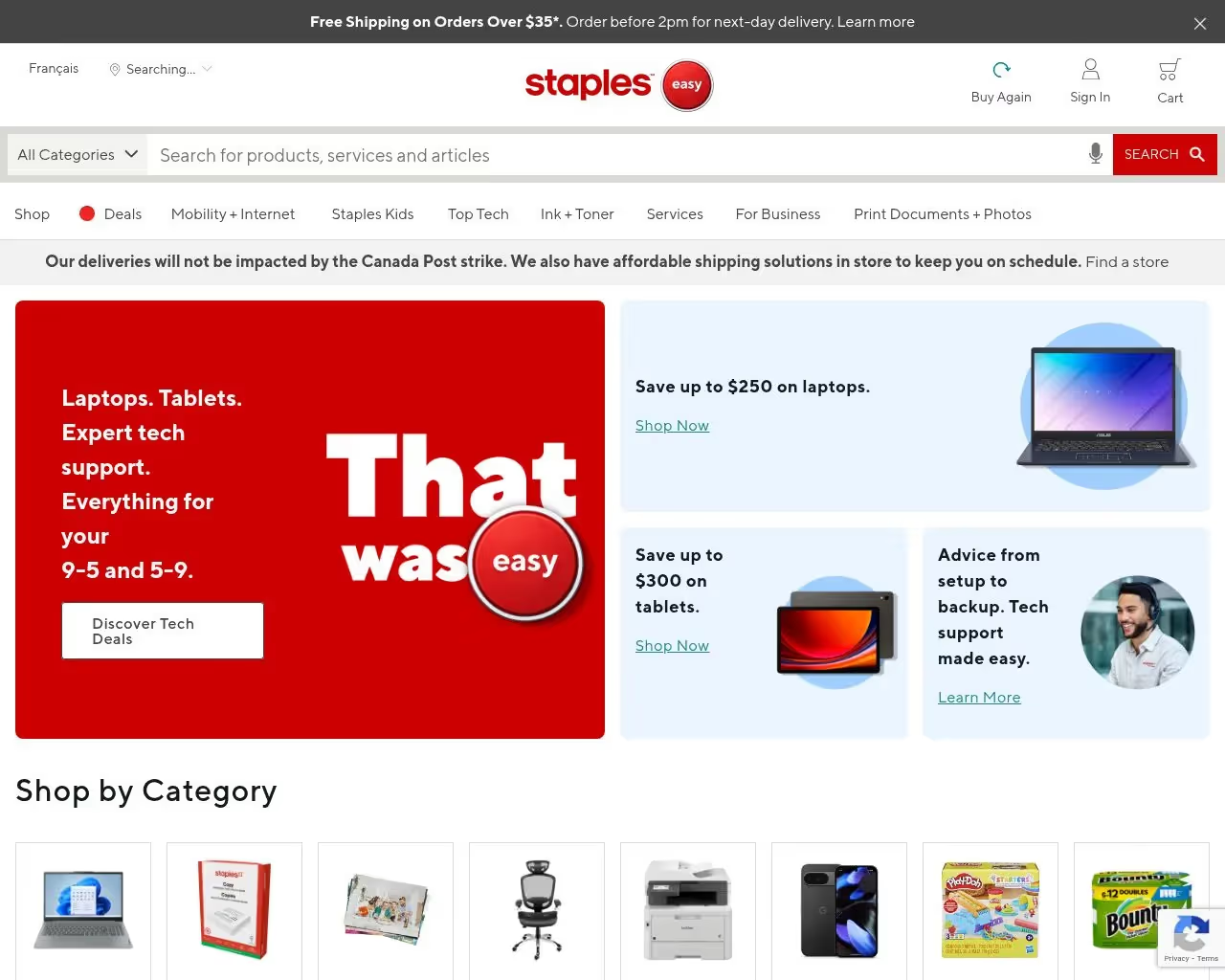
A leading office supply retailer offering a wide range of products and services for businesses and consumers across Canada.
Top Selling Product
Office supplies and electronics
Country
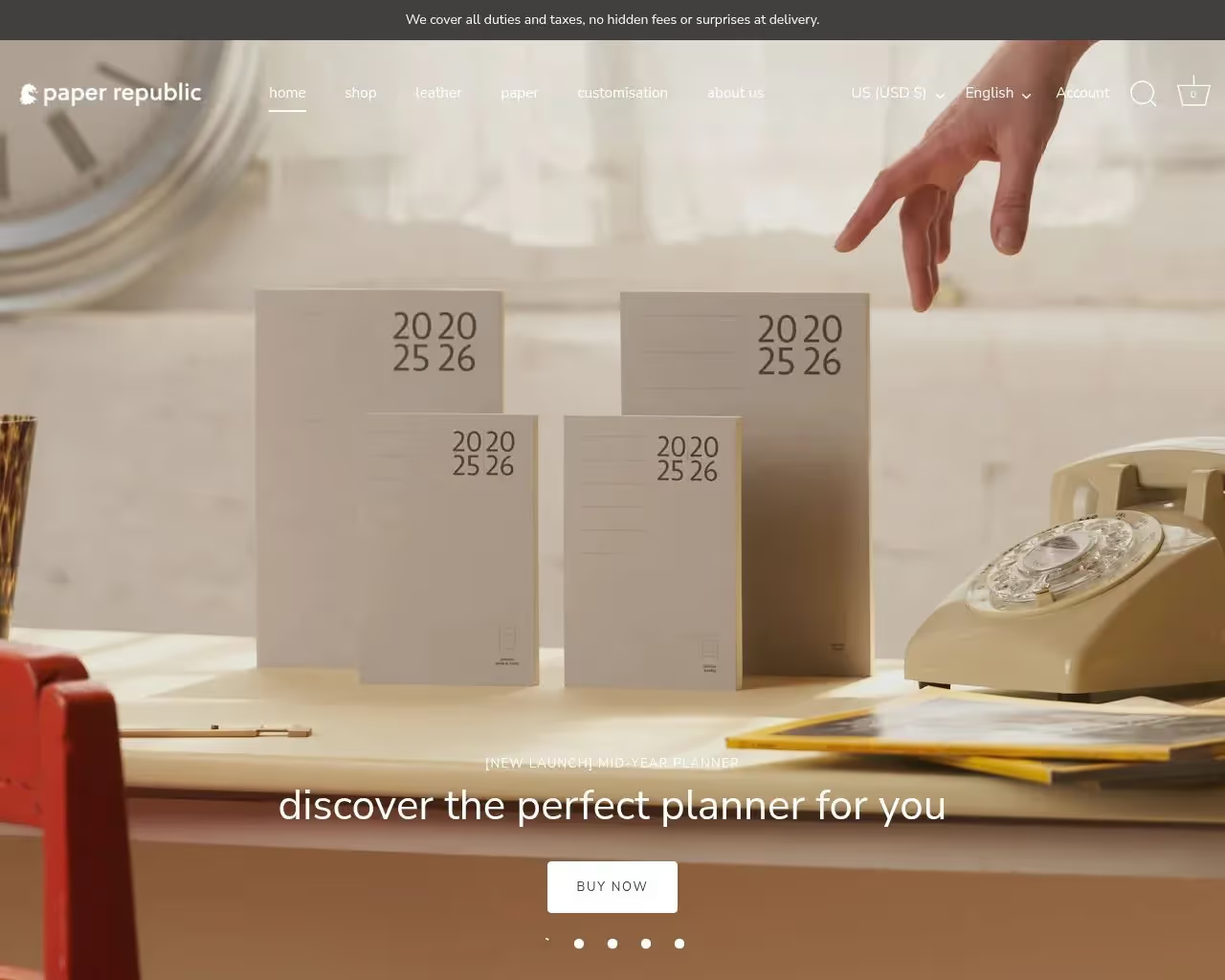
Crafts high-quality leather notebooks and journals.
Top Selling Product
Leather-bound notebooks
Country
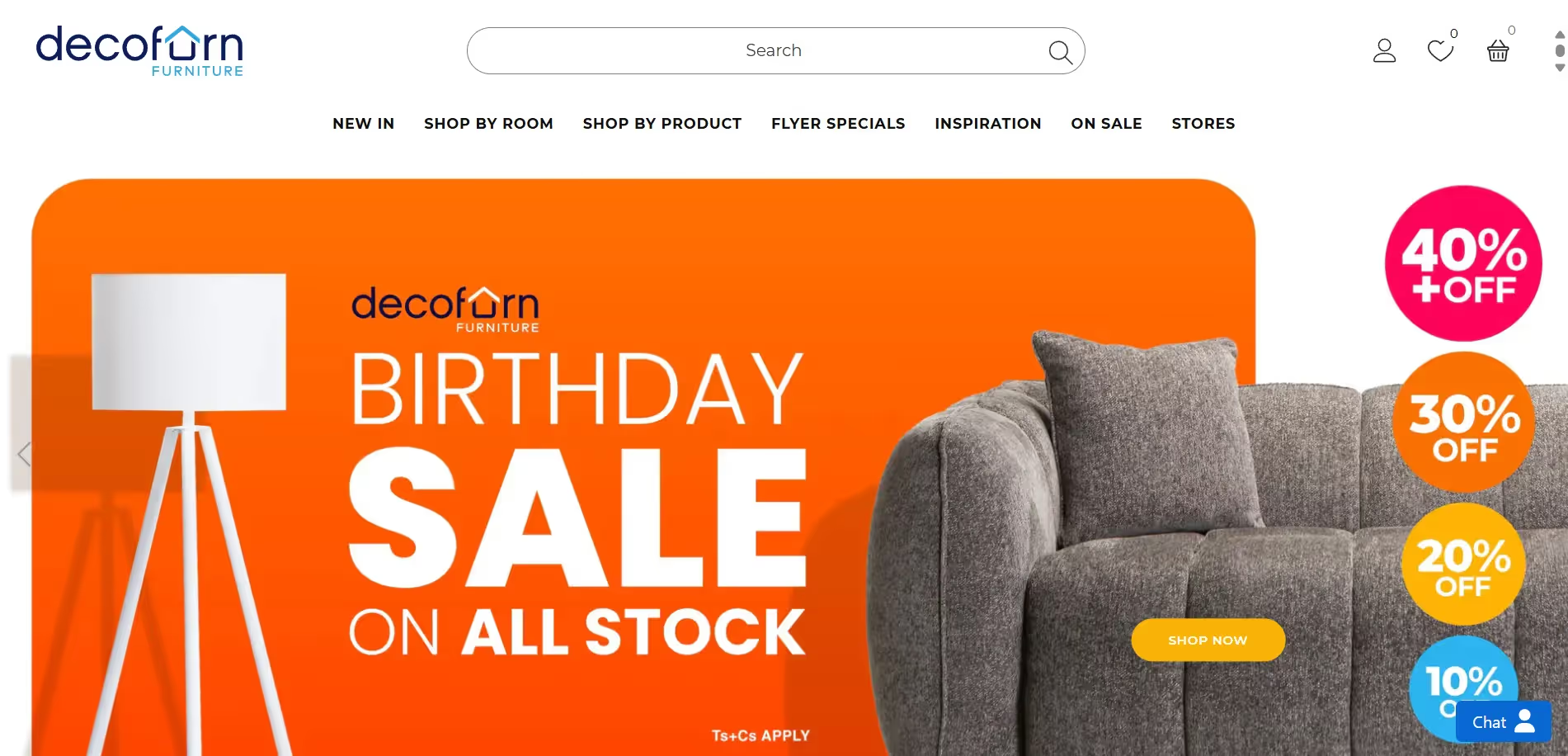
Specializes in affordable and stylish furniture for homes and offices.
Top Selling Product
Home and office furniture
Country
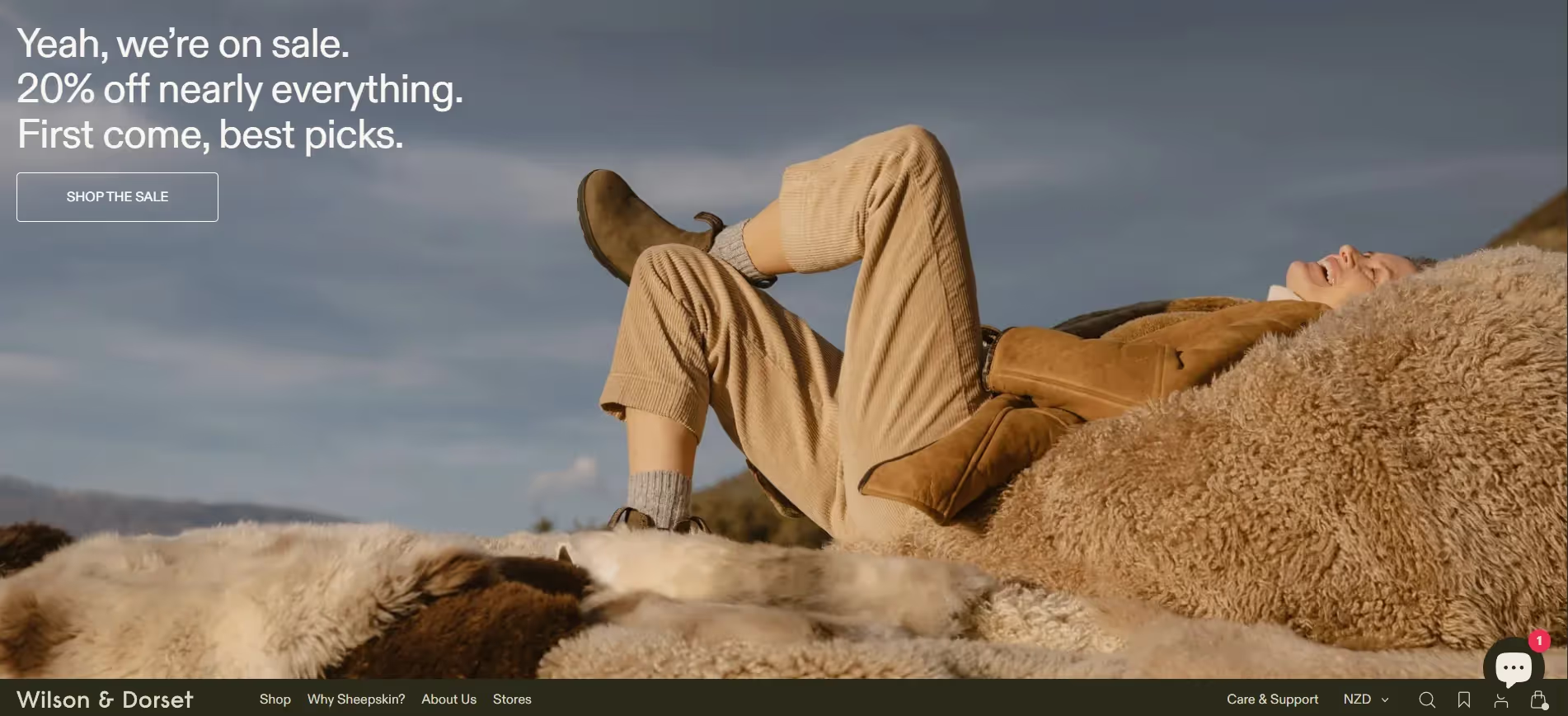
Wilson & Dorset designs luxurious sheepskin rugs and furniture, focusing on natural materials and comfort to enhance living spaces.
Top Selling Product
Sheepskin Bean Bags
Country
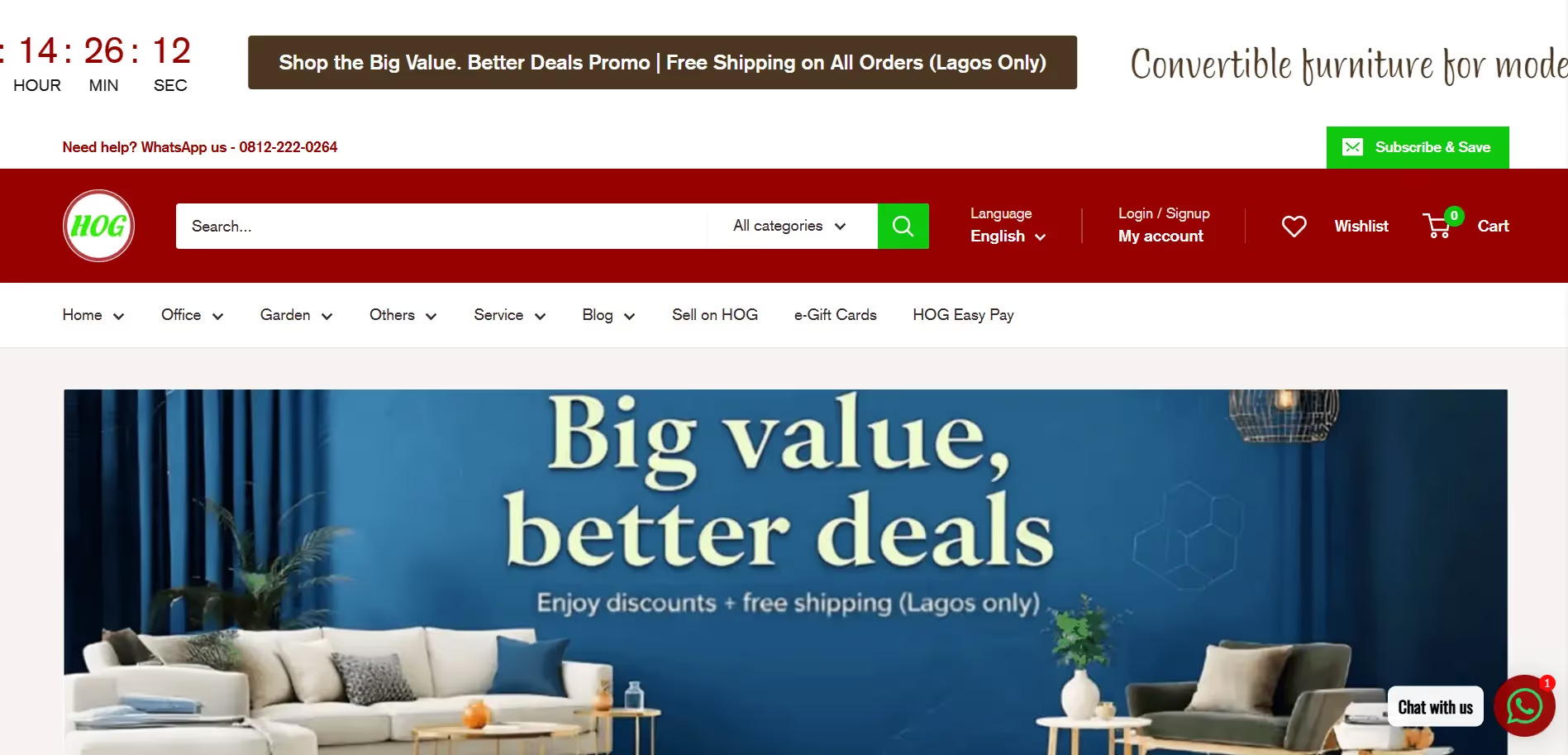
HOG Furniture provides a vast collection of home and office furniture, combining style and functionality to meet diverse customer needs.
Top Selling Product
Ergonomic Office Chairs
Country
The total office supplies market sits at $183 billion, with online penetration at 24 percent and growing at 7 to 14 percent CAGR as remote and hybrid work continues to reshape where and how people kit out their workspaces. The office subscription box segment is growing faster still, at 12 to 19 percent CAGR, driven by stationery enthusiasts and WFH professionals who want a curated monthly experience rather than a commodity purchase. Buyer demographics have shifted: the premium office and desk accessories buyer is now more likely to be a 28-to-40-year-old creative professional building their home office aesthetic than an office manager procuring in bulk. AOV ranges from $65 to $120 for standard purchases and $200 to $400 for premium desk bundles, with conversion rates of 2.0 to 3.5 percent for well-positioned premium stores.
• Grovemade is the benchmark for bundle architecture in desk accessories. Their modular desk bundle system takes a customer from a single $60 item to a $250-plus complete desk setup through a series of complementary product pairings. Every product is designed to work with every other product in the range, which makes the "complete your setup" upsell feel like good advice rather than a sales tactic.
• Papier reached $50 million in DTC revenue with year-on-year US growth over 50 percent by making personalisation the core product mechanic. Name-printed notebooks, custom diary covers, and monogrammed stationery turn a commodity category into a gift and self-expression play. Personalisation increases perceived value, reduces price sensitivity, and nearly eliminates returns.
• Appointed uses seasonal collections and limited edition drops to give stationery enthusiasts a reason to return beyond pure replenishment. The drop model creates urgency and drives email engagement in a category where most brands rely entirely on search-driven acquisition.
• WFH and home office premium ergonomics continue to grow as remote workers invest in long-term setups rather than temporary arrangements. Monitor arms, cable management systems, and premium desk mats are all outperforming commodity versions.
• Desk aesthetic and battlestation accessories are a YouTube and Reddit-driven sub-niche with passionate communities. Stores that produce "desk setup" content consistently outperform those that rely on product photography alone.
• Personalised stationery and notebooks occupy a high-value position between commodity office supplies and luxury gifting. The personalisation mechanic protects margin and creates gifting occasion demand.
• Sustainable office supplies (recycled paper, FSC-certified notebooks, refillable pen systems) are gaining share with buyers who want their workspace to reflect their values.
• Subscription stationery boxes targeting enthusiasts and educators represent a recurring revenue layer that most office supply stores are not yet capturing.
• Competing on Google Shopping against Staples and Amazon on commodity items is a losing position for DTC brands. Pens, standard notebooks, and basic desk organisers have no defensible margin or differentiation at scale. The DTC opportunity is squarely in the premium, aesthetic, and personalised tier.
• Underestimating the aesthetic buyer is the most common strategic mistake in this category. Desk setup content on YouTube and Reddit drives significant DTC traffic for premium office brands, and stores without this content miss their most motivated audience entirely.
• No bundle architecture leaves 30 to 40 percent of AOV on the table. Desk accessories are naturally complementary: a desk mat pairs with a notebook holder, which pairs with a cable organiser. Stores without a "complete your setup" bundle mechanic are not capturing the full value of each visit.
• Seasonal strategy gaps cost revenue. Back-to-school and the new year are the two biggest office purchase spikes, but most DTC brands don't build content or email campaigns around these moments, ceding the timing advantage to mass-market retailers.
• Gross margin: 55 to 70 percent for branded and premium office products
• AOV: $65 to $120 for standard purchases; $200 to $400 for premium desk bundle configurations
• Return rate: 5 to 10 percent (low, driven by the non-wearable, non-fit-dependent nature of the products)
• CVR: 2.0 to 3.5 percent for premium-positioned stores with strong visual merchandising
• Subscription stationery box retention: 55 to 70 percent at 3 months for well-curated boxes
Premium office supplies are increasingly purchased as curated desk aesthetic investments rather than commodity procurement decisions, and personalisation is the mechanic that differentiates a $15 notebook from a $60 gift. Infinite Options by ShopPad enables monogramming, name printing, and custom cover text on notebooks, planners, and stationery with a live preview, lifting AOV on personalised items by 30 to 40% above equivalent non-personalised products and nearly eliminating returns on custom orders.
Desk setup buying follows a natural bundle logic: a desk mat pairs with a notebook holder, a cable organiser pairs with a monitor stand, and buyers purchasing a complete aesthetic are worth 3 to 4 times more per visit than single-item purchasers. Easy Bundle Builder by Skai Lama powers "complete your setup" bundle mechanics that group complementary desk accessories into curated configurations at a discounted bundle price, serving the aesthetic buyer who wants the full system without the research burden of sourcing compatible pieces separately.
Consumable office products (notebooks, printer ink, paper, pens) have predictable depletion cycles that make them ideal subscription candidates, particularly for professional buyers who restock regularly on the same items. Recharge Subscriptions converts one-time consumable buyers into subscribers on flexible quarterly or monthly schedules, building recurring revenue on the high-frequency replenishment items that anchor the average buyer's relationship with the store.
Bulk purchasing mechanics are highly effective in office supplies for professional and business buyers who are willing to commit to larger quantities for a per-unit saving. Kite: Free Gifts and Discounts by Skai Lama powers volume discount tiers (buy 5 notebooks, save 15%; buy 10, save 25%), free gift additions above a spend threshold for corporate orders, and seasonal promotional mechanics for back-to-school and new year purchasing windows, the two biggest revenue spikes in the category.
Desk setup photos from verified buyers are among the most shared and conversion-driving review formats in office supplies, particularly for the aesthetics-motivated buyer who wants to see products in a real workspace context rather than a product photography studio. Okendo supports photo review collection with workspace type and use-case attributes, and office supplies stores using it see higher engagement on review content and more referral traffic from the desk setup communities on Reddit and YouTube that are the primary organic acquisition channel for this category.
Office supplies is a category where positioning determines fate. Commodity plays have almost no path to margin in the DTC channel. The opportunity is in the premium aesthetic tier, where a $40 notebook becomes a $200 desk setup and a personalised cover becomes a $60 gift. Operators who build bundle architecture, invest in desk setup content, and create seasonal campaigns around the two major purchase spikes are playing a fundamentally different game than the commodity resellers. The subscription layer on consumables is the recurring revenue engine that makes the unit economics work long-term.

These stores offer a wide variety of essentials like ergonomic chairs, desks, stationery, printers, filing systems, and tech accessories like webcams and keyboard sets. Many also include eco-friendly options such as recycled paper or biodegradable desk organizers. Skailama supports these stores by offering smart filtering (e.g., “ergonomic,” “B2B pricing”) and real-time FAQs around compatibility, use cases, and workspace planning.
Yes, many Shopify office supply stores cater to teams and organizations with bulk pricing tiers, B2B portals, and subscription services for repeat essentials. Skailama enhances B2B support by automating quote request forms, team-based account FAQs, and bulk delivery timelines—reducing manual overhead for store staff.
Absolutely. Products like notebooks, pens, mousepads, and mugs can often be personalized with company logos. Skailama facilitates this by answering customization FAQs dynamically, offering design upload guidance, and managing turnaround time expectations right within the product page.
In major cities, yes—many stores partner with courier services to offer same-day delivery or express fulfillment for urgent office needs. Skailama helps clarify cutoff times, eligible zones, and fulfillment speed via dynamic delivery FAQs that adapt based on user location and product type.