

Our Apps Have Driven
5X AOV | 2X Conversions | $30M+ Additional Revenue
5X AOV | 2X Conversions | $30M+ Additional Revenue
.svg)


5.0 (3000+ Reviews)


Shopify Apps





.svg)

Tailor your search to find the perfect Shopify store.
Categories
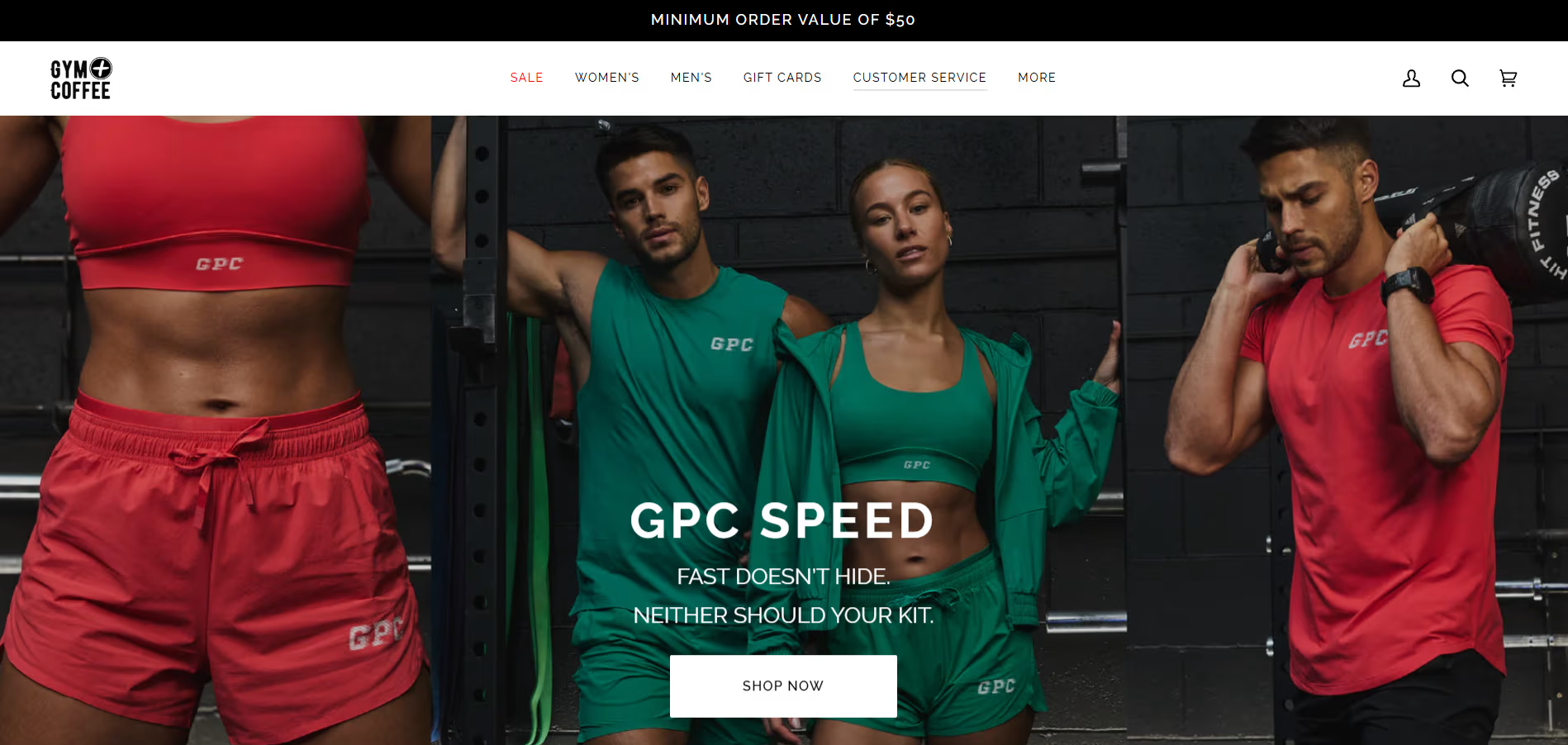
Gym+Coffee specializes in versatile hoodies, leggings, and lifestyle essentials designed for an active social life, focusing on the balance between fitness and social connection.
Top Selling Product
Horizon Layer Up Jacket in Gingham Print
Country

VPA Australia focuses on purity and transparency, offering a wide range of batch-tested, locally manufactured products.
Top Selling Product
Whey Protein Isolate
Country
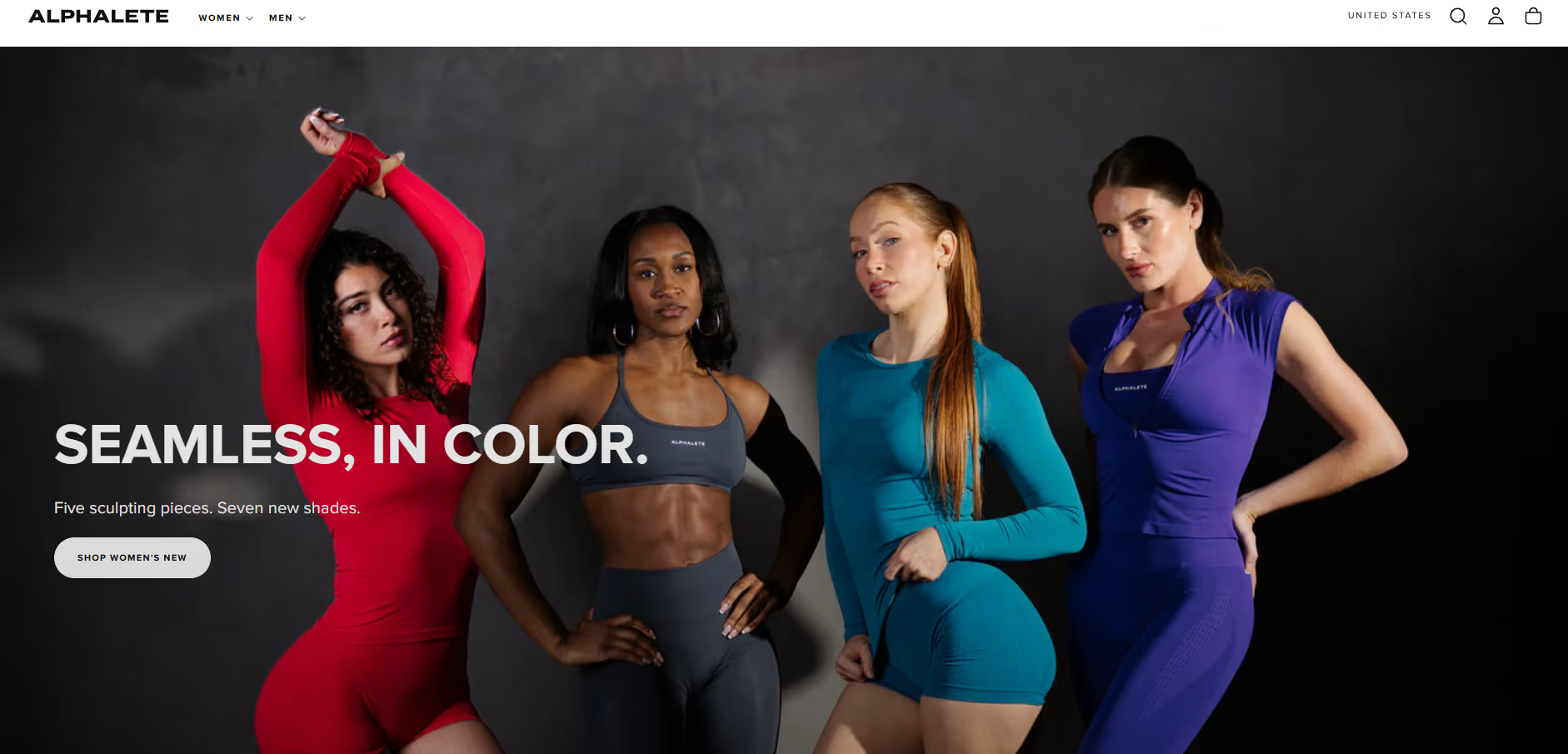
Alphalete offering a range of technically advanced gym wear and everyday essentials designed with a high-end, aesthetic-focused fit for athletes and fitness enthusiasts.
Top Selling Product
Amplify Ultra-High Rise Legging - Black
Country

Alo Yoga focuses on "studio-to-street" aesthetics, combining innovative technical fabrics with contemporary fashion to offer versatile yoga apparel, accessories, and skincare.
Top Selling Product
Suit Up Trouser (Regular) - Black
Country
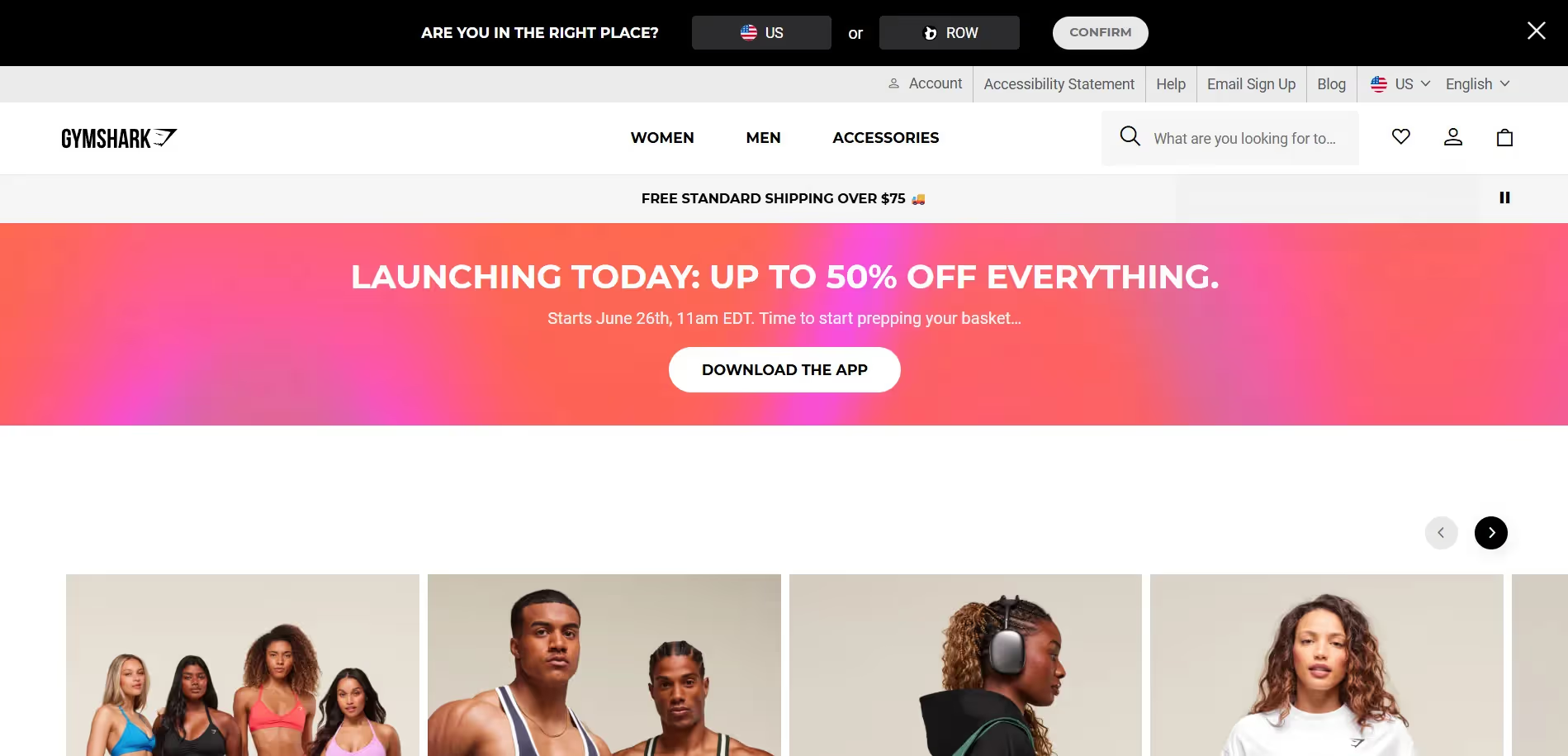
A fitness apparel brand known for its stylish and functional workout clothing.
Top Selling Product
Fitness apparel
Country
The fitness and sports nutrition ecommerce market is valued at $5.6 billion in 2026 at a 9.2% CAGR. Supplement customer acquisition costs average $89, the highest CAC of any major ecommerce category, making retention economics critical from day one. Equipment and apparel in the fitness category carry better margins and lower CAC. The category is experiencing strong structural tailwinds: 51% of consumers report working out at home at least 3x per week, home gym equipment searches remain elevated 160% above pre-pandemic levels, and recovery tools are growing at 12.2% CAGR as sports science moves mainstream.
The DTC fitness brands with durable unit economics have built genuine communities and product ecosystems rather than single-SKU supplement plays.
• Ambassador and athlete network as primary acquisition: Gymshark grew from a garage operation to $128 million in annual revenue without traditional advertising, primarily through athlete ambassador and community programmes. The key: Gymshark chose authentic fitness creators before "influencer marketing" was formalised, paid them in product before paying in cash, and built a community that felt owned rather than sponsored.
• Hardware-as-subscription to lock in retention: WHOOP pioneered the model of charging a monthly membership ($30/month) for access to the device rather than selling the hardware outright. This creates a very different relationship with the customer: they are not a one-time buyer but an ongoing subscriber with daily engagement. WHOOP members wear the device an average of 23 hours per day.
• Transparency as differentiation in supplements: Transparent Labs built a $774 million brand on a single product claim: no proprietary blends, all ingredient quantities published. In a category plagued by underdosed formulas hidden behind proprietary blend labels, this transparency built extraordinary trust and justified premium pricing. MyProtein ($774M) similarly uses third-party certification to differentiate in a trust-deficit category.
• Content that mirrors the buyer's journey: AG1 (Athletic Greens) went from $160 million to $600 million in revenue within two years, with 90% of revenue from subscriptions. Their acquisition strategy centres entirely on podcast sponsorships that reach buyers already primed for health optimisation messaging. The alignment between content format and buyer psychology is what drives their subscriber conversion rate.
• Recovery tools: Massage guns, compression boots, cold plunge equipment, and red light therapy devices are growing at 12.2% CAGR. The consumer understanding of recovery as performance has permanently expanded the addressable market.
• AI-integrated fitness wearables: AI wearables in the fitness context (rings, patches, continuous glucose monitors) are growing at 27.83% CAGR. DTC brands with proprietary algorithms can command membership fees on top of hardware margin.
• Women's performance nutrition: Female-focused sports nutrition (protein, pre-workout, hormone-supportive supplements) is growing at 14.7% CAGR, significantly faster than gender-neutral products. Most incumbent brands still position primarily for male buyers.
• Functional food and sports nutrition crossover: Protein-enhanced everyday food products (cereals, pasta, snacks) are bringing supplement-adjacent nutrition to buyers who would never visit a sports nutrition store. This creates a new acquisition channel for supplement brands.
• Supplement-only business model at launch: Supplement-only DTC brands face the highest CAC in ecommerce ($89 average) and a subscription churn problem driven by the "I've reached my goal" dropout. Brands with equipment, apparel, or digital content alongside supplements have dramatically better LTV profiles.
• Underdifferentiated products: The supplement market is massively saturated with near-identical formulas at near-identical prices. Without a genuine differentiator (ingredient transparency, certification, unique delivery format, or specific audience focus), acquiring customers at sustainable economics is extremely difficult.
• No community infrastructure: Fitness is an inherently social and motivational purchase category. Stores without community elements (Strava integration, challenge programmes, community forums) have 40% lower 90-day retention than stores with social infrastructure.
• Ignoring the recovery and longevity buyer: The average age of supplement and fitness equipment buyers has increased significantly as longevity and healthspan become mainstream consumer concerns. Brands communicating only to the 18 to 35 performance athlete are increasingly missing the higher-spending 35 to 55 longevity buyer.
• Gross margin: 60 to 75% for supplements; 45 to 60% for equipment; 55 to 70% for apparel
• Average order value: $65 to $95 (supplements); $120 to $250 (equipment); $80 to $150 (apparel)
• Return rate: 3 to 8% (supplements, nearly no returns for consumables); 10 to 18% (equipment)
• Repeat purchase rate: 55 to 70% for subscribers; 20 to 35% for one-time supplement buyers without subscription prompting
• CAC: $89 average for supplements (highest in ecommerce); significantly lower for community and content-driven brands
Goal-based product discovery is the highest-converting mechanic in fitness because supplement and equipment buyers are purchasing an outcome, not a product, and stores that match them to the right product for their specific goal before they reach a PDP convert at dramatically higher rates. Octane AI powers "find your stack" quizzes that ask buyers about their training goal, experience level, and dietary preferences to route them to the right combination of supplements or equipment, used by brands across sports nutrition to reduce decision paralysis on high-SKU catalogues.
Supplement replenishment is one of the most predictable consumption cycles in ecommerce (30 days for most products), and subscription conversion is the primary driver of LTV in fitness DTC. Recharge Subscriptions is the standard subscription platform for fitness brands, enabling automatic replenishment with the subscriber management tools (pause, swap, cancel flows) that retain customers through the motivation dip that typically occurs at 60 to 90 days.
Protocol-based bundle selling is the highest-AOV purchase pattern in sports nutrition, where buyers invest in a complete stack (pre-workout, protein, recovery) rather than individual products. Easy Bundle Builder by Skai Lama enables goal-specific stack bundles with mix-and-match mechanics, so a buyer targeting muscle gain can select their preferred flavour across multiple products in a single bundle purchase, rather than navigating each SKU individually.
Sampling is the most effective trial mechanic in supplements because buyers are reluctant to commit to a full tub without trying a product first. Kite: Free Gifts and Discounts by Skai Lama automates free sample inclusion with qualifying orders (add a free protein sample to orders above $50), BOGO on trial sizes, and tiered spend promotions that introduce buyers to new products from the range without margin-eroding discounting.
Verified results reviews with buyer-provided context (training background, goals achieved, weeks of use) are the highest-trust conversion signal in a supplement category that suffers from widespread scepticism about efficacy claims. Okendo supports review collection with goal and attribute fields, enabling buyers to filter social proof by people with their specific training objective, which measurably reduces abandonment on higher-priced premium formulations.
Fitness ecommerce rewards operators who understand that the buyer is not just purchasing a product but investing in a version of themselves they want to become. The brands that acknowledge and support this psychological dimension through community, content, and personalised goal-tracking have dramatically better retention economics than those selling products transactionally. The recovery and longevity segment in particular is underserved by DTC brands still focused primarily on performance athletes, and the 35 to 55 longevity buyer has both the spending power and the health motivation to make a high-LTV customer for stores built around them.

Top Shopify fitness stores offer a diverse range of high-performance gear including activewear, yoga mats, resistance bands, protein supplements, pre-workout formulas, fitness tech, and compact home workout equipment. Many cater to niche audiences like CrossFit athletes, yoga enthusiasts, or casual home exercisers. These stores combine curated product collections with inspirational content to create a complete lifestyle brand. When powered by Skailama, these stores offer real-time product availability, intelligent workout suggestions, and tailored fitness FAQ sections to help shoppers find exactly what they need for their goals.
Yes. The best fitness Shopify brands offer products suited to all levels—from beginner-friendly gear like light resistance bands and guided programs, to advanced equipment like weighted vests and smart gym systems. These stores typically include experience-based filters or buyer’s guides. Skailama enhances this by delivering dynamic content based on customer profiles, purchase history, or selected goals—ensuring users receive recommendations aligned with their fitness level.
Absolutely. Many leading fitness stores now bundle digital coaching, meal planning, or access to exclusive video workouts with product purchases. Subscriptions or one-time downloads are common. With Skailama, brands can automate customer onboarding by providing post-purchase emails, app integration links, and downloadable fitness trackers, helping customers stay engaged long after checkout.
Look for third-party lab testing, ingredient transparency, and certifications like NSF Certified for Sport. Reputable Shopify stores clearly label these details and provide educational content. Skailama can further support by surfacing common supplement questions, managing product safety disclosures, and providing customer reviews filtered by specific concerns like energy, recovery, or muscle gain.