

Our Apps Have Driven
5X AOV | 2X Conversions | $30M+ Additional Revenue
5X AOV | 2X Conversions | $30M+ Additional Revenue
.svg)


5.0 (3000+ Reviews)


Shopify Apps





.svg)

Tailor your search to find the perfect Shopify store.
Categories
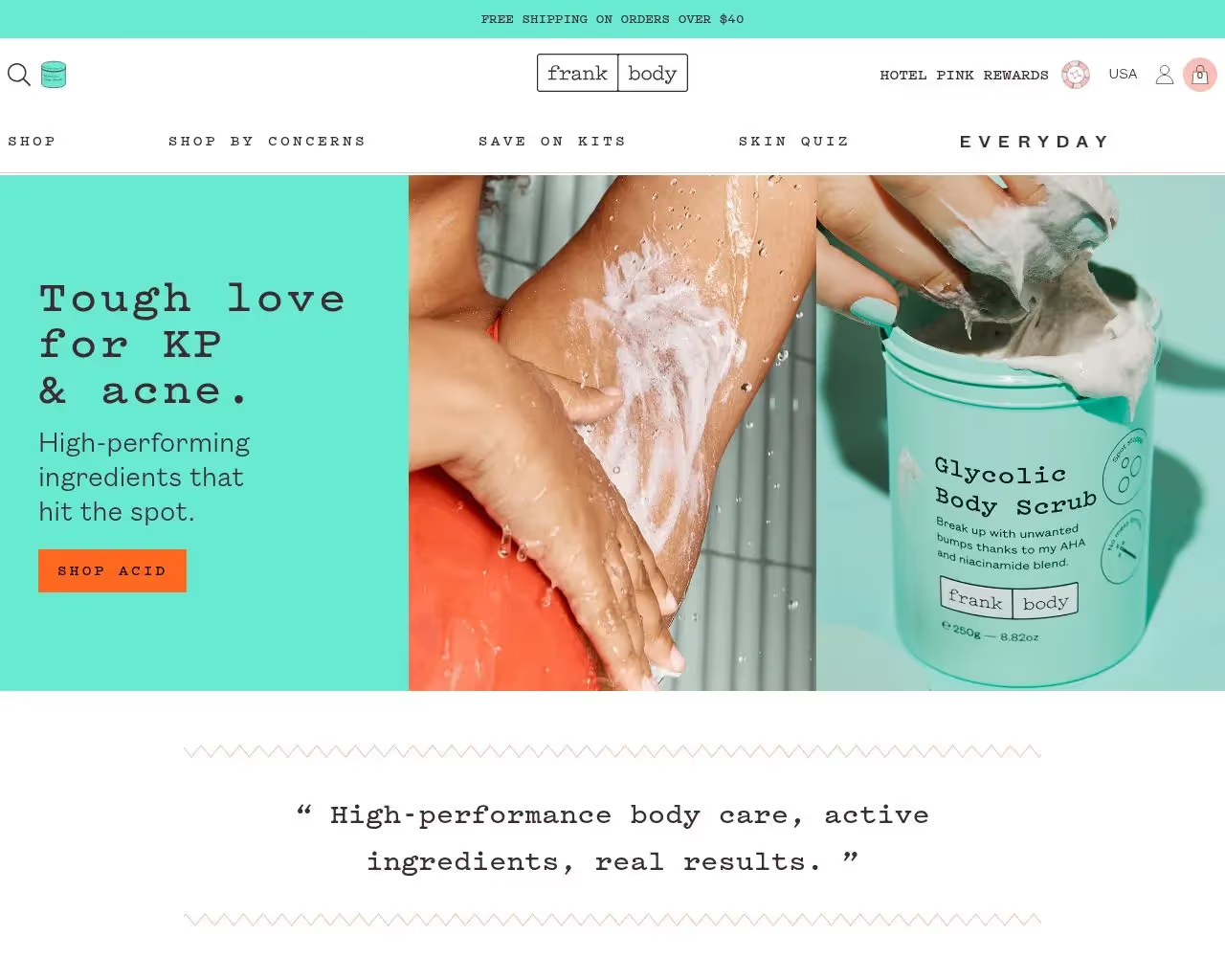
Skincare brand famous for its coffee scrub, promoting natural ingredients and a playful brand voice.
Top Selling Product
Original Coffee Scrub
Country

Offers beauty and health products, emphasizing natural and herbal remedies.
Top Selling Product
Herbal health products
Country
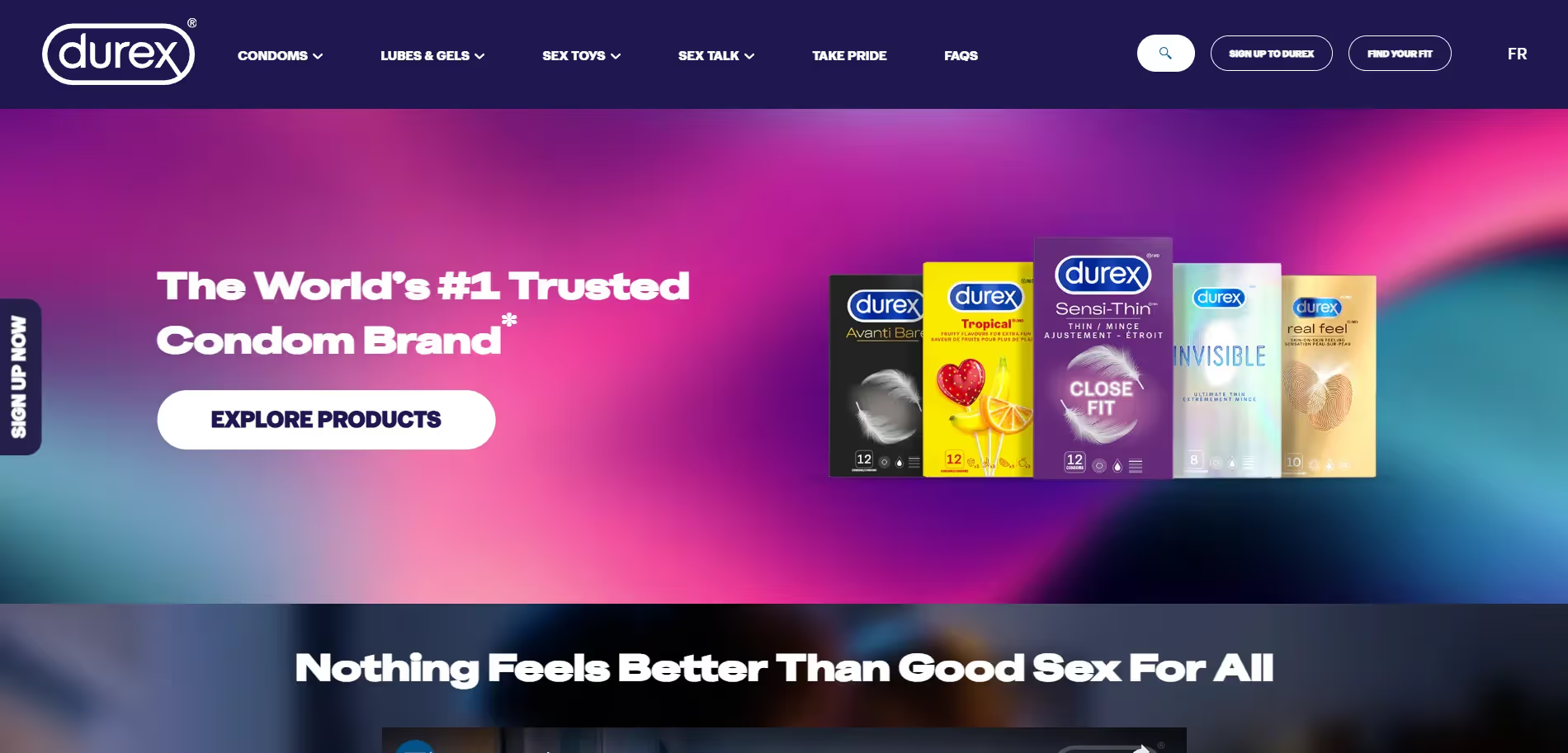
Offers a range of sexual wellness products, including condoms and lubricants.
Top Selling Product
Condoms and lubricants
Country
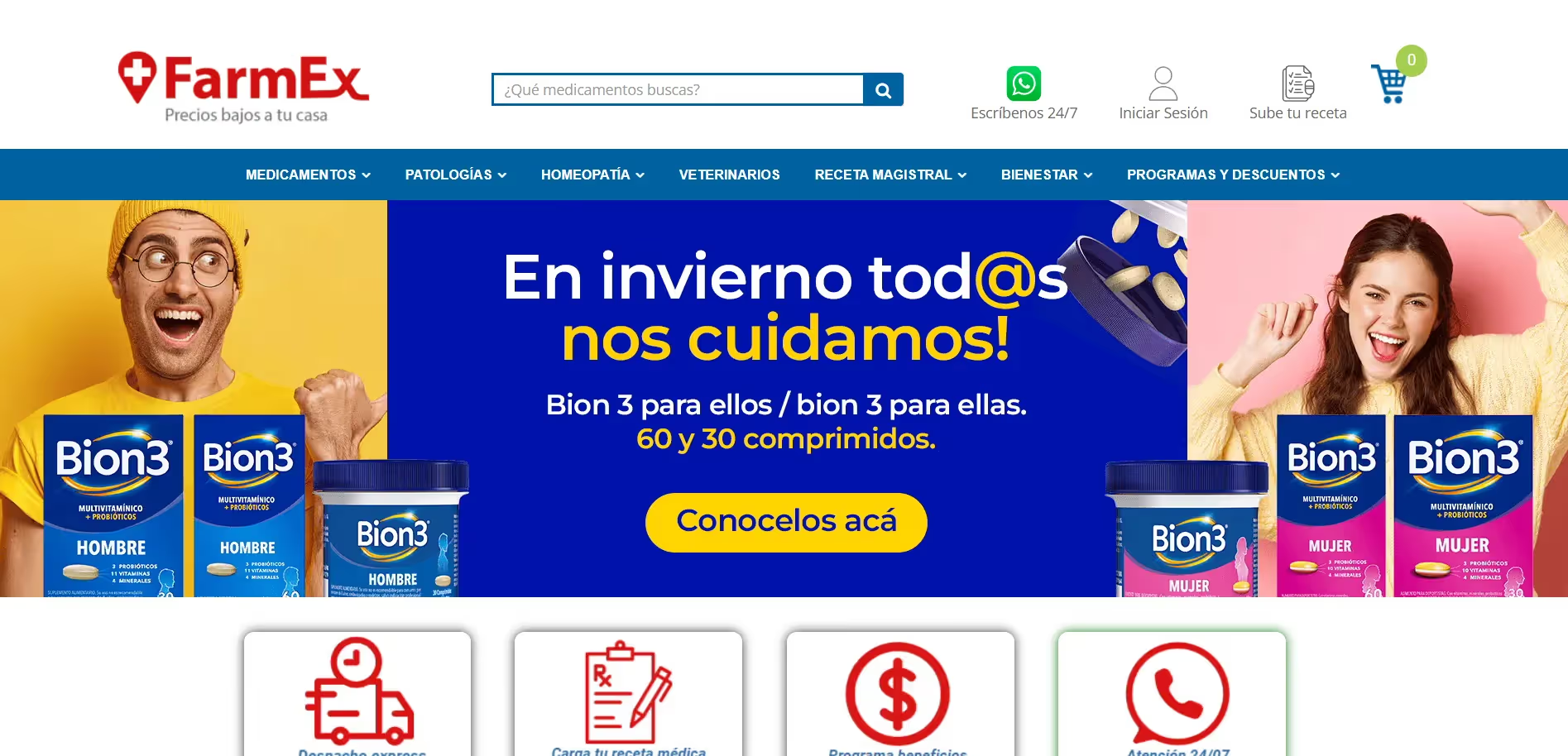
A leading online pharmacy in Chile, offering a wide range of health and wellness products.
Top Selling Product
Health and wellness products
Country
Whamisa is an organic skincare brand emphasizing fermented natural ingredients to enhance skin health and vitality.
Top Selling Product
Organic Flowers Toner Deep Rich
Country
Durex is a globally recognized brand specializing in sexual health products, committed to promoting safe and enjoyable experiences.
Top Selling Product
Condoms
Country
Ethique is a sustainable beauty brand creating solid bars for hair, face, and body care, eliminating plastic packaging and promoting zero-waste products.
Top Selling Product
Shampoo Bars
Country

HealthPlus Pharmacy is a trusted healthcare provider in Nigeria, supplying prescription medications, health supplements, and wellness products through its online store.
Top Selling Product
Multivitamin Supplements
Country
The broad wellness market represents $5 trillion in global consumer spending, with several high-growth sub-segments creating specific DTC opportunities. Sleep technology is a $30.7 billion market growing at 15.5 percent CAGR. The adaptogens and functional ingredient segment (ashwagandha, lion's mane, reishi) sits at $12.79 billion growing at 7.3 percent CAGR, with individual ingredients growing at 40 percent-plus annually in search volume. Average order values range from $80 to $150 for supplement-based wellness and $300 to $549 for hardware products. Subscription retention in this category runs 55 to 70 percent, and brands that combine subscription with community and accountability content see significantly higher retention. Ritual's subscription-first model from launch contributed to a $1 billion-plus valuation, and Oura Ring's hardware-plus-membership model has scaled past 2 million members.
• Ritual built its business with subscription as the default offer from day one, not an opt-in add-on. Combined with radical supply chain transparency (tracing every ingredient to its source), the brand created a trust architecture that justifies premium pricing for a product category (vitamins) that is otherwise highly commoditised.
• Goop generated $250 million-plus in revenue by treating wellness as a content-driven commerce category rather than a product category. Every product sits within a broader editorial context: a problem, a philosophy, and a way of living. This approach drives organic discovery, justifies premium pricing, and creates a brand identity that is difficult to replicate through product development alone.
• Oura Ring's hardware-plus-membership model ($300 to $549 for the ring plus $6 per month for the health platform) transforms a one-time hardware purchase into a recurring revenue relationship. With 2 million-plus members, the model demonstrates that wellness buyers are willing to pay ongoing subscription fees for health tracking data they find genuinely useful.
• Sleep optimisation products are the single fastest-growing sub-segment at 15.5 percent CAGR, spanning mattresses, sleep trackers, magnesium-based supplements, blackout solutions, and wearable monitoring. The category benefits from the convergence of wellness awareness and technology adoption.
• Adaptogens and stress support (ashwagandha, lion's mane, reishi, and functional mushroom blends) are growing over 40 percent annually in search volume, driven by mainstream awareness of chronic stress and the desire for non-pharmaceutical support options.
• Women's wellness (hormones, fertility, perimenopause, and cycle support) is a significantly underserved category relative to the size of the addressable market. Mainstream brands have historically ignored or under-invested in this demographic, creating substantial white space for DTC brands with genuine clinical credibility.
• Biohacking tools (cold plunge systems, red light therapy panels, continuous glucose monitors, and HRV tracking devices) are transitioning from early-adopter to mainstream consumer awareness, with several DTC brands building significant businesses around premium biohacking hardware.
• Longevity and healthspan products represent a growing category driven by the 40-to-65 demographic's increasing willingness to invest in preventive health rather than reactive treatment.
• Wellness is vague territory, and brands without a specific problem-solution angle get lost in the noise. "Feel better" is not a positioning. "Better sleep for shift workers" or "hormone support for women in perimenopause" are. Specificity in the ICP and the problem solved is the primary differentiator in an overcrowded category.
• The trust deficit in wellness is a real conversion barrier. Bold claims without science backing are increasingly challenged by consumers who have been burned by supplement marketing and by regulators with growing FTC enforcement interest in outcome claims. Brands that lead with ingredient transparency, third-party testing, and clinical citations convert better and retain better than those that lead with transformation promises.
• Subscription without community drives high churn. Wellness subscribers cancel rapidly when they feel the habit is not producing results or when motivation drops. Community content (habit tracking, accountability prompts, member stories, expert Q&As) is the primary retention lever for supplement and wellness subscription programmes, and brands that treat subscription as a billing mechanic rather than a community product suffer churn rates 2x higher than those that invest in the community layer.
• Ignoring the 40-plus buyer is leaving the highest-spending demographic underserved. Most DTC wellness brands skew their visual and copy content to 25-to-35 buyers, while the 40-to-55 demographic represents the highest per-capita wellness spending and the most health-motivated purchase behaviour. Brands that speak directly to longevity, hormonal health, and metabolic concerns for this cohort are capturing underserved demand.
• Gross margin: 60 to 75 percent for supplements and software-based wellness tools; lower for hardware (hardware COGS are higher but LTV from membership offsets the margin compression)
• AOV: $80 to $150 for supplement-based wellness; $300 to $549 for hardware wellness products
• Return rate: 5 to 12 percent (low, as wellness products are rarely returned for reasons other than "didn't work" dissatisfaction)
• Subscription retention: 55 to 70 percent for supplement subscriptions; significantly higher for hardware-plus-membership models where switching cost is higher
• Repeat purchase rate: 50 to 65 percent within 12 months for stores that build routine-forming products with community infrastructure
Wellness product discovery is a high-consideration process because buyers are matching products to specific health concerns (sleep, stress, hormonal balance, longevity) and generic recommendations are significantly less effective than personalised protocol guidance. Octane AI powers wellness assessment quizzes that route buyers to the right supplement stack or protocol based on their health goals, lifestyle, and existing routine, reducing the decision paralysis that causes the majority of wellness store abandonment and producing higher-AOV initial orders from buyers who adopt a complete protocol.
Subscription is the defining model for supplement-based wellness brands: Ritual built a $1 billion-plus valuation on subscription-first mechanics, and daily-use products with 30 to 90 day consumption cycles are among the most naturally suited subscription candidates in ecommerce. Recharge Subscriptions powers supplement replenishment programmes for wellness DTC brands, with onboarding sequence integrations, habit formation content tools, and subscriber analytics that reduce churn at the 30 to 90 day window when motivation is most fragile and cancellation risk is highest.
Protocol-based wellness purchases (sleep bundle, stress bundle, longevity stack) are the highest-AOV pattern in the category because buyers investing in a multi-step approach spend 2 to 3 times more per transaction than single-product purchasers. Easy Bundle Builder by Skai Lama enables wellness protocol bundle mechanics that group complementary supplements into named stacks with a clearly communicated combined benefit, alongside BYOB mechanics that let buyers customise their own protocol from the range, with automatic tiered discounts that reward larger initial commitments.
Free gift mechanics are highly effective in wellness for driving trial of new supplements within the range, particularly for buyers who are building a routine and need a low-risk way to evaluate an unfamiliar product. Kite: Free Gifts and Discounts by Skai Lama automates free sample inclusions above a spend threshold, BOGO promotions on trial sizes, and introductory bundle discounts for new customers, using native Shopify Functions that apply the promotional mechanics consistently at checkout.
Health outcome reviews with usage duration and goal context are the highest-trust conversion signal in wellness because buyers are sceptical of efficacy claims and actively seek evidence from people with their specific concern who have used the product long enough to see results. Okendo supports review collection with health goal, usage duration, and age range attribute fields, enabling prospective buyers to filter social proof by people with the same wellness objective, which measurably reduces purchase hesitation on higher-priced formulations where the commitment requires genuine confidence in outcomes.
Document prepared for intern review. All app URLs are Shopify App Store links and should be verified before publishing. Skai Lama app links (Easy Bundle Builder, Kite, Fly Bundles, Checkout Wiz) are dofollow. All third-party app links should carry rel="nofollow" when published on the site.
Wellness is the highest-stakes DTC category in terms of both opportunity and risk. The margins are excellent, the subscription economics are compelling, and the buyer motivation is strong and growing. But the category is also saturated with low-credibility brands making unsupported claims, and the bar for consumer trust is rising. Operators who combine genuine clinical credibility, radical ingredient transparency, specific problem-solution positioning, and community-based subscription retention are building brands with compounding moats. The 40-plus demographic, the women's wellness segment, and the sleep optimisation category are the three areas where demand most clearly exceeds the current supply of credible DTC brands in 2026.

While wellness products focus on physical well-being (like supplements or hygiene items), wellness includes a broader spectrum—mental health tools, self-care products, meditation aids, sleep support, and aromatherapy. Shopify wellness brands aim to create holistic lifestyle experiences, often combining physical products with digital content, community support, and eco-conscious living. Skailama allows these stores to tell their brand story through FAQ flows, guided journeys, and well-being-focused product categories.
Yes, many include journals, mindfulness planners, calming teas, stress-relief products, and links to mental health content. Some offer digital downloads like guided meditations or productivity tools. Skailama helps brands highlight this content with scheduled prompts, digital delivery support, and emotional wellness FAQs—all of which increase engagement and repeat visits.
Look for stores that offer detailed product descriptions, verified customer reviews, and expert endorsements. The best stores provide educational content about product use, benefits, and possible side effects. Skailama improves decision-making by automatically surfacing related FAQs and connecting shoppers with usage guides or “How it works” pages.
Yes, sustainability is a cornerstone of many wellness brands. Products often feature natural ingredients, biodegradable packaging, cruelty-free certifications, and carbon-neutral shipping. Skailama helps these stores organize and promote their sustainability credentials for SEO and customer transparency—making their values clear from first click to final purchase.